Two Book Recommendations

I know I haven't posted in a while, which means I'm breaking the two cardinal rules of blogging: Posts should be frequent and short. Well, I'll try to manage one of those by keeping this brief (I know. Too late.)

I would love to say I've been slaving away at my lesson plans for this next school year all summer, but that would be a lie. I've been camping a lot. And napping a lot. Everything else has fallen by the wayside. I have been trying to catch up on some reading, and I've just finished two very good books. Normally, a book recommendation is the worst kind of advice to give me. I write down the title, say I'll get to it one day, and promptly forget where I put the name. If you, dear reader, have the same proclivity, this might help. These book recommendations have time limits, because both these novels are being made into films, and after reading both, I fear the movies will be monumentally awful. They will either be overlayed with voice-over narration because anyone with any sense wants to make them into movies because of the beauty of their prose, or they will be vapid chronicles of the events in the books which really aren't the point of either novel.

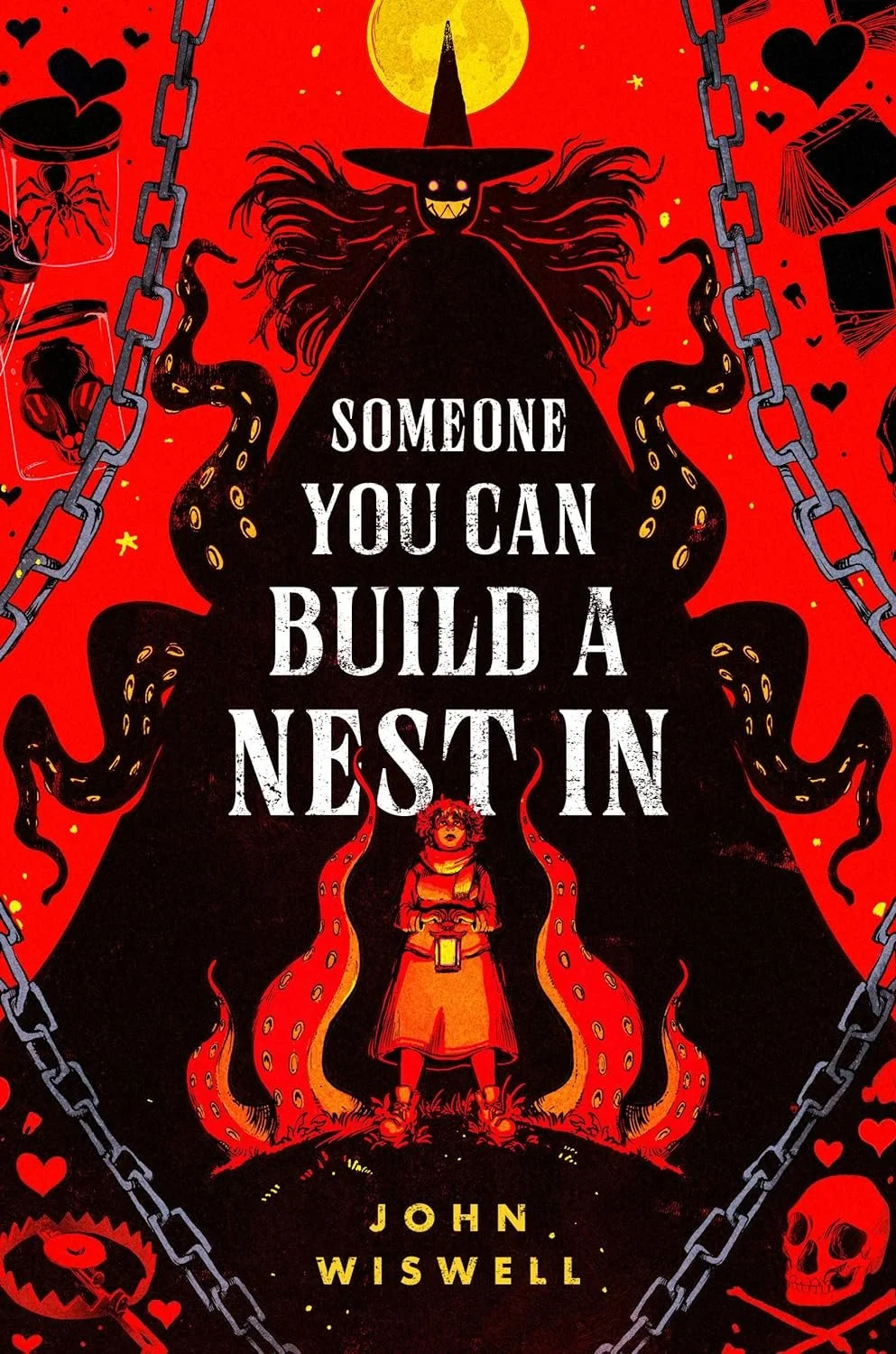
Read The Lovely Bones. I am not a crier, but I teared up more than once. The writing is very good, and the picture of a family dealing with grief is so spot-on that you forget your first reaction, which is that the idea of a murder victim narrating her observations of the living is at best clever and probably lame, and instead decide it was brilliant. This isn't true, but the quality of the writing almost makes it so.

Time Limit: Read by 3/13/2009
(Peter Jackson is attached, but I'm worried this will be far more King Kong than The Lord of the Rings. At least it won't possibly be Meet The Feebles.)

Read The Road. Imagine Mad Max meets No County For Old Men (a novel also by Cormac McCarthy) but with a father and son set-up that rips your heart out over and over without ever getting schmaltzy. Not even once, and that's saying something. McCarthy could teach Hemingway a thing or two about the economy of language. It was the first time I ever felt a physical pain in my chest caused by words the writer didn't include. McCarthy plays with your ears, so you hear things the characters don't say on the page, and sometimes you're deafened by their silences, too. The text itself is scant, but the thick subtext (midtext?) makes you read the book more slowly, like a great basketball player who knows how to control the tempo on both sides of the court. When I finished I was so full of feeling it reminded me of the kind of passion I could manage as a teenager, only the book indulges (and even exhorts) an adult recognition of nuance so that I can't understand, let alone articulate, exactly which direction these feelings are pulling. When you finish it, please post a description of your emotional reaction here, so I can use your road map to navigate my own.

Time Limit: Read by 11/26/08
(The cast looks amazing. Charlize Theron, Robert Duvall, Guy Pierce, Viggo Mortensen. At the height of their powers, these folks might be able to convey a lot of what's going on inside these characters. But then we miss out on the prose. Plus, they'll need someone with Robert Duvall's skill and resume to play the four or five-year-old boy. Macaulay Culkin will not do.)

Okay, well, now I've managed Infrequent and Long. If you still have any free time left, read both these books.

Favorite Novels to Assign for Creative Writing Class

Okay, world, I have another favor to ask:
This next year, for my Creative Writing Class, I'm going to assign some independent novel projects to students. I need some titles that I can put on my list. Here's what I'm looking for:

1. First and foremost, the book must be an example of truly exceptional writing; not just a great story and an important book in its historical context, but something so well written that students can learn from the style and quality of the prose.

2. The novel has to be appropriate for high school students (and something that won't freak their parents out). I think Nabakov's Lolita is one of the best examples of English prose ever, but I'm not going to fight that battle with the parents or the school board. Also, I really enjoy Umberto Eco, but I'm not going to assign him to a sixteen-year-old. So don't try to show off by recommending Joyce' Ulysses.

3. The novel can't be a part of any other class' curriculum. Give me lots of suggestions so I can eliminate some and still have plenty to work with.

4. Ideally, it's something I've read. Of course, I can always pick it up if it sounds like a winner.

So far, I'm thinking about
For Whom the Bell Tolls
A Prayer for Owen Meany
Catch-22
Lord of the Flies
and maybe, maybe The God of Small Things (think kids could handle that one? Think their parents would agree?)
It's been a long time since I've read I Know Why The Caged Bird Sings. I remember being deeply affected by the book, but without a copy handy I can't remember the quality of the prose. Anybody have a take on that one?

Any suggestions would be welcome. Thanks, world.

Free Rice

While I'm promoting free online quizzes, please check out http://www.freerice.com/ . On this site, you answer multiple choice questions about the definitions of words. If you're a word lover (or "logophile") like me, this is just fun, but here's the really cool part: For every word you identify correctly, someone in the third world gets twenty grains of rice. I racked up 3800 with the help of my Creative Writing class today. (We had some down-time between units and someone recommended the site.) It's addictive, educational, and philanthropic. Who could imagine anything better?

http://www.freerice.com/

Again, feel free to brag about your best scores in the comments section here.

Greatest movie of the year?

I loved There Will Be Blood, and I thought No Country for Old Men was genius, but this video may be the best movie of the year. Some yahoo hack from Bill O'Really's show tries to play gotcha with a priest from Chicago, and the priest takes it to him hardcore. It's almost enough to make you feel sorry or BillO's goon; he's outmatched on every level. Do I smell an Oscar performance?

On seeing "No Country For Old Men"

No Spoilers here, but I just saw No Country For Old Men, and I wonder if other folks out there in the ether had the same reaction I did. The film was amazing. The Coen brothers not only make beautiful movies (as far as cinematography)but they have an uncanny knack for pacing a story to match its theme. My one question is this: While other films have played with nihilism, depicting a conflict between a kind of heroically apathetic absudrist confronting nihilistic maniacs(The Big Lebowski), and showed an antihero striving against absurdity and nihilism out of force of will (O Brother Where Art Thou), and even shown curios exploration of nihilistic tone (Fargo), this film seemed to express a kind of evangelical nihilism. It felt persuasive. Maybe that's more Cormac McCarthy's doing than theirs, but if he preached it, they didn't shy away from mimicking the tone (I haven't read his novel, so I don't know if that tone was his, but I think it was theirs). Did anyone else feel like this was an argument for embracing nihilism? I'm not knocking that. I found it a brilliant argument. But I'm wondering if other people had the same reaction.

Great New Lost Video

The essence of our debate in the comments regarding the show Lost has been whether or not it's okay/tolerable/laudable that the show is so demanding of its audience. I think this video will serve as something of a Rorschach test. People like me, who love the demanding quality, will probably enjoy it. People who think the show is just too weird/mysterious/confusing will find this a perfect summation of their feelings about the show. Enjoy!

See more funny videos at CollegeHumor

Dangerous Unselfishness

Here's a piece I wrote for my church's Listening Life group.

To paraphrase Gregg Koskela (our head pastor), I’m not really going to think about poverty… am I? Not today of all days. It’s April 4th, 2008, the fortieth anniversary of the assassination of Dr. Martin Luther King Jr., the man who, in my opinion, deserves the title of “Greatest American”. King’s critics like to point out his flaws. He was human, after all. But I think many of his supporters also do him a disservice by describing him only as a civil rights leader. Dr. King was so much more than that. He was a pastor, a child, a husband, a father. He was a great leader who led in the struggle for social justice on many fronts. He opposed the Vietnam War and advocated the use of nonviolent resistance here at home. He spoke out against not only racial injustice, but against misogyny and other forms of social injustice. In the days before he was killed, he traveled to Memphis to support striking sanitation workers, men (black and white) who faced such awful working conditions that two had recently been killed in one of the city’s own trash compactors. Not only were the conditions brutal, but the pay hardly allowed them to feed themselves and their families. King went to Memphis to strike with these men, but at the time he was planning a much larger march on Washington D.C. This was not a civil rights march, as we have come to think of them, though the struggle against income inequality is an essential part of the struggle for civil rights for all people. No, at the time of his death, King was working on the Poor People’s Campaign. You see, at his core, Dr. King was a Christian. His faith motivated every aspect of his life. And King recognized that poverty was the greatest threat to our nation’s soul.

Since King’s death, we’ve come far as a nation on the issue of race relations. Now we can indulge in the debate about whether we’ve come far enough. Personally, I think we still have a long way to go, but I agree with Dr. King: our greatest challenge, and our greatest moral obligation, is in the struggle to end poverty. Over the last forty years we’ve made such great strides on the front of race that we’ve lost sight of this even more daunting challenge. Since that time, income inequality has grown. In fact, every quintile of the American population has seen its income drop when adjusted for inflation, except the top quintile, which has seen a dramatic increase in wealth. When comparing our national wealth to world averages, this income inequality becomes even more dramatic; while our rich are getting richer and our poor are getting poorer, our poor are still outpacing the poor of the third world. In other words, we are so wealthy that our poor are rich, relative to the world’s poor, at the same time that all of us lose ground to our super-rich.

Paul, in his first letter to Timothy, instructs his pupil to “Command those who are rich in this present world not to be arrogant nor to put their hope in wealth, which is so uncertain, but to put their hope in God, who richly provides us with everything for our enjoyment. Command them to do good, to be rich in good deeds, and to be generous and willing to share." This command takes a kind of moral courage that is, in our world, very difficult to find. Even though Jesus clearly tells us that wealth makes it harder to get into the Kingdom, we all seek security in our wealth. We need this sense of security because of a very justified fear of the consequences of poverty. And yet, it’s our fear for our own economic insecurity which drives us to hoard at the expense of others. We create the poverty we fear.

Where can we look for the kind of courage we need? Jesus makes this abundantly clear, as well. We need only look to the birds of the air and the flowers in our gardens, and see how God provides for them. Jesus tells us that God loves us more, and will provide for us just as richly.

But that’s easier said than done. Sure, I want to put my trust in God. I know He will care for me. But what if God has plans for me that are different from my own? What if God’s not so keen on that new computer I’ve been coveting? What if God thinks I don’t need another car? If I trust in Him, I know I’ll have everything I need, but I may not get all the junk I want.

Wouldn’t it be easier to believe in a god who just wants to give me that junk? It would certainly be easier to sell such a god. The other night my wife, Paige, and I were idly flipping through the channels on T.V. and came across a pastor preacher the “Prosperity Gospel”. God, he told people, would pay down their credit card debt. God would make them wealthy. I was incensed. I couldn’t stand hearing the Gospel cheapened so. Did God send his only Son so that whoever believes in Him would not suffer the indignity of walking down the street in off-the-rack clothes, but enjoy Armani suits in that new Lexus SUV? That’s not quite the wording in my Bible. But I can’t deny this fact: that mega-church was full to the gills.

And why not? Of all the parts of the Gospel to dismiss, this is most tempting. It was such a long time ago. Jesus couldn’t possibly have predicted my economic circumstances all those years ago, right? The disciples didn’t have computers and cars to covet, after all. I know I should be spending my time researching how best to give to my brothers and sisters in need, perhaps through some mechanism like the micro-loans Josh Reed (our youth pastor) was telling me about, but I have so much online shopping to get to. I’ll give when I am wealthier, when I feel more secure in what I have, when I no longer need to depend on God.

But I know the kind of courage Jesus calls me to isn’t outdated. It’s just hard. If only I had some modern example of courage to look to. If only someone facing much more dire circumstances could show me what that kind of faith looks like.

Forty years ago, the night before he would be killed, King preached a sermon that provides that kind of example. Facing more immediate and severe threats than any I’ll ever face, he said, “Like anybody, I would like to live a long life. Longevity has its place. But I'm not concerned about that now. I just want to do God's will… I'm not fearing any man. Mine eyes have seen the glory of the coming of the Lord.”

When I think about poverty, I should remember that King said something else in that speech. The night before his assassination, King told that congregation in Memphis, and reminded all of us, “Be concerned about your brother. Either we go up together or we go down together. Let us develop a kind of dangerous unselfishness."

The Purpose of Art: Where I Stand Today

Tonight I saw a movie (Gone Baby Gone) that does a wonderful job of posing an unanswerable question. I thought I’d recommend it to a friend. In the email to my friend, I said I didn’t want to restart a debate we’d had in college. That debate was about whether art should preach or ask questions. I said I didn’t want to restart the debate because my views on the subject have changed over the years. That got me thinking: Where do I stand now? What is art for?

So, in case he asks, and before I forget, I thought I’d jot down some current thoughts on the subject.

Back in college, if I remember correctly, I took the position that art should preach. I didn’t say it that way, but really, that’s where I stood. In large part, I think I took that position to justify a failing in my own writing. I’m prone to produce moralizing, pedantic stories, and rather than do the hard work to overcome this flaw, I wanted to explain why all artistic theory should support my own bad habit.

As I’ve grown as an artist, mostly through teaching, I’ve come to doubt my previous pronouncements. Having read hundreds of students’ stories that fell into the same traps of my own juvenile writing, I now make a point to teach my students that a theme is not a moral, and that a story which can be summed up in a single “Thou Shalt” statement isn’t much of a story. But what is the alternative? Should art seek only to entertain? Is “art for art’s sake” enough? Should art pose questions, the way this film did?

I still don’t accept that art should exist for its own sake. This, to me, denies the fact that an exchange is taking place between the artist and the audience; it implies that the means is the end in itself. If artists are honest, we have to believe that something real is going on, a genuine transaction between two parties. Otherwise, we are best served to journal, to dance in the dark, to paint pictures to hang in our own bedrooms. If we really don’t care about the audience, why burden them with work that wasn’t designed with them in mind? I believe a denial of the value of the audience will show in the quality of any artwork. So if the behavior of creating art is valuable; if we want to get better as artists, we have to think about the audience. The work can’t be the end in itself.

This is especially true in the context of narrative art. Something magical goes on in the minds of the audience, the willing suspension of disbelief. In order to achieve this, something far less magical goes on in the mind of the artist: artificially designed believability. While the audience chooses to accept that a story is real during the telling, the artist must design an experience which facilitates this process. But here’s the rub: life isn’t believable. It doesn’t follow a neat plot ark. We don’t experience happy endings or tragic ones; we go on living. The over-eager attempt to recreate reality just produces bad art: stories that don’t conclude (or lack intentionally provocative inconclusive endings), characters who make irrelevant choices, the recreation of the banality the audience sought to avoid in the first place. Good art is unreal, but believable. Since that’s the case, it can’t be the end in itself, or it’s just a lie told for no reason. An artist has to believe he or she communicates with an audience: we tell a lie to make a buck, to get a laugh or a tear, to tell a greater truth, something. We can’t lie just to lie.

So, if the art is a means to communicate with the audience, how should this transaction occur? Should the artist try to teach the audience something? There may be cases where this is justified, but it implies a kind of authority most of us don’t deserve. When Jesus uses parables to teach his disciples, he gets to be preachy. He has that authority. I would argue that Martin Luther King Jr.’s sermons achieve the level of art, but as a pastor in a pulpit, he’s been given the authority to speak from on high by anyone who chooses to sit below him in a pew. I don’t think the same deference is owed to actors on a stage, or in front of a camera, to painters in a studio, or to writers banging away at their computers. I certainly haven’t earned the right to preach at anyone. (In fact, most people would consider it pretty vain that I would even speak about myself using the term “artist”. I would say they are assuming the term implies quality, an assumption I don’t share. I refuse to play the “Is it art” game when it comes to questions of quality. Bad art is still art. “Art” is determined by the artist’s intent, while quality is determined by her/his talent, skill, and hard work. When I write fiction I am an artist. I just may be a bad artist.)

So, if art shouldn’t preach, should it, instead, be morally neutral? Merely a commodity to exchange? My first impulse is to say, “No.” I want to deny this craven, capitalist part of the exchange between artist and audience. But, when I think about it, I must admit that I do believe art should entertain. I’ve experienced (and, I admit, created) art which sought to be Great Art at the expense of entertaining, and it’s awful. It benefits the narcissism of the artist and the narcissism of the audience, but any “greatness” is sacrificed on the shrine of pride. Entertainment is what makes art do its work. It facilitates the transaction between the artist and the audience. Artist who deny the value of entertainment are really saying, “Ignore the art. Look at me. See what I can do?” And audiences who choose such art are saying, “Ignore the art. Look at me. See what ‘Great Art’ I can appreciate?” Two people, both gazing at their own navels, hardly generate something that can be considered communication.

But is entertainment enough? In general, I think it is. If we want art that might do something more than entertain, we have to leave room for a lot more art that does nothing else. Otherwise, there will be no art that welcomes people in through entertainment and then surprises them with something more. Without entertainment, the only art would be the kind audiences experience out of a sense of grudging obligation (“My teacher/friend/social group is making me read/watch/see/listen to this.”), or worse, that egotistical impulse to call attention to one’s self (“I read/watched/saw/listened to this, and I got it. Aren’t I great?”). To prevent this, the vast majority of art should do nothing more than entertain. Does this commoditize the experience? Certainly, but that doesn’t have to be bad. Service is not, in itself, greed. If the audience needs the experience of entertainment, the artist is providing a service. If the artist needs an audience in order to exist as anything but a navel gazer, the audience is also providing a service. If money changes hands to lubricate this exchange, that’s fine, but one could argue that the artist is just as obligated to pay the audience as they are to pay the artist. Determining who gets paid is based on economic principles of scarcity, not on principles of art. If it’s really a conversation, the benefits go both ways, with or without cash.

So, if all art should entertain in order that some can do more than entertain, what might that “more” consist of? If it consists of education for the audience, that can be a happy accident, but as soon as it becomes the driving force the artist has fallen back into the preaching trap, taking on underserved authority and forcing an unequal power dynamic into what should be, as much as possible, the kind egalitarian relationship necessary for real conversation. The artist says, “Look what I’ve made for you”, and the audience must feel free to say, “Thank you. I think it sucks.” Moralizing leaves the audience feeling that they can’t deny the work without denying the moral. This would be an unfair rhetorical ploy that would end conversation, so if art is conversation, it shouldn’t be employed there either. Artists naturally take on power within this conversation; the power of the byline, the power to choose what they reveal, the power to frame the debate. But all this power should be balanced by the power of the audience; the power to choose to engage, the power to maintain the experience, the power to judge. Moralizing attempts to take away some of the audience’ power. People generally go to hear sermons out of a sense of religious duty, stay through them when they don’t enjoy them out of a fear that they would be judged harshly if they stood up and walked out, and reign in their harshest judgments because they don’t want to deny the authority of the pastor, the scripture, or God. These same people don’t, and shouldn’t, feel the same compulsion to pick up a book, to finish it, or to pretend they liked it.

But if it’s a conversation, the artist can do more than just entertain. To argue the inverse would be to demand a world where our interpersonal conversations consist solely of jokes and sob stories. Artists, like any conversationalist, should reserve the right to ask questions of the audience. They should be able to make a point, as long as it’s done respectfully and not from a position of authority. And they should be able to admit they don’t know the answers.

That, I think, is why I’ve always tended toward preachy stories: laziness and fear. Moralizing gave me confidence when I didn’t think my stories would stand up to scrutiny. After all, if the story failed, the audience would at least have to concede the moral, right? That, I think, explained my impulse to preachy-ness in college, and compelled me to make my argument with my friend. But now, when I succumb to that same temptation, I think it’s due more to laziness than fear. Now I do it because admitting to what I don’t know is not only difficult on the ego, but it’s particularly hard work for the storyteller. After all, a storyteller must know the story, right? So how can I tell the story I know while admitting to a deeper ignorance regarding the story’s meaning in an uncertain world? The very act of telling a story implies a moral imperative: if I’ve got a story to tell you, I believe you should hear it. How can I respect my audience enough to try to think of the story they will want to hear, without coming up with the meaning they should hear embedded within it? I’m trying to find that story my audience will want to hear, while still admitting I don’t quite know why we need to hear it, or what it all means. And that’s very hard work. Moralizing is just easier.

My understanding of art has evolved significantly from my days in college. I can’t be certain the evolution is a move toward a more accurate conception, though, of course, I have to believe it is. But I do know the process of contemplating the purpose of art has tracked well with my own improvement as an artist. This is because a better conception of the purpose of art still might not tell me when I succeed, but it frequently reminds me when I’m failing.

Lost Theory II: Charactonym Theory

Well, I posted a reference to this list last week, so I thought I'd publish all my notes this week, and see if someone has an insight/comment.

Someone cleverly recognized a connection between the name of one of the new characters on Lost, Charlotte Staples Lewis, and the writer Clive Staples Lewis (known to most of us as C.S.Lewis. This reminded me of a conversation I once had with a friend about the names of the cast, so I thought I’d see if I could connect the other names of the characters to other people or to their character traits. As another friend recently informed me, this literary phenomenon is called a “charactonym”, defined as “a name given to a literary character that is descriptive of a quality or trait of a character.” [Note: As I researched this, I found a lot of it isn’t new. (Thanks, especially, to John Marcotte at Badmouth.net)]. This week Paige gave me a hard time for writing down names during the show, mocking me for blogging about this, but Faraday, in particular, seems unlikely to be accidental. Of the rest, some could be coincidence, and some of these required more conjecture on my part than others, but I still think there’s something here. Check out the list. I don’t have much of a cohesive theory yet, but I’ve tried to formulate something after the list itself.

Charlotte Staples Lewis – writer C.S. Lewis

John Locke – enlightenment philosopher John Locke

Desmond Hume – enlightenment philosopher David Hume

Kate Austen – novelist Jane Austen
aka Kate Dodd – Martha Dodd, American spy
aka Kate Ryan – the Irish surname Ryan bears the family motto: “Malo More Quam Foedari” Translation: “I would rather die than be disgraced”

Renee Rousseau – philosopher Jean Jacque Rousseau

Jack Shephard, son of Christian Shephard – though this could be a reference to Christ (the “Good Shepherd”), it could also be a reference to “Shephard’s Problem”, a geometric equation relating symmetric convex bodies in n-dimensional Euclidian space (thanks, Wikipedia!)

Michael Dawson – Christopher Dawson, English philosopher, sociologist, and cultural and political critic

Sayid Jarrah – Sayid means “master” in Arabic. Jarrah means “cutter” or “wounder”.
Master Surgeon? Master Butcher? We’ll see.

Charlie Pace - Jordan Scott Pace, English enlightenment philosopher

Shannon Rutherford - Samuel Rutherford, Restoration era critic of English government, preceded enlightenment philosophers like Locke and Hobbes

Juliet Burke – Edmund Burke, Irish political philosopher, critic of “Natural Law”

Henry Gale (Benjamin Linus)- Dorothy’s Uncle Henry in the Wizard of Oz, who might be the Wizard himself.

Ethan Rom – some have speculated this is just an anagram for “Other Man”. I can’t help but see a possible connection to the character Ethan Frome, the protagonist of the book by the same name. He’s “the most striking figure in Starkfield” but comes to a tragic end.

James “Sawyer” Ford – Perhaps this conman is named after a bunch of storytellers, like James Joyce, James Baldwin, Mark Twain (Tom Sawyer reference), and Ford Maddox Ford (that really was his pen name, not a typo)

Hugo “Hurley” Reyes – Frank Hurley was an explorer and photographer/filmmaker who traveled on Shackleton’s expedition to the South Pole. Victor Hugo, French novelist, author of Les Miserables and The Hunchback of Notre Dame

Mr. Eko – Eko is the original name for the second largest city in Africa, Lagos, Nigeria, the country where Mr. Eko came from.

Walt Lloyd-Porter - William Sydney Porter was the real name of the American writer O. Henry.

Daniel Faraday – Michael Faraday, English chemist and physicist who contributed to the fields of… wait for it… electromagnetism and electrochemistry

Goodwin – Richard N. Goodwin, writer and speechwriter for JFK, LBJ, and Bobby Kennedy, served as the secretary general of the Peace Corps and named LBJ’s program “The Great Society”

Harper – Harper Lee, writer


So, here’s what I’m thinking: The most significant name is the name of the show. One of the things I’ve enjoyed about this season is that it’s driven home the point that these characters are not only lost on an island in the south Pacific (maybe), but that they were all lost in the world before they ever got onto that Oceanic flight, and that even after they return they are still lost. I wonder if this is further illustrated by the charactonyms. Writers and philosophers, despite their seemingly normal lives, are all people who take on occupations which separate them from their own world, which force them to see human interactions with a measure of detachment, an affected objectivity. Could the references to so many authors and philosophers, beyond pointing to the immediate relationship between character and referenced figure, be a larger commentary on the separation of these characters from the world? Like the writers and philosophers they (might) allude to, all these people share a similar skewed perspective on humanity. They are outsiders, be they survivors or others, to our world.

Again, here’s my call for the assistance of a mathematician. Would Shepard’s Problem relate to a projection from a plane in such a way as to reference an altered perspective from within that projection? Might that relate to this notion of these characters’ (and writers’/philosophers’) distinct perspective on the world which makes them, in a way, lost?

My LOST Theory

I never thought I'd post a theory about the show LOST online, but after tonight's episode I had to get some more input on an idea I've been kicking around. I need some input on the theory, especially from some mathematicians. Please, somebody let me know what you think! (I tried to post this on LOST-Theories.com, but they seem to be having technical problems.)

I never thought I'd add my own musings about LOST online, but after tonight's episode, I am seeking someone who can confirm or disprove a theory I've been kicking around.

After an attempt at a Charactonym Theory, in which I tried to identify meanings connected to all the names in LOST, I noticed something: Most folks out there online are assuming Jack (and, for that matter, Christian) Shephard's names are Christian references, associating Jack's role as the shepherd of the flock of castaways with Jesus' description of Himself as "The Good Shepherd". But I realized that, while many of the other names are spelled exactly like historical characters they directly relate to (Locke, Hume, Rousseau, etc.), if Jack's name is a reference to The Good Shepherd, why spell it differently? So I started looking into the name Shephard, and guess what I found? There's a mathematical problem called "Shephard's Problem." It relates to projections in a hyperplane. Now, I don;t know much about geometry, and I would love it if someone would explain this to a layman in plain English, but it seems to me this directly relates to the very nature of the island. Sure, the other names relate to writers and philosophers (almost down to a one), and that is what the bulk of the how is about: how these people interact outside of society, with each other and with nature. But maybe Jack's name relates more to the nature of the anomolous island itself.

One of the names I couldn't connect to a thinker is Benjamin Linus. But, if this theory regarding Shephard holds water, might his name refer to Linus Torvalds, the creator of Linux? After all, while the other characters are part of the philosophical conflict amongst the survivors, Linus is arguably more involved in the conflict with the nature of the island itself. Also, according to rumor, he's something of an open-source character, his longevity motivated by calls from the public. If that's the case, I am curious to see how Linus eventual role (a surprisingly moral agent, perhaps?) might relate to Linus' Law, which states: "given enough eyeballs, all bugs are shallow". Might this relate to a relationship between viewers (either withing the story, or viewers at home) and the superficiality, reality, or problems of the island?

Can some mathematician explain how Shephard's Problem does or does not relate to the bending of space time evident on the island, especially in tonight's episode?