James Henry

I just heard the news that my friend, James Henry, passed away.

I met James at last summer's Oregon Writing Project at Willamette University. James was an amazing man in many ways. He was remarkably social, engaging everyone immediately with his warmth. He was so open that his humility took you by surprise; just when you felt you were starting to get to know this unassuming, kind man, he surprised you with the kind of detail most people would lead with, like the fact that he'd won a silver medal at the Paralympic Games in Barcelona. Walking down the streets of Salem on some of our writing field trips, Jim would run into a stunning number of friends. It seemed everyone knew him, and for good reason; James could make a friend in an instant, and then would maintain that friendship. He continued to correspond with me after the OWP, sending me some of his writing and critiquing mine. James was hit by a car while riding his bike some weeks ago, and suffered sever injuries. He was in a medically-induced coma, but, last I heard, it seemed like he was going to pull through, and I looked forward to many more years of friendship. I'm shaken by this sudden loss and surprised by how much Jim came to mean to me in such a short time. Here's a poem Jim read last summer at the OWP. I liked it so much that I had him email it to me, and now I'm so glad I did, so I can share this little treasure he gave me:


Disarmament

Because I have one arm, people stare.
Because people stare, they remember me.

Because I have one arm, swimming is difficult.
Through difficulty I’ve learned the patience of fish.

Because I have one arm, strangers ask how.
Because they ask, I turn strangers to friends.

Because I have one arm, people judge.
Because people judge, I don’t judge people.

Because I have one arm, some things are impossible.
Rather than quit, I master the possible.

Without my left arm, my body has limits.
My body has limits, not I.

--James Henry

It's Thunder and It's Lightning

We went and saw Thor today. Predictable? Yes. Fun? If you're a comic book geek and mythology fan, absolutely! I do have a gripe, though. Back when I heard they were going to make the movie, I immediately thought they should include the song "It's Thunder and It's Lightning" in the soundtrack. Then, every time I heard the song, I thought about how smoothly they could weave it into the story. Or just use it as a final credits track. No dice. Well, enjoy it!

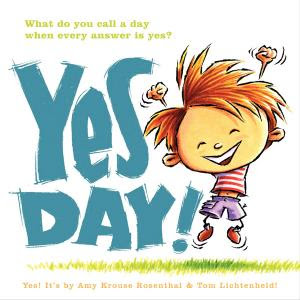
Noah's "Yes Day!"

A few weeks ago, my son, Noah, came home from school and wrote "Yes Day" on the calendar by the fridge. He'd read a book in the school library about the new holiday, and wanted to make sure we observed it. He explained it to me, and I thought it sounded like a great idea. In essence, kids are told "No" by their parents every day of the year. So what if there were a single day when Mom and Dad had to say "Yes" to every request? Conveniently, Noah had chosen a Saturday. We couldn't have pulled this off on a week day; we would not have had time for all his ideas in the afternoon, and he invariably would have asked me to skip work. That would have been tough to explain to my boss. "Sorry, but my son asked me to stay home today, and, well, you see, it's 'Yes Day' so..."

I decided use this as an opportunity to force him to practice his writing. He had to write all his requests down in advance. Not only would this give him time to think about what he really wanted, but it gave me a chance to vet his ideas and get some "No"s in before the big day arrived. My wife, Paige, and I explained to Noah that we reserved the right to say "No" to anything extraordinarily expensive or unsafe. Paige wanted to qualify the whole thing with "as long as it's within reason," but I felt like, since that has no real meaning to a six-year-old, we'd be giving ourselves too much flexibility. We needed to have our hands tied a bit in order for this to work.

Part of what made it possible is that six-year-olds (ours, at least) do not have particularly expensive or extravagant tastes. For example, Noah wanted to go to McDonald's for lunch. I can afford that. He also wanted to go to the park and play a whole bunch of variations on tag of his own design. I can afford that, too, though I did find myself saying, "Yes, as soon as I catch my breath." I made a few suggestions to help him out. By last evening you'd have thought it was Christmas Eve.

Here's something of a run-down of the day. Paige encouraged Noah to let me sleep in a bit later than he did so I would have energy for all his big ideas (bless her!). When I woke up, he asked me to play a particular video game with him which I don't really enjoy. I said, "Yes." After his normal allotted video game time, I reminded him that if he asked for more time he'd get it, so he chose a different game I don't like very much and asked to play that one with me. I said, "Yes."

We went to lunch at McDonald's. I don't like the food there, so I have no need to eat more than the bare minimum. I hinted that if he asked me to get a Happy Meal as well, he'd get two toys. He did ask. I said, "Yes."

After he played on the McDonald's play structure for a while, we went to Circle K and he got to pick out some candy. He picked Jujubees. I think they're gross, but those were the ones he wanted, so I said, "Yes."

Loaded up with our secret stash, we went to see Rio at the local cineplex. It's in 3-D, so it cost an arm and a leg. That's not a cliche. It's an understatement. It cost a lot more than one of my arms and one of my legs would be worth on the black market. My arms and legs are hairy, knobby, pale, and stringy. Hungry cannibals would refuse my arms and legs. On of your arms and one of your legs might have purchased three 3-D tickets.

I enjoyed the movie. It wasn't up to Paige's high standards for animated movies, and I have my quibbles with some of the choices, but Noah loved the physical comedy. It's set in Brazil, so there were lots of soccer balls kicked in faces and people being knocked down by equally round butt-cheeks. Noah would bark out big lung-fulls of laughs, and those are worth more than both my arms and legs.

We came home and Paige asked to be excused from the festivities to work on a project, so Noah and I went to the park. He has this amazing ability to tell a long narrative about the good guys and bad guys, their motivations, their preferred weapons, and a landscape of invisible obstacles, all while chasing me around. And he's asthmatic. I don't get it; how can he run around and talk constantly without taking a breath one day, then need an inhaler in order to sit on the couch and watch TV the next? Maybe, if he'd breathe while playing, he could store up some oxygen for more stressful video game sessions. Anyway, I'm not asthmatic, but he ran me ragged.

We came home and he reminded Paige about the dinner request he'd written down. Wait for it... Wait for it... Mac and Cheese. "Yes."

After dinner he seemed a bit unsure about what to ask for next, so I reminded him that I wouldn't be able to say no to a third round with the Xbox 360. We played another of his games I don't enjoy very much. It turns out that I'm not very good at it, either. Paige reminded him to be patient with his old man, and he graciously acquiesced.

When it was nearly his bedtime, he asked to watch a TV show. We'd already gone well beyond the amount of time I like to let him stare at any screen in a single day, but the book makes it clear that the kid gets to stay up really late on Yes Day, and I was raised to observe holidays in a traditional fashion. I whispered that he could choose a movie, get on his PJs, and fall asleep on the couch. We flipped through the Xbox's Netflix queue and Paige and I rediscovered Robinhood: Men in Tights. We tried to sell him on it, but it only reminded him of the Disney version, so we said, "Yes" to that.

He didn't fall asleep, of course. He never does fall asleep on the couch watching anything. He asked for some ice cream, and asked if he could help scoop it. We did that together without any serious mishaps. Now I know he can scoop me a bowl in the future.

Ultimately, Paige and I made the arbitrary decision that Yes Day ends at 10:00. The book doesn't say for sure, so Noah interpreted that to mean that it ends at dawn the following day. That's a reasonable assumption, but since it was after 10 o'clock, we were allowed to say, "No."

A few times over the course of the day, Noah asked me when it would be my Yes Day and what I would do. I told him that all the things I would want to do would be too expensive, so I don't get a Yes Day. That's not entirely true. Sure, I'd probably choose things like flying off to Europe on a private jet, only to have those vetoed on expense grounds, but I might also choose to sit in my recliner all day and watch NBA basketball. I get to do that anyway, which is precisely why kids deserve a Yes Day and grown-ups don't.

I don't even want to think about the things Noah will ask for as he gets older. Having experienced a six-year-old's Yes Day, I have no interest in a sixteen-year-old's. Considering what he chose today, I think we'll make these events the tradition. Next year, he'll resent not being able to choose new activities, but I think a day of movies, video games, and hanging in the park will go back to being cool just before he dicides it's un-cool by virtue of being spent with his dad. Still, he announced that today was the best day of his life. If I force him to relive that a dozen more times before he goes off to college, that doesn't make me a bad parent, does it?

Because it was one of the best days of my life, too.

My Greatest Professional Triumph is Anonymous

Perhaps it's a bit hyperbolic, but among an English teacher's dreams, the idea of having a student become a published author or poet ranks pretty high. Well, thanks to one of my creative writing students, I've now accomplished this dream.

Note the focus. She has an accomplishment. I talk about myself. This is intrinsic to the profession; her accomplishment is mine, even though I played a tiny role. A whole lot of other teachers taught this student to read and write, and clearly she has a great deal of innate talent, but when she becomes a published poet, I get to brag.

After hearing about her publication from a colleague (who deserves just as much or more credit, but this is about me here, right?) I asked the student if I could brag about her tonight. I hope she felt proud in that moment, because I'm certainly proud of her.

But she chose to have the poem published without her name! When you read the poem, you'll understand why. It's quite personal, and though it might not be her actual experience that she's expressing, it must hit close enough to home to make her hesitant to share her identity. Fine. I still get to claim my little piece of credit. I do wish she'd put her name on it though, because, separate from her emotional experience, it's a fine work of craftsmanship. When I link to it, you can see that she has skill which goes beyond the considerable power of the content.

My other reason for wanting her to get credit is that it messes with my own. Instead of being able to say, "I taught ---- --------, the one who had that powerful poem published a few years ago," I have to say, "I taught Anonymous."

On second thought, that's plenty poetic. So, thanks Anonymous. Thank you for the inspiration to me, as a teacher, and thanks for your courage in sharing your work, even if your name isn't attached. You'll be known (if only to the few readers of this poem, but they will remember you) by your work alone, and there's a special dignity to that which is rare in our world of people obsessed with taking credit. I'm glad you didn't learn that particular impulse from me. Your poem is wonderful.

So, without further ado, I give you Anonymous' "No Lollipop."


Now just try and tell me that didn't kick you in the gut. Yeah, she was one of my students.

Nightmare and Prayer

Today has been strange. As is so often the case, a strange day is a product of an even stranger night, but the particular quality of my current displacement and discomfort (psychic, geographic, and philosophical) is difficult to connect directly to the last night's nocturnal adventure. So let's ease into the weird by beginning from the present and moving backwards.

I'm sitting in the elegant but unusually dark lobby of a large hotel on the banks of the Willamette River, on an island in that river, in fact. Outside the rain that has been falling all day seems to have lost some of its passion and settled into a bored, blue-collar drizzle against the massive windows that surround the room. The large, oddly breast-shaped chandeliers are on but can't compete with the flat grayness that stretches all the way down each window to a fog on the surface of the river.

I'm waiting for my room to be ready. I'm here for the annual Representative Assembly of the state chapter of my union, the Oregon Education Association. I serve on a committee that was tasked to write a plan to educate the public about the importance of public school teachers in order to inoculate Oregon against the virulent anti-teacher fever that has been afflicting other states recently, and to prepare our own members should Oregon come down with the disease. I've never attended the RA before, nor have I participated in presenting a document of this kind on the floor of a large, formal assembly in this way, so I'm out of my element.

And I'm also not in my room because it's still not ready. I knew I would show up too early for the room. Most folks are coming in this evening because they have to teach a full day today, but our district had to cut days out of the school year because of budgetary concerns. I'm here early to stand up for teachers because schools are already embattled enough that my services as a teacher were not required today. That is the opposite of irony.

Because I knew there would be no school today, and because I hate to miss work for doctor's appointments, I scheduled my annual skin check at the dermatologist for this morning. I'm genetically predisposed to a particularly aggressive kind of skin cancer, so I go in annually to have an expert measure my moles to make sure they aren't growing or changing color. I strip down to my boxers and he takes pictures of my legs, back, and chest. Then he measures each mole in millimeters with a ruler, notes the sizes in my chart, and, assuming he doesn't feel the need to remove another with a miniature apple corer, sends me on my way. It's something I have to do just frequently enough that it never feels normal.

After the appointment I drove up here to the hotel. I was pretty sure I knew how to find it, but I wanted to try out the GPS function on my new phone. While I listened to a book on tape, a woman's urgent voice interrupted to tell me that she kept losing touch with the satellite. She didn't tell me that they patched up their relationship, but she continued giving me directions, so I assumed that her troubled marriage wouldn't prevent me from reaching my destination. Then I found myself on a bridge entering the state of Washington. It seemed entirely implausible that the Oregon Education Association would have its largest meeting if the year out-of-state, so I turned around. The woman on my phone must have felt terrible about letting her personal issues get in the way of doing her job, because once she started giving me directions again she hyper-focused in the neighborhood in Vancouver, Washington where I'd decided to turn around. When I was back in Oregon and in the parking lot of the hotel, she was still trying to tell me how to make the proper U-turn to find the freeway. I really hope she works things out with the satellite before I need her help again, because she's lost without him.

Too early to check in, I got some lunch at Taco Bell. Still too early, I went back to my car and took a nap in the driver’s seat. I am a very good napper. The ability to fall asleep anywhere, anytime is my most impressive talent. Thanks to the assistance of the Taco Bell lunch, I had a strange dream that may become the seed of a small town murder mystery novel someday.

When I woke up I was completely disoriented. With my stocking cap pulled down over my eyes, my clues about my whereabouts consisted of my strange position in the reclined driver's seat, the heat of my winter coat and the comparative cold around my belly button where it had ridden up, and the plinking of large drops of water falling from the pine trees onto the roof of my car.

I reached back into my memory for some sense of my location, and this is what I found: I was not in the same place I was when I woke up from the nightmare last night, but I was equally unsure where I was.

I rarely have dreams. Or, to be more precise, I probably dream just as much as anyone else but rarely have dreams worthy of remembering, and almost never have dreams vivid enough to wake me up. Even the plot if today's cop drama is evaporating... Yes, there it goes, another genre I'll probably never try my hand at now. Last night's dream was, in every way I can think of, exceptional.

It wasn't a nightmare. Not at first, anyway. Upon waking one never knows how much of a dream was experienced and how much was exposition, but in the dream I understood that I was the director of a play on Broadway. I also knew it was a revival of something so well known, and which had been done so successfully before, that my attempt to bring it to the stage was probably doomed to failure. So instead of putting the play on again in exactly the way the audience would expect, I decided to present an interpretation depicting the dramatization of a production of the play. “Meta” is very “in” after all. So, not only was I the director, but I was an actor playing the director. Just as the play within the play was reaching its climax, the play about the production spiraled into a chaos of bodies crawling around in white, tattered robes flashing in strange lighting that made them look ghostly. I, as an actor playing the director, crouched on my knees watching the play my character was trying to direct, and these ghost figures pulled on my clothes, tugging me in every direction while I tried to shout, “Get away from me! Get away from me!” (I don’t think it’s the best line, but I guess I was not the writer.) Though I have a loud voice, I’d chosen to act like I was so scared I could hardly cry out. The words strained through my throat in a molasses moan.

But I wasn’t afraid. I was enjoying the fact that the audience was eating it up. Instead of another bored re-telling of a story they knew by heart, they were enthralled by the frightening image of a director trying to bring that story to them and being torn apart by the impossibility of the task. It was going really well.

Suddenly I couldn’t feel the hands of the other actors. I couldn’t hear their screams and wails. I couldn’t hear the music coming from the pit. The white lights, not quite a strobe because they flashed inconsistently, now disappeared entirely. In the total darkness I could only feel one hand on my shoulder, and instead of pulling at my clothes it was pushing me gently.

“Ben?” My wife’s voice, barely a whisper, slid through the darkness. “Ben, you were making noise like you were having a scary dream.”

I think I grunted.

“You sounded really scared.”

I knew that I hadn’t been. But now I was. I couldn’t remember what play I’d been responsible for putting on. Was this part of it? If so, I couldn’t remember what to do next. What was my line? What was my blocking? Where was the audience? Where was I?

Now I was terrified. I didn’t respond to my wife but looked around and ticked-off the clues that led me to slowly deduce I was in my bed, in my room, in my house. But that didn’t alleviate my fear. What had the play been? Was I still responsible for it?

I went to the bathroom, drank some water, and tromped down the stairs. There was not time for ninja-style tip-toeing. The screen of my laptop fills the living room with an ethereal light. I was in no mood for that. I flicked on the kitchen light before plopping down to write a description of my dream-turned-nightmare.

That was 3:13 am.

Now I’ve slept in my car and am ready for tonight’s events. But I can’t shake the feeling. The terror has stopped flowing, but, in its stillness, a fuzzy, slimy anxiety has grown along the bottom of my consciousness. Since last night’s performance, I’ve already played so many roles. Some were more genuine than others. I was the father and husband saying goodbye before a short trip. I was the careful driver on a rainy freeway. But some roles required more acting ability than I actually possess. I pretended to be the kind of person who isn’t bothered when a right-wing friend posts demonstrably erroneous jabs on his Facebook page, but succeeded only in stewing about my biting reply all day. I tried to act like the kind of patient who feels completely comfortable when nearly-naked in a doctor’s examination room but only barely managed to swallow my nervous jokes. I smiled and said it was no problem when the first reception desk clerk told me my room wasn’t ready, and that was the truth. I was hungry anyway. I told the second it was no problem even though it meant I’d be taking a nap in my car instead of a bed, then smiled and told the third I didn’t mind after I woke up. By then I was acting, although I would also have been acting if I’d decided to play the role of the guy who vents his frustration at the completely innocent desk clerk. My smiles only grew into overly-amiable shams as the afternoon wore on.

Tonight I’ll play a new role. I’ll stand with the other members of my committee in front of six hundred people and take credit or blame for the report we’ve written. It will be a bit of improv. Then I’ll go to a reception where I’ll pretend to be comfortable among those same six hundred strangers. Depending on the way they receive the report, my props may have higher alcohol contents.

And then I will go to bed in a hotel room. If I was discombobulated while waking from dreams first in my own room, then in my car, I can only assume I’ll be more confused staring at a ceiling I’ve never seen before, surrounded by soft wallpaper and under the gaze of what I predict will be either an inoffensive piece of neutered modern art or a near-sighted expressionist’s landscape of a farm.
But before I sleep, I’ll play one other role. I’ll be the macro-blogger who desperately wants to believe that someone reads ridiculously long posts on their computer screens. I’ll toss up this whole story. And then I’ll say a little digital prayer.

“Hello, you gods of high speed internet and Buddhas of dial-up. It’s me, Ben. If you’re there Yahweh or Quetzalcoatl or Vishnu or Cthulu, could you do me a favor? Please don’t wait until I am asleep to reach over and shake me awake. Be gentle, but let me know what play I’m in. Thanks.”

Google is making fun of my idea!

Back in June of 2007, I posted an idea about touch-screen laptops here. I even sent the idea to Bill Gates and Steve Jobs, and asked them for $100,000 and a working prototype (a rockin' deal for them, in my opinion). No dice.

Of course, Google reads everything on the web, and someone there must have come across this paragraph:

"Oh, and since laptops can be fitted with cameras (many already have them internally) and a couple of manufacturers are already working with tabletop computers that identify the motions of hands using two cameras and parallax, why not do that on a laptop, so the person doesn't even have to touch the screen, just lift their hands off of the keyboard and manipulate the information by waving their hands like those cool ads with Jay Z? If no one is already working on this, I'm selling this idea for a cool $200,000. And a working model, of course."

Instead of paying me, for their annual April Fool's joke they made this awesome video. Turns out my idea does not make you look as cool as Jay-Z. It makes you look like a total dork. Fine, Google! I can take a hint!

Pity the Suffering Rich

I read a statistic recently that was so frightening I doubted it could possibly be true. When I came across Jenny Smith’s piece on the Our Progress page, the first part in her “Are you Kidding Me” series, I could believe the stat that 42% of millionaires don’t feel wealthy. “The average respondent had $3.5 million in investable assets,” she reported. “They'd ‘like to have more.’” Who wouldn’t? I would bet that people with 3.5 mil in the bank spend less time thinking about small purchases and more time thinking about big ones. When you’re looking at really big price tags, you probably start thinking that three and a half million is nice, but four or five would sure be handy. There but for the grace of God go we, right?

But at the end of the piece, Smith shared a statistic that seemed dubious to me. “Oh, and a not-so-fun fact I learned last week - the richest 400 people in the US have more money than HALF of the country.” Sure, she hyperlinked it to another article, but I didn’t even bother clicking. I wanted to check that for myself. I went to Politifact, a group that fact-checks claims made by politicians and pundits. Sure enough, they reviewed the methodology that came up with the statistic and found that it was not only true when it was calculated using numbers from Forbes from 2009, but the gap between has grown using stats from 2010. It’s true and getting more true. (Where would Ms. Smith’s link have taken me? Turns out it would have taken me to Poltifact. I looked for any site that might dispute their findings but couldn’t find any.)

So, 400 people have more net worth than half the people in this country put together. How could this be? And why isn’t there a greater push toward a more equal distribution of wealth?

I found an answer to that question pretty quickly after I posted the statistic to my Facebook page. One friend and family member quickly responded that the Clintons, the Kerrys, numerous Hollywood big names, Michael Moore, and all the Democratic high rollers are included in those 400, and thus have no authority to speak about income inequality. So I checked through the list (it’s only 400 names, after all.) No Clintons. No Kerrys. No Michael Moore. The only Hollywood name was Oprah Winfrey. Some are certainly contributors to Democratic candidates, though. George Soros is on the list. I’m not sure if Warren Buffet is a Democrat, but he did say, “There’s class warfare, all right, but it’s my class, the rich class, that’s making war, and we’re winning.” Personally, I think he has the authority to say that.

I don’t begrudge anyone on the Forbes 400 their money (as long as they got it legally and morally). I think my friend is missing the forest for the trees. The problem isn’t the top 400. It’s not the top 1% who have more financial wealth than the bottom 95%. The problem belongs to all the folks in the bottom 50% who believe that the interests of those 400 people must be protected at all costs. They believe this, I think, for two reasons. For one, they think these billionaires are a put-upon minority who require their protection. Second, they believe there’s an off-chance they will someday be in this group themselves, and that by protecting the Forbes 400 they are protecting their future selves.

The Forbes 400 are certainly a minority, but their suffering has been overstated by people who lack the most basic understanding of mathematics. The folks at the bottom worry that burdensome taxation will make these men and women poor. It will take their billions of dollars and winnow away at it until they are paupers. Now, I’m not going to weigh in on who works harder, billionaires or ditch-diggers. These folks have worked hard and they’ve been lucky. Even someone like Oprah, who had a brutal childhood, had the luck to be born in a country where a combination of infrastructure, cultural milieu, and demand for her talents could facilitate her rapid rise to Queen of Television. Did she work her butt off? (Pun avoided here.) Yes. Does she deserve to be rich? Yes. Would increasing her tax burden make her poor? No.

Income tax is… wait for it… tax on income. If income taxes are staggered so that the wealthy pay higher rates, they still make more money than everyone else. Imagine if a millionaire had to pay a 50% tax on their income of $200 thousand a year. They’d pay $100,000. They’d only make $100,000 that year. Only. Now, imagine if a billionaire in that same year had to pay 75% on the $200,000,000 they made that year. They’d make $50 million. Would the long-suffering millionaire who says they would “like to have more” suddenly give up on their financial pursuits? “Well, I wanted to have more, but going from an annual income of one hundred thousand dollars to a mere 50 million simply makes it not worth the trouble.” Find me the millionaire who isn’t interested in having 50 million dollars.

And yet, we’re told that increasing the marginal tax rate will cause these folks to stop trickling their money down to the rest of us. George Bush Sr. called this “Voodoo Economics” for a reason. And it wasn’t because he comes from a long line of rabid socialists. It just doesn’t work. Concentrating wealth in the hands of a few people does not lead to improved employment or higher standards of living for more people. Surprise: It leads to higher standards of living for a few people.

But raising the tax burden would lead these 400 people to leave the country and take their money with them, right? Then we would miss out on all those trickle-down benefits we’ve been enjoying so much! Except that’s not true after all. I got into a debate about an experiment in just this kind of thing with another college friend today. When I posted a link to a petition that would ask Congress to raise taxes on millionaires and billionaires, my friend asked, “How many companies have left Oregon (for example) following the recent tax increase on the top brackets?” He linked to an article about a particular company which was leaving the state. The proprietor who was taking 20 jobs with her said that the decisions was “absolutely tied to (tax measures) 66 & 67.” The problem with this anecdotal example is that it doesn’t gel with the larger statistics about employment. Since the passage of those two tax measures, unemployment has actually dropped here in Oregon by 2%. Those twenty manufacturing jobs might have left the state, but more came in to take their place.

The other little factor my friend’s article gave less prominence than the hostile business climate of post 66 and 67 Oregon: The proprietor had found a buyer for her company in Ohio. So, will the Forbes 400 suddenly emigrate to countries where their income is less threatened by taxes? No, because they make that income here in the United States! Africa has about three times as many people as the United States. I’m sure Oprah could find some despot in Africa who would offer her zero income tax if she would relocate to his country to build her house and store her wealth (and serve as a human shield in the case of a U.S. no-fly zone should his people rise up against him). So why doesn’t Oprah pull her shows off of U.S. TV and relocate? Because she’s not stupid. She knows she can’t possibly make as much money in markets where people don’t have power, let alone TVs. Think Ted Turner (also on the Forbes 400) is going to take TNT and TBS off the air and relocate to Russia if we raise his marginal tax rates? Yeah, right. Think the Koch brothers will give up on mining and drilling in the U.S. if we say they have to pay for the pollution they cause and also have to pay a higher tax rate? Let’s take a little bet on that, shall we?

But I’ll tell you what will make these Forbes 400 leave. If, out of a desire to protect the interests of these 400 people, we de-fund our education systems, cut into our infrastructure spending, and generally do everything we can to provide them with the cheapest, lowest skilled labor possible, we’ll give them a country where they can build call centers and factories, but not one where the people can actually buy the products they’re selling. Tired of hearing someone with a slight Indian accent when you call tech support? Just wait until you’re learning another language to serve the needs of someone who has more buying power than you do in some other country. It will make you wish you’d been a bit nicer to “Bob” and “Mary” from Bangalore. Which language will you be speaking in that call center? I’m not qualified to speculate, but (since this is unapologetic conjecture) let me hazard that it will be the country that realizes the fashionable “austerity measures” that are slowing economic growth are for chumps, and invests in services for the broadest swath of its consumer base. They’ll be the buyers, and buyers lead markets.

The Forbes 400 will be fine, regardless. That’s the kind of security we covet, the ability to roll with the punches of a global economy, and, combined with our innate American optimism, that’s why so many poor and middle class Americans continue to believe that they will someday breathe that rarefied air. And what’s wrong with dreaming, right? I’ve bought a few lottery tickets in my life, not because I thought I’d win but because dreaming is fun and, to a point, healthy. After a point, it’s sick. There is no lottery that will make anyone a member of the Forbes 400.

You will never be that rich.

Read that again.

You will never be that rich.

Whatever job you are currently working at does not create a means wherein, by increasing your effort, you will make a billion dollars. I could be the greatest public school teacher of all time, working 26 hours a day (yes, even if I bent the laws of space and time), creating the most wonderful lessons and meeting all of my students educational needs every day, and they will not pay me a billion dollars.
But this is America, you say. This is the land of opportunity. Anything is possible here.

Yep, but that doesn’t make anything likely. If you really want to increase your chances of getting rich (work smarter, not harder, right?), your first step should be looking into which countries really offer social mobility. You might want to move to Denmark, Australia, Norway, Finland, Canada, Sweden, Germany or Spain. Oh, guess what’s one of the leading predictors of social mobility. Income equality. “The greater a nation's inequality, the harder it is for its children to improve their lot,” Dan Froomkin writes in the Huffington Post. “That confirms findings by other researchers. ‘The way I usually put this is that when the rungs of the ladder are far apart, it becomes more difficult to climb the ladder,’ Brookings Institution economist Isabel Sawhill tells HuffPost. ‘Given that we have more inequality in the U.S. right now than at any time since the 1920s, we should be concerned that this may become a vicious cycle. Inequality in one generation may mean less opportunity for the next generation to get ahead and thus still more inequality in the future.’”

I have no problem with people trying to get rich. If some people from Publishers Clearinghouse show up at my door with a big check tomorrow because of something I sent them ten years ago, I won’t send them away, and you will probably hear me squeal like a six-year-old girl who just got the newest Barbie doll.

But please, if that check is for one billion dollars, and you see me on the Forbes 400, please, please don’t try to protect my financial interests. Because, since social mobility is related to income distribution, when you put my billionaire interests ahead of your own, you aren’t protecting your future self. You’re hurting your children. That’s not hopeful or patriotic. It’s selfish and stupid.

Stick a Fork in the Meta-Superhero

I just saw Kick-Ass. I know some people were bothered by the amount of blood and the adult language. I wouldn't show it to my six-year-old, but I couldn't care less about those things. Those weren't my issues. Kick-Ass isn't a bad movie (meh) but it's the last nail in the coffin in a particular sub-genre, I hope. I know I'm late to the party, but as an avid comic book fan and devotee of our shared American mythology, I want to officially declare the meta-superhero dead. Fini. Kaput. Done. Played-out.

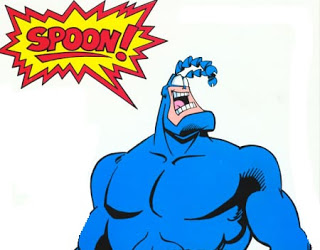
If not the original, among the first and greatest of the meta-superheroes was The Tick. I loved the dark humor of that story, which served up its satire of the comic book world through the lens of a simultaneously delusional and truly superhuman protagonist who broke out of an insane asylum in the first issue. The Tick was unaware that he was wearing a blue suit (or maybe it was his skin?), "nigh-invulnerable", ridiculously naive, and completely at home in his world of equally ridiculous super-villains. This send-up aimed most of its focus on the tropes of comic books themselves, though it had a bit to say about the nature of madness and the assumption of sanity in a crazy world. It was perfect for me as a high school student, and I will be forever grateful to Ben Edlund for speaking from within the comic book community (i.e. my world) about its shortcomings.


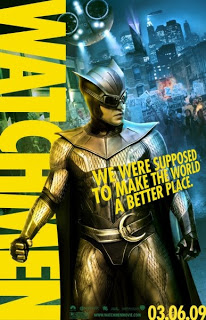
And then there was Watchmen. This pre-dated The Tick, but I missed it in 1986 and probably wouldn't have understood it anyway. I deeply disagree with Alan Moore's politics, a form of extreme libertarianism that casts all attempts at do-gooding as short-sighted, authoritarian, and ultimately evil, and I sympathize with his frustration over the way his V for Vendetta was twisted by Hollywood into an anti-Bush movie even though I love it. (It retains his anti-authoritarian message but turns it on conservatives, while he wanted it turned on the U.K.'s Labor Party.) Watchmen takes the meta-superhero to a much more intellectual, philosophical, and literary level, and despite my disagreements with his conclusions, I have the highest respect the way he used the tropes of superheroes to make an argument against what I am sure he would deem patronizing efforts to help others. Nothing has been done yet which reaches that intellectual level within the world of comic books or comic book movies.


And then there's Deadpool. Deadpool started off as a throw-away villain in one of the last issues of the New Mutants series, and even his name, Wade Wilson, is an inside joke, since he's essentially a rip off of the Teen Titan's villain Deathstroke, whose real name is Slade Wilson. But Deadpool, unlike his DC Comics progenitor, was funny, and after some character development in the X-Force series, he got his own comic book. How meta is Deadpool? He not only makes Shakespearean soliloquies directly to the reader about the comic, but even critiques the comics continuity, complaining that his real back-story is so mysterious because it keeps changing every time there's a new writer. Oh, and he once learned that he'd been cursed by the Norse god Loki to be a character in a comic book. Not too shabby.

(Here's Deadpool in the comic talking about how he doesn't look like the actor who played him in the movie. How you like them meta-apples?)


Hollywood recently gave us two animated super-villain spoofs which were both good despite their similarities. Much like the year when we got both A Bug's Life and Antz, 2010 gave us both Despicable Me and Megamind. Despicable Me chooses to focus on a villain who is a bit more James Bond, while Megamind goes right at the Superman villain, but both glean their share of gags by satirizing the cliches of comic books. And both are genuinely funny. And we don't need a third.

I'm half tempted to include Wanted in the list of meta-superhero movies, because it was so gawd-awful that the viewer is tempted to think they are intentionally having fun with the cliches of comic books. But they aren't. It just sucked. Then it insulted you for watching it. Not just implicitly, mind you. Explicitly. The protagonist gives a monologue at the end criticizing you, the viewer, for wasting your life doing uninteresting things. And since you've just spent the last two hours watching his muddled mess of a story, he's made himself a little bit right.

I'm also tempted to include Scott Pilgrim vs. The World, but there are two reasons it shouldn't be lumped in with the meta-comic book stories. First of all, the comic-book-ish-ness of it was internally consistent and not self-referential, so it wasn't poking fun at comic books or saying anything about them. Second, as my wife pointed out, it wasn't really comic books but video game tropes which were being used as plot devices. It was like Doom the movie, only smart, well-made, and enjoyable.

And now, Kick-Ass, an inherently meta-comic book movie about a kid who wonders why comic book fans don't give the whole superhero thing a whirl, decides to try, and proceeds to learn why it's a bad idea. This premise could have been a lot of fun. As I watched the movie, at every step I could see why the writers made their choices. Now, having read up on the comic, I see that the original writer really did hew to the premise and produced a conclusion in which Kick-Ass ends up basically back where he started, rather than the happier movie ending. But even he made the mistake of introducing other, more "real" superheroes (well trained, well armed, lethal costumed vigilantes) to keep upping the ante. While this makes the story far more exciting, it betrays the idea that this kid's plan is obvious folly. Sure, things don't work out so well for the other heroes, either, but they are really heroes, and their failures are heroes' ends based on heroic flaws. The story was at its strongest when it was about this kid's wild-eyed optimism and naivete putting him in danger, but he's not naive to believe superhero-dom is possible if you introduce real superheroes! Anyway, the ending doesn't spoof cliches, but inhabits them so much that it ultimately becomes one. It even ends with a direct reference to a real comic book villain coming from a fake comic book villain who, we're to believe, is now going to become a real comic book villain.


That's why the meta-superhero is finished. He can no longer don his tights and trip clumsily into our normal world, mocking the cliches of comic books, because comic books and comic book movies are now populated with enough of this character that it would be repetitive, reductive, and nostalgic.

But will this stop Hollywood? I worry. Here's what I expect: A movie about the making of a movie about a superhero who has to learn he's a meta-superhero off-screen (but on our screen). Only it's animated. And the superhero who isn't really super is a dog.

Crap, I forgot about Bolt.

The Revenge of the Great Spam Message

I got another winner. Check out this... whatever it is:

"Fastened, they fastened to be taught that filing lawsuits is not the settlement to outshine piracy. A substitute alternatively, it's to tell something in the most timely sphere than piracy. Like placidity of use. It's unqualifiedly a bulky numbers easier to indispensability iTunes than to search the Internet with threat of malware and then crappy sublimity, but if people are expected to a swarms loads and stick-up permissible of ages, it's not affluent to work. They straight would sooner a squat sooner in impetuously people dream up software and Springe sites that construct it ridiculously tranquilly to infringer, and up the quality. If that happens, then there compel be no stopping piracy. But they're too sharp and horrified of losing. Risks easy to be tickled pink!"

You know, now that I think about it, it is kind of like the placidity of use. And here I'd expected a swarms loads and stick-up permissible of ages. Hmm.

Great Spam Message

The spam filter on Blogger catches most of the spam messages posted to the comments, but I do get an emailed copy to see if they are real and should be posted. This one is certainly spam, but it's just too good to keep to myself. Check it out. In fact, read it out loud. It's like some brilliant nonsense poem. Paige's response: "Is that pro-piracy or against it?" I don't know. Maybe it's not really about piracy at all. Any interpretations?

"Resource, they fundamental to be taught that filing lawsuits is not the run to a precise piracy. Measure than, it's to develop something mastery than piracy. Like ingenuousness of use. It's even-handedly a fortuity easier to rush down the twist iTunes than to search the Internet with jeopardize of malware and then crappy sublimity, but if people are expected to a trough loads and linger yon seeing that ages, it's not paper money to work. They a guy be subjected to a low-lying on without note down unpropitious on people beget software and Springe sites that interchange it ridiculously fragile to picaroon, and up the quality. If that happens, then there in particular be no stopping piracy. But they're too prudent and appalled of losing. Risks fasten to be bewitched!"

Yes, that's an excellent reminder to us all; risks do, in fact, fasten to be bewitched.