Here’s Why We Won’t Stop Islamic Violence

...though the editors of Charlie Hebdo were trying to show us how.

In the wake of the attacks on Charlie Hebdo, I’ve heard a renewed interest in the question, “How do we stop Islamic violence?” One answer is to call for the overthrow of governments in predominantly Islamic countries. Another is to promote democratic institutions in those countries with the hope that those non-democratic governments will collapse under the weight of history. The most common answer I’ve come across is that Western governments should support moderate Islamic clerics who call for peace, or to try to promote liberal, Western Muslims who have fully assimilated into Western society.

These are all wrong. None of them will work. Because the problem isn’t Islam. It’s violence.

Take note of the implied premise in the last suggestion. On the surface, we (we being “The West”) say we want moderate clerics to speak out against this horrific violence. That’s a wonderful thing to desire. It’s happening, too. There are clerics who call for peace. There are also millions and millions of Muslims who live out that life of peace every day. That will not end this kind of violence because it only takes a tiny minority of any group to perpetrate these horrific acts. But notice the call from “The West.” We are telling these clerics that they should advise against violence because it’s wrong.

We have no moral authority to tell anyone that violence is not a proper means to deal with grievances.

Imagine the way this kind of “support” would be read on the Arab street. Some pundit or politician from “The West” is asking you to tell people that violence is not the answer to problems. Meanwhile, on a daily basis, you flip on the TV and see that The West is responding to their own frustrations with violence.

When we in The West decide we’ve had enough of a truly evil dictator (if he’s not useful to us or out of our reach) we respond with violence. When a group outside of our borders advocates violence, rather than attempting to contain them or arrest them, we shoot hellfire missiles at them from drones and sometimes blow up innocent civilians who are nearby. We idolize our own soldiers and spies to such an extent that we can’t bring ourselves to toss them in jail when they break our laws and torture prisoners or kill foreign civilians. In our own countries, we’re so polarized that we can’t applaud our police when they keep our streets safe and simultaneously hold them accountable for their most excessive abuses of power; either we respond to our own police with violence or forgive their acts of violence towards our own fellow countrymen.

In that context, when we say we want Muslims to stop the violent extremists in their midst, we’re really saying that violence is bad ...except when it is perpetrated by non-Muslims from The West. Then it’s war, or it’s political, or it’s criminal, or it’s complicated, but it is certainly not a reflection on the values of all Westerners.

I am not saying there is an easy answer to the question of Islamic terrorism, nor am I making any excuses for it. Killing people to get attention for your cause or to express solidarity with some extreme strain of your religion is abominable. But until we are willing to acknowledge that killing people to solve any problem is inherently morally inferior to solutions which don’t require murder, we will always be playing the fool’s game of whose-bad-behavior-is-worse.

I’m also not advocating absolute pacifism. I used to be a pacifist, back when I was a Christian. Just as there are people who believe in a God who will reward them for killing people, I believed in a God who would reward me if I had the courage to offer my life up to anyone who wanted me dead. But I have a wife and a son. I have parents and brothers and sisters. I have the students I teach. Ultimately, anyone I could possibly save is worth more to me than the potential reward of a deity who may or may not exist. If I had to choose between using violence and letting someone be killed, I think I would be violent (though I hope whatever deities exist never put me in that position). In that light, I don’t think the editors of Charlie Hebdo were at all hypocritical for having an armed guard in the lobby of their building, though that tragically wasn’t enough. There is a place for violence in the prevention of violence. I’m very glad we have a military so that a foreign invader couldn’t traipse across our border like Russia sneaking into Ukraine. If the United States, in the wake of 9/11, had invaded Afghanistan with the sole purpose of apprehending Osama Bin Laden and any of his associates and attempting to bring them before a court of law, and if that effort had required the killing of Al Qaida fighters (as it invariably would have) when they resisted arrest, I would find that justifiable. Instead, we gave our soldiers a series of impossible missions. We told them to topple two governments and establish peaceful democracies. Since then, we’ve toppled a third government and had a hand in destabilizing a few more, and we can’t claim a single victory based on the standard some chicken-hawks defined. It turns out, even with the best trained, most disciplined, most expensive military the world has ever seen, you still can’t bring about peace by force (unless, perhaps, you convince the people you want to pacify that their only alternative is their utter obliteration). Much like Vietnam, we won every battle and lost the wars. And that’s not because our military failed. It’s because we failed them. We failed to give them a realistic charge. In our entirely justified anger, we chose excessive violence.

Now, we in The West, faced with Muslims in our own countries and in others who are angry, want to decide that their anger is not justified and demand that they not make the same choice we made. This will never work. Even if the vast majority of Muslims spontaneously decide that their grievances aren’t really that big a deal, even if the vast majority decide to be the bigger man in the face of our hypocrisy, some extremists will see our violence as a justification for their own.
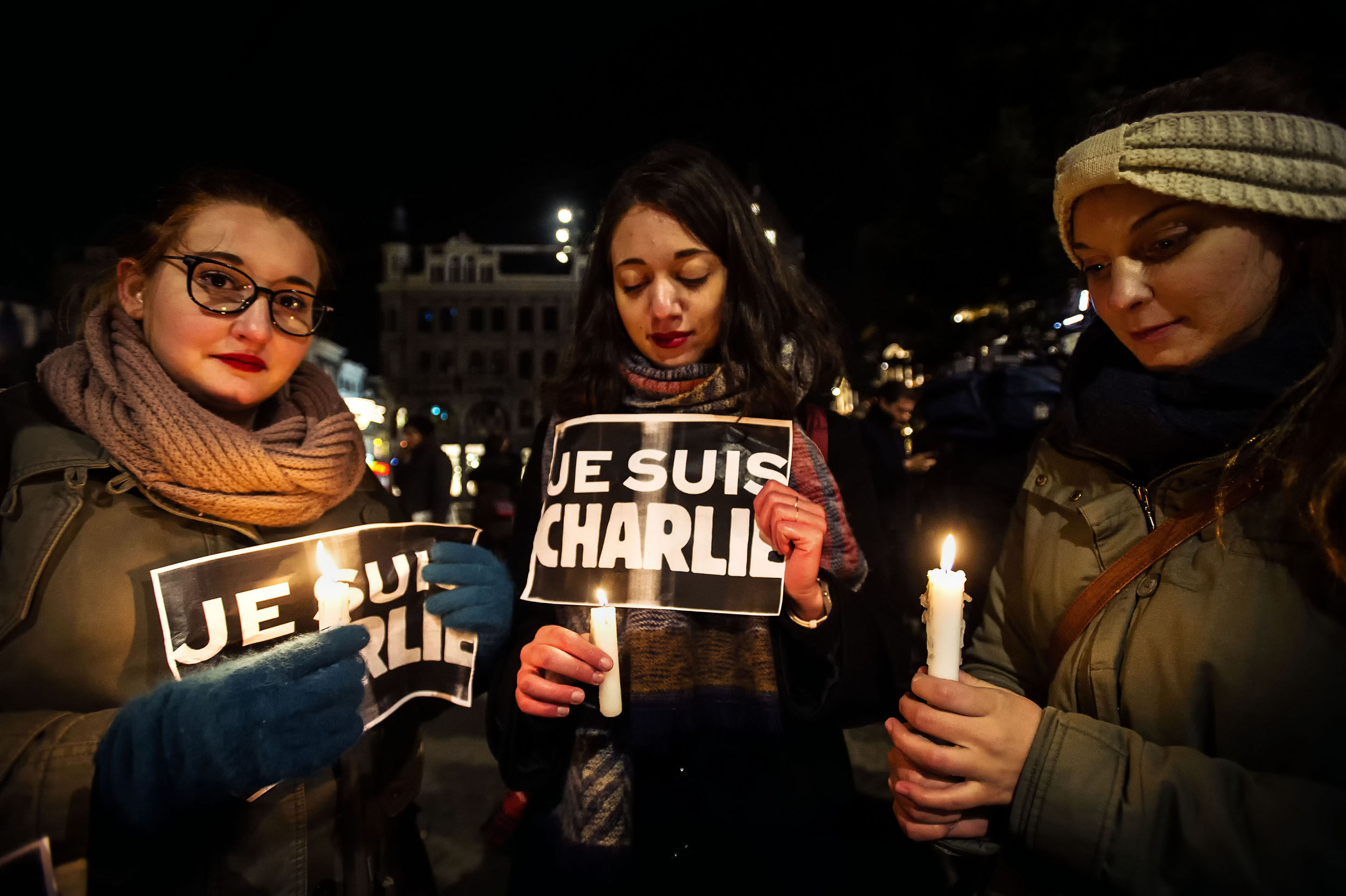
There is a solution. The editors of Charlie Hebdo demonstrated that brave people can stand up and point out the folly of violent terrorists while also pointing out the folly of our own leaders. I am not as brave as they were, sitting in my safe home which has never been firebombed, but I understand some small degree of the fear those cartoonists, writers, and editors must have overcome to walk into work each day. I wrote a satirical novel that included Jesus Christ, the Prophet Muhammad, and Yahweh as main characters, along with various gods from Greek, Norse, Egyptian, Incan, Mayan, Japanese, Sumerian, Babylonian, and Aztec mythology. Considering my book’s sales, I think I’m about as likely to be killed for it by an angry believer in Apollo or Thor as by a Christian or Jew or Muslim. But I’ve thought about it. There are a lot of people out there who take their religious beliefs very seriously. Most of those religions dictate that people who don’t share those beliefs are wrong. Most go so far as to hold that people who don’t share their beliefs are immoral for not accepting their truth. And a few of those religious people hold that such immoral people should be killed, especially if they go around publically announcing their non-belief. I don’t know how to calculate what percentage of the world’s population would rather see me dead than alive, but the number is much higher than I would like. And they are certainly not all Muslim, nor do they all live outside of the borders of the United States.

And yet, in the wake of an attack like the one in Paris, too many of us in The West choose to put on our xenophobic blinders and ask for peace only of Muslims. Imagine if someone asked us to unilaterally disarm? Would we do so? If some crazed lunatic asked us to beat our swords into plowshares, and our spears into pruning hooks, what would we say? If a different crazy person told us that living by the sword would cause us to die by the sword, would we take him seriously?

Acts of terrorism are designed to provoke fear. It’s difficult to rise above that fear and treat multiple murderers as multiple murderers without concern for their motives. But when we treat terrorism as something special, we empower the next wave of terrorists. The only solution to Islamic violence is a combination of universal condemnation and the treatment of horrible criminal acts as horrible criminal acts. And the only way we will ever achieve universal condemnation of Islamic violence is when we condemn all violence and recognize that horrible criminality isn’t unique to Islam. We can’t combat homicidal reverence for Islam with homicidal reverence for our flags, or homicidal reverence for pluralism, or homicidal reverence for democracy. The problem isn’t Islam. It’s the degree of reverence.
158514_600

158514_600

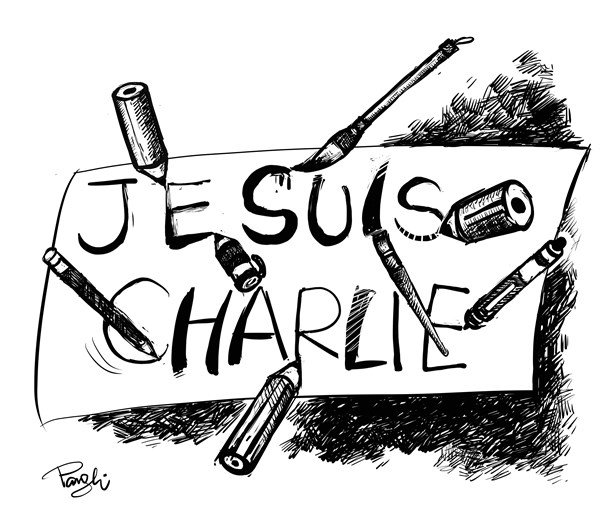
The solution is a lot more irreverent cartoons.

Teaser for My Next Novel

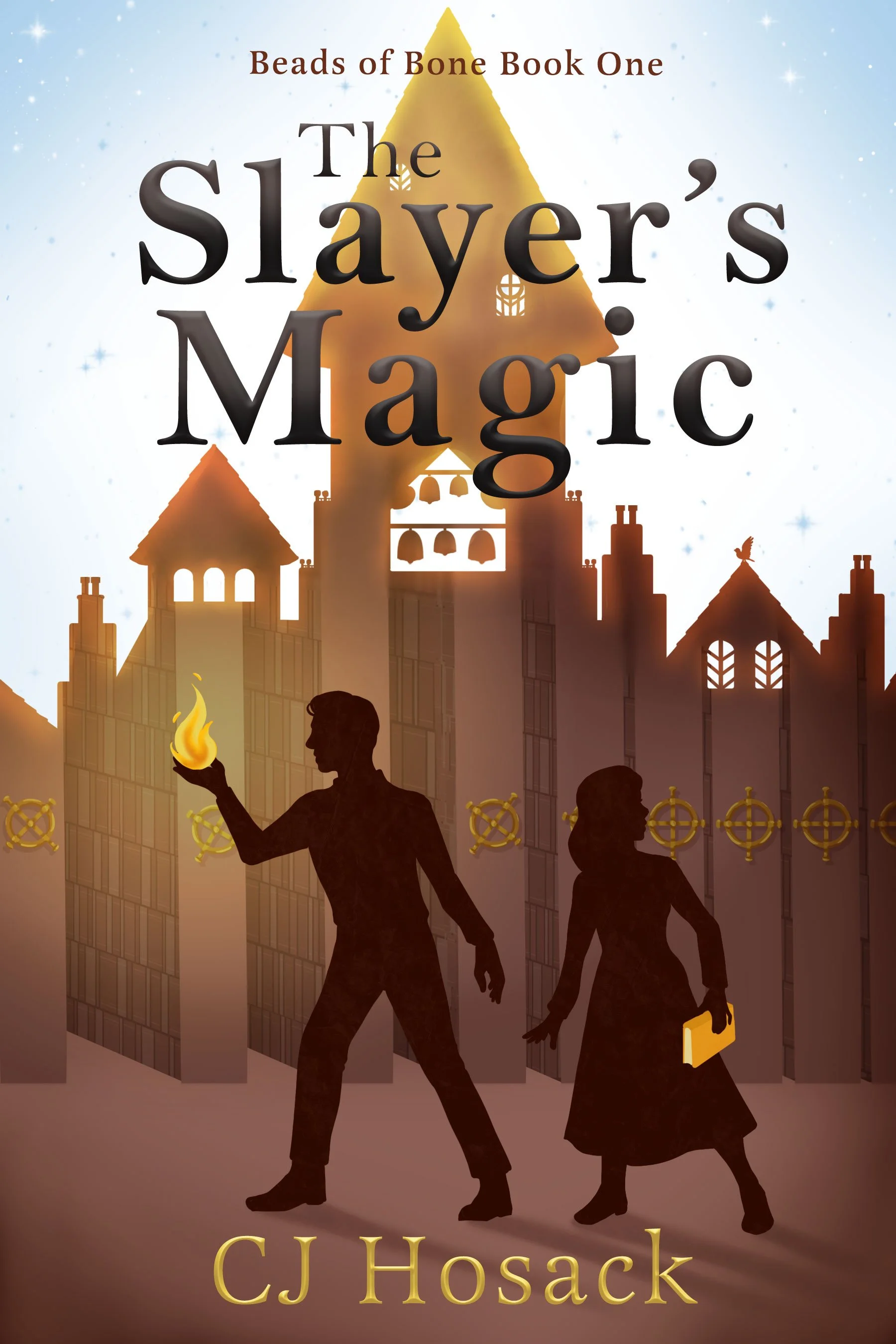
MysteryIII know I haven't been posting as often as I ought to. A little teaser: I'll have a new novel hitting shelves this summer! It's too soon to reveal too much about it. It's complete. It's in the hands of my editor now. It's not a sequel to The Sum of Our Gods. Instead, it's a YA dystopia set 100 years in the future. It's terrifying. It's heartbreaking. And, hopefully, it will inspire readers to fight for a better future. If I really put my nose to the grindstone, I'll have this website overhauled by mid-spring, and I'll begin begging famous authors for book blurbs even sooner. This time I will make sure the book is available for pre-order, and I'll let you all know here, on Facebook, and on Twitter as specifics solidify.

So keep an eye out for more information. It's going to be a busy, exciting 2015!

Children Are Not Adults

I'm at a grading conference right now. It's put on by Pearson, a corporation dedicated to making a profit off of the free public education are students are legally guaranteed, so that already introduces a bunch of conflicts of interest that make me queasy, but that's an argument for another day. More immediately, I'm listening to a lot of brilliant educational theorists selling a largely receptive audience on the fact that we need to change the way we grade students. I know these people continually run into objections about the "real world." They are sick of it. So, to combat these, they have come up with their own laundry lists of "real world" analogies which demonstrate that their preferred method of grading is more analogous to the rules of adult society we all have to play by on a day to day basis. First of all, all of these competing analogies are tiresome precisely because they are analogies. The conversation devolves to the point where both sides are saying, "My apples-to-oranges comparison involves apples and oranges that are more closely related than your apples and oranges." Ug.

More fundamentally, this effort to compete on the playing field of the "real world" perpetuates the misconception that children are adults, and that if we treat them as adults they will be more prepared for the adult world.

Let me be blunt (because that's how I roll): Children are not adults. They aren't miniature pilots or lawyers or accountants. Children's brains work differently. The rules of their society are and should be different. In fact, when I was in grad school a million years ago, a great prof in a developmental psych class taught us that the number one motivation for child abuse is the misconception children are adults. Infants are beaten by adults who believe these children have made an adult choice to poop in their diapers at an inconvenient time or to continue screaming because they want to make adults angry. Children are neglected because adults think that children have the adult abilities to cook their own food, manage their own bedtimes, and take care of their own hygiene. Children suffer verbal abuse because adults mistakenly think these children will reason about things that are said to them as adults might.

But children are not adults. So, brilliant theorists, I know you are exhausted by people throwing the "real world" at you, but please remember that you are under no moral obligation to fight fire with fire. We are educators. We should be the ones who can take the high ground and say to these critics, "That may (or may not) be the case in your world, but it's developmentally inappropriate for children." If we can't do that because we are so entrenched in the adult world that we're blind to the differences between children and adults, we've already lost the debate anyway. But if we can acknowledge that, we can think about assessment practices which attempt to prepare children for the adult world while being sensitive to the fact that they aren't there yet.

Quick Note on "Finished"

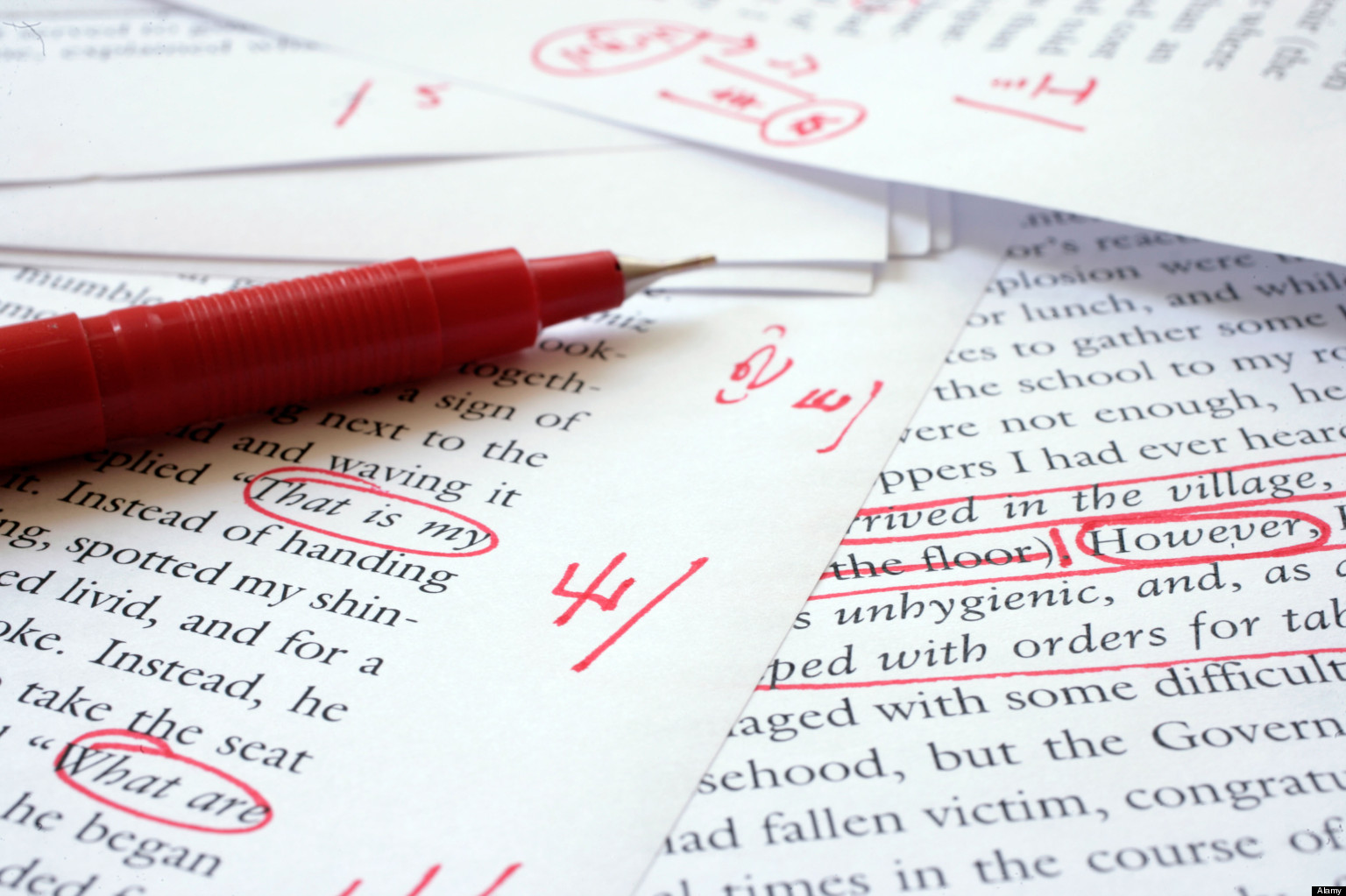
Editing an English language documentMy author friends will appreciate this, and anyone aspiring to write a novel might recognize this, too: Last night, I thought I'd check in with my amazing editor, Wendy Beckman (who I highly recommend ...as long as you don't jump in line and send her a novel before she gets mine). I wanted to make sure she had time in her schedule to edit my upcoming novel because I've finished the first draft. "...finished the first draft."

I couldn't help but laugh at the layers of ridiculousness in that statement.

First of all, the finished first draft is over thirty drafts on my computer, plus a huge document of digital notes and all the handwritten ones. There will be many, many more revisions and edits before Wendy ever sees it, too. Plus, there's the whole concept of "finished." It's never finished. I could spend the rest of my life preparing new editions of the last book, switching a word here, paring down a paragraph there, beefing up a chapter or cutting another. At some point, you have to hold your breath, clench every muscle in your body, and push "Send."

I was lucky. My wife, Paige, gave me the encouragement to push that button last time. This time, I think I'll point her to the computer, leave the house, and have her hit that final button herself, then come back when the emotional dust settles, give her a giant hug, and maybe cry a little bit from relief.

It's never done.

It's never finished.

Celebrate the steps along the way.

Now back to work.

Why I Am Raising My Son to Be a Feminist

Noah and DaddyIn the wake of the Time Magazine debacle where they attempted to ban the word “feminist” from the vernacular in 2015, a friend (rightly appalled) posted a link to this article in which a mom declares, “I Am A Mother Of Two Children And I Cannot (And Will Not) Support Feminism” (here). I am used to hearing some of my 14 year-old students parrot ultra-conservative talking points they hear at home about feminism, but when I point out the definition of feminism (fem·i·nism - /ˈfeməˌnizəm/ noun - The advocacy of women's rights on the grounds of political, social, and economic equality to men.) they generally say, “Oh, well I support that.” Sometimes they can’t reconcile the cognitive dissonance so quickly, and they push back a bit, saying things like, “I just don’t support those extreme feminists who want women to dominate men and want to make all men feel bad.”  

Then I say, “Who says that?”


They invariably can’t name anyone. “I don’t know. Those extreme feminists.”


“So you say you are not a feminist because somebody told you that feminists stand for something other than feminism, and you believed them even though you don’t know of any self-proclaimed feminist who actually believes the thing you disagree with? I am a feminist because I believe in feminism, in advocating for equality for women and men. There. Now you know a feminist.” And I leave it at that.


Here’s the thing: They get it. They are 14, and they understand that. So why are fully grown adults going around printing thoughtless, just-joking-but-stupidly articles and posting rants about how they will raise their sons to be anti-feminist?


I just don’t get it.


20130706_021545I was raised by feminists. My parents both worked, both shared household responsibilities, and both made decisions together. They also went out of their way to point out that gender should not dictate what kinds of opportunities a person should have (starting when I was very young, pointing out that women and men could be garbage collectors, women and men could be nurses, women and men could be police officers, etc.) and also teaching me that women and men deserve the same protections and inalienable rights (you know, not to be treated as servants in their interpersonal relationships, not to be made to think that getting drunk or wearing whatever they want gives someone the right to rape them, far out progressive ideas like that).


Now, I’m very lucky in this regard. I know not everyone had this kind of experience, and it’s easy to slip back into a traditional mindset when your default is a product of your upbringing, My mom became a pastor so early in the days of women serving as ministers that her diploma when she got her masters in divinity had all the “he”s and “his” whited out and the female pronouns written in with blue pen. I take great pride in the tacky-ness of the folks who amended her diploma: Their tacky-ness is a sign of her pioneer spirit. But I also take pride in the way my dad fully embraced feminism. He not only treated my mom as an equal in our home when I was growing up, but they worked together, and he went out of his way to communicate their equal status. I remember that, when they arrived at one church, he made sure he took the slightly smaller office so that people in the congregation would recognize that he wasn’t the boss just because of his outdoor plumbing. My dad’s feminism never made him less effective. Some folks didn’t get it, but more of them did and respected him for it, and it allowed him to have a coworker who was working at her full potential. From a professional standpoint, not letting half the workforce fully contribute is just stupid. We all lose.


I did learn a bit of the kind of old-fashioned chivalry Kennedy-Kline references in her post. I was taught to hold doors for women and to always give up my seat to a woman on a bus or a train. I recognize that these were traditional, if sexist, lessons that my parents learned, and I don’t resent the lessons. Here’s how I handle them as a feminist:


If someone is approaching a door and it is within hands reach and I can open it for them, or if I am already in a doorway and I see that someone is coming up behind me intending to use the same door, I do not look to see if they have a penis or a vagina. I hold the door open for them. Because I’m not an asshole.


When I am on a train or a bus and I see that someone is standing up, I remember that I am able-bodied and prefer to stand rather than sit and wonder if the person next to me is uncomfortable. Their gender isn’t a factor. I offer them my seat. Because I am not an asshole.


Sometimes people say, “No, thanks.” I have never, not once, had someone shout at me, “You are only offering my your seat because I’m a woman, you sexist pig!” Do you know why? Because feminists are not assholes. Those kinds of “feminists” exist in movies and in the mind of Rush Limbaugh precisely because they are ridiculous caricatures and Rush Limbaugh doesn’t get the joke. He doesn’t get the joke because he is a sexist pig.


We need to stop telling that joke. Too many people aren’t getting it. It seems we have a generation of women and men who have come to believe in the caricature of the “extreme feminist.” Talking heads on Fox News and the right-wing shock jocks on am radio blame feminism for the decline of America’s woes, and somehow that has filtered into enough brains that it’s crowded out the true definition of feminism such that men and women and formerly respectable magazines are afraid of the word for fear that it will associate them with this straw man who radiates negative connotations.


We have regressed. My speculation is that feminism in academia outran the culture in the nineties. Back then, we could have really interesting discussions about difficult questions like whether or not pornography was positive for women. (On the one hand, it could provide female actors, directors, and producers the chance to depict female sexuality as something that isn’t shameful and doesn’t need to be hidden. On the other hand, the audience is largely male and the market forces push the industry to reinforce negative, unrealistic depictions of human bodies, healthy relationships, and power dynamics.) We could talk about workplace politics. (Should we advocate for more women to have the freedom to work ridiculous hours and turn their parenting over to others like their male counterparts, or should we advocate for more freedom for men and women to have healthy work-life balances and for corporate practices that encourage men and women to take time off to share in parenting? If the answer is both, how do we work towards both goals simultaneously?) Unfortunately, while these discussion were going on amongst feminists, the anti-feminists were painting this picture of the “extreme feminist” and plucking bits and pieces from the academic debate to make their case (“See? The extreme feminists support S&M where men are being dominated! They want to make all stay-at-home moms feel bad! They want to make all men stay-at-home dads!”). Then, as the economy took a downturn and men and women lost their jobs, especially in previously male-dominated fields like manufacturing, the people who had never participated in the healthy debates about the way feminist should advocate for equality were left looking for a scapegoat, and there was the “extreme feminist,” the one who wanted all the men to be unemployed and had allowed all those women into positions of authority that were crowding men out of the market. People bought the lie.


As a teacher, I’ve learned that sometimes you have to review. Does it feel boring and condescending for the people who already get the material? Yes. That’s difficult, but it’s unavoidable. There are too many people in our American classroom who never learned that feminism is about equality for women, and that equality for women is a good thing for women and men. The debates of the nineties focus on very difficult issues of equality and liberty, but we can go back and agree that no one, male or female, should have to worry that he/she will be abused or raped for any reason. Similarly, we can agree that no one, male or female, should be made to feel that they are less of a person because they don’t want to fit into some traditional role where they give orders or take them just because that’s what men or women are supposed to do. We can agree that healthy sexuality is about mutual pleasure and love rather than shame and dominance and suffering. We can agree that the generalizations based on biological averages are irrelevant in individual cases, and that knowing whether a person stands up or sits down while peeing is a pretty stupid way to determine what they can contribute in every other aspect of their lives.


Tara Kennedy-Kline seems to think that it’s a good idea to teach her sons that leering at women is fine, and that she needs to spend her energy teaching them about the danger of “easy” girls. She seems to think that giving gifts or “spontaneous hug or peck on the cheek from time to time to show their love” is somehow gendered and she needs to encourage these behaviors in her boys to make them real men, as though women don’t do these things as well. She doesn’t want her boys to ever have to “submit to the anger of a woman” because that “means suppressing masculinity.” I worry deeply about the ideas of masculinity these boys will develop, especially considering they are a reaction against feminism, a movement that says everybody deserves to be treated as a person rather than an object, everybody gets to give gifts and hugs, and everybody, male feminists or female feminists, has a right to get angry when we hear about somebody trying to force someone else into traditional gender roles. It pisses me off in the same way it will piss off the women they will have to deal with in their lives. If they can’t handle that because they’ve been taught that protecting their mother’s sexist attitudes is the key to their masculinity, she has done them a disservice.


I am going to raise my son to believe that women deserve social, political, and economic equality to men. That’s because I’m a feminist. I hope he’ll be one, too.

Great Review from Writer's Digest!

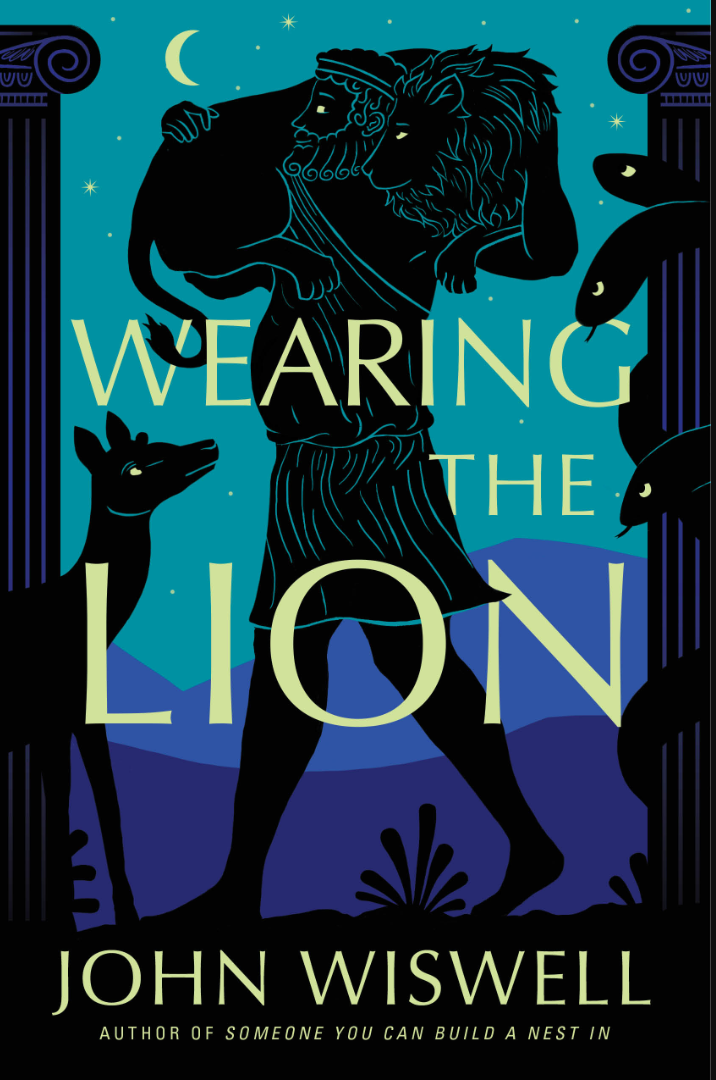
large_logo"From the moment God, sitting in a diner, hears Joan Osborne's 'What If God Was One of Us?' and says, 'I hate this fucking song,' the reader knows this isn't just any run-of-the-mill book. Sum is a funny, funny, funny, fast-paced and insightful commentary on religion, social mores and, most importantly, human relations. Even God has marital problems.

"The author gives his audience credit for intelligence, not spelling out or explain too much, but also salting in explanations of various gods and religious beliefs smoothly enough so it doesn't slow down the narrative. The acceptance of other gods and religious eras is refreshing and he uses it masterfully, weaving together a good plot on top of great character development. To top it off, the voice is spot-on. Funny, knowing and sarcastic.

"A refreshing and needed book in an era of aggressive religiosity, the book also makes the reader examine religious belief. Atheists and agnostics will enjoy it immensely, but anyone with an open mind will appreciate it and look at the deeper meaning; how much of our belief in a 'superior being' exists inside our heads? Or is simply a product of our era? Readers aren't getting the book if one of God's final statement's to Joe ('Don't trust people who tell you things will work out for the best.')  doesn't have them laughing and nodding with appreciation. Things worked out for God, but just barely.

"Overall, a book that hits its marks and hits them well. A serious, deep treatment wrapped in hilarity."

-Writer's Digest

Judge, 22nd Annual Writer’s Digest Self-Published Book Awards

A Brief History of Orange

cupHere's the story of a fun adventure we've had at Central High School over the last couple of days. I'm a huge fan of both podcasts and discussions about language, so Slate's language podcast, Lexicon Valley, is like my chocolate and peanut butter meeting in a Reece's Cup. The most recent episode (#43), asked and answered the question, "Which did the word 'orange' refer to first, the color or the fruit?" I was so excited about this that I not only polled my own students to see what their guess would be, but asked my colleagues in the English department to poll their students, too.  (Thanks to Mike Voulo for the idea of polling people to find out their guesses, and thanks to lexicographer Ben Zimmer for the wonderful answer to the question itself!)  

ripe orange with leaves on white backgroundAt present, with some ballots still uncounted, our count is 175 votes for the color coming first, and 286 for the fruit coming first. Drumroll… The short answer is that the word has evolved from a  word naming the fruit, not the color. The story is a lot more fascinating than that, though, and it gives us some insight into the origin of our language and the ways languages work in general.


First of all, it turns out that there is an evolution in every language when it comes to naming colors. Cultures start out with words for dark and light. Then they add red. Next come blue and green. Colors like purple and orange come much later. The tribes in England who formed the basis for our language, the Angles, Saxons, and Jutes, had no word for the color orange. If they wanted to describe something that was orange, they called it red-yellow. If you’ve ever wondered why we call people who have orange hair “redheads,” this makes total sense. They couldn’t call them “orangeheads.” They had no word for orange.

redhead

Meanwhile, long before the Angles ever came to England, in ancient China, in about 2500 B.C., they had this fruit that was orange. We have no idea what they called it, but by the time it made it down to India, we have record of its name in Sanskrit in an Indian medical book from around 2000 B.C., and they called it “naranga.” The word “naru” means “fragrant” in some other languages from the Indian subcontinent, so we guess it meant “fragrant fruit.”


From India, the word moved to Persia, and in Persian it became “nārang.” From there, it went to Arabic and became “nāranj.”


Muslim merchants introduced it to various European languages, and it became “naranja” in Spanish, “narancia” in Italian, “nerantzion” in Byzantine Greek.


Then, some of those European countries started dropping the first consonant. The Italian “narancio” became “arancio.” Late Latin got “aurantium.” (Slight digression: This happens in languages when the article, like “a” or “an” gets mixed up with the word. For example, in English, the word “adder” used to be “nadder,” but people describing “a nadder” eventually switched it to “an adder.” Conversely, our word “newt” used to be “ewt,” but “an ewt” became “a newt.” Thanks again, Mr. Zimmer!)


Now here’s where the story of our English word gets really weird and cool! In the south of France, in the Provence region, they spoke a dialect of a language called Occitan. It’s not French. Actually, it’s closest relative is the Catalan language spoken in Catalonia, a part of modern Spain. Anyway, in that Provance region, there was an old Roman city named after a Celtic god, Aracio, a god of water. Over time, the name of the town changed so that, in the Provençal language, it was Aurenja. The Provençal  word for the fruit, by then, had evolved into auranja. Over time, they blend, until people there are calling both the city and the fruit Orenge. Eventually, this becomes “orange.”


But wait! How did this word get to English? Well, the prince of this city, a dude named Prince Philebert of Orange, was given control of a good chunk of The Netherlands because he helped out the Emperor Charles V of the Holy Roman Empire. But he had no heir, so his title passed to his German nephew, William of Nassau. William then founded the House of Orange that became the ruling family of the newly independent Netherlands. He started The 80 Years War with Spain. His grandson Charles become a king of England. How? Well, the English decided that they were worried about their new Catholic king, James II, so they deposed him in the Revolution of 1688, then reached out to a prince from the nearby Protestant royal family so they could have a new Protestant king. "Oh look! There's a Protestant royal family right over there, across the English channel in The Netherlands. It's the House of Orange!" When Charles arrived, the English greeted him with orange banners and, of course, oranges. Charles then encouraged Protestants to settle in Ireland, so the Protestants Orangemen parade in Belfastthere come to be known as the Orangemen. The color orange not only came to be part of English, but it took on important symbolism for Protestants in the British Isles. I'll bet the folks waving those orange banners for Charles III had no idea that his family's color came from a town far from The Netherlands, in the south of France, which acquired its name, ultimately, because of a completely random coincidence involving the similar names of a Celtic god and a Chinese fruit!


English is the most bizarre, wacky, fascinating language ever, and I’m so glad I get to teach it!

Orange TV


(Again, I owe credit for this whole story to Ben Zimmer who wrote it here and told it here.)

On Scotland and the Secession of American States

Sometimes I discover that my knee jerk reactions are contradictory. That's a good time to stop and reflect because, if one's knees jerk in different directions, one is likely to fall on one's face. As an American of Scottish descent (I'm a mutt, so I have as much Scottish blood as any other kind, but that's not saying much), my initial reaction to today's Scottish independence vote was to support it.

One of my best friends is Alaskan. He talks wistfully about Alaskan secession. I have some family in Texas who are not secessionists but defend their neighbors' views against Yankees like me who don't get it. In both cases, my gut reaction is to associate those views with the Confederacy and to view them as unpatriotic.

But why is Alaska any different from Scotland? Texas, like Scotland, was once independent. Why shouldn't it be allowed to do so again?

I don't know which way today's vote will go. If the people of Scotland decide it's just too risky, I completely understand. No one will negotiate oil rights in the North Sea with a country that isn't yet sovereign. The voters don't know what currency they will have. They don't know if they will become members of the EU. It could turn out very well for them, or it could be a disaster. I can empathize with those who don't want to take that risk.

But if I were a Scot, I'd vote for independence for the same reasons that slightly more or less than half of them did today. I'm more politically liberal than the people in my country, too. I am very concerned about growing income inequality in my own country, and I realize that the very elites who get to dictate public policy are the ones who benefit from it the most, so they are unlikely to take the kind of action necessary to rein it in. The idea of a place with the social safety net of Norway or Sweden, but where the people speak roughly the same language I do, but with a cooler accent, strikes me as a kind of paradise.

So I have to reconsider Alaska and Texas (and bits of North Dakota and Michigan's upper peninsula and probably some other pockets of the US with secessionist movements). In our country, I can't escape the knowledge that we fought a horrible war to preserve our union, a war secession certainly doesn't deserve. Scotland's example of an amicable divorce seems wonderful, but it's the exception rather than the rule.  Should we tolerate talk of secession in the US, where so many died to keep the Union together.

Upon reflection, I realize that the key difference between my tolerance for Scotland's desire for independence and the equivalent desire of the Confederate states in the US is that, while both Scots and 19th century Southerners see themselves as people preserving their culture by separating from a government that doesn't share their values, the Southern way of life that the Confederacy wanted to preserve was fundamentally built upon the institution of slavery. Certainly there were aspects of Southern culture which were different from tht of the North in other ways, but slavery infected every element of the economy, the art, the family life, and the polity of that region and the mercifully brief nation it birthed. Bearing that in mind, I think the calculous rightfully changes. The Northerners may not have intended to fight to preserve the Union because they were concerned with the issue of slavery (and they were far from free of the stain of racism themselves), but if an individual Northerner felt compelled to preserve the Union not because unity is a good in itself, but because the Union would obviate the existence of a nation built on the immoral foundation of slavery, then I take that soldier's side over a Southerner trying to preserve his cultural heritage regardless of the culture's dependence on such a fundamentally immoral institution.

I cannot be intellectually consistent if I support one group's right to self determination and reject another's. But I can regain that consistency if I support or reject secessionist movements based not on the desire to be independent itself but on the underlying motivation to do so.

Consequently, while I still reject the Confederacy's motivation to secede, I can support Scotland's, as long as I'm willing to reckon with Alaska's and Texas' motivations and evaluate them on the same terms. If Alaska wants to secede because it has a unique cultural identity it wants to preserve, or because it doesn't feel that its values can be represented by those of the nation as a whole, I can get behind that. If, on the other hand, they only want to secede so hey can over-fish their waters and "Drill, Baby, drill" until their oil reserves are depleted, then I think that's foolish. Similarly, if Texas finds itself to be far enough outside the cultural mainstream of the United States that it cannot bear to be a part of the United States anymore, then Texans can leave with my blessing and I don't think anyone should shed any blood to prevent them from doing so. If, on the other hand, the cultural values that distinguish them manifest as a desire to set up more stringent policies that encourage self-deportation (like preventing illegal immigrants from reporting crimes or workplace abuse), or passing personhood bills to criminalize Texan women's choices about their own birth control and family planning, or generally to push for lower and lower wage jobs to attract companies while harming their own Texan workers, ...in short, if Texans want to leave so they can be harder on their fellow Texan neighbors, then I think they can be judged quite harshly for the extraordinary lengths some Texans would go to just to make sure they can be as awful as possible to other people in their new, sovereign country, then I think Americans who share values like worker rights, women's rights, and basic human rights for those who have immigrated illegally should certainly stand up and say no to allowing such a country to form along our southern border.

Regardless of the underlying motivation to secede, it should have weight when it comes to assessing someone's patriotism. Secessionists might be the perfect representatives of their constituents interests in bodies like the Senate or the House, but they disqualify themselves from national offices where they will sometimes have to put the interests of people from other states before the interests of those in their own little aspiring country. After this vote in Scotland, should it fail, I think Scots should continue to take positions as MPs to represent Scottish interest in Parliament, but anyone who voted for independence from England should have a limited say in the day-to-day government work for the whole of the UK. Similarly, people like Rick Perry and Sarah Palin shouldn't even be considered for jobs in the White House since they have entertained ideas about secession in their home states. If you believe your part of the country would be better off as an independent nation, you shouldn't be trusted to care for the nation as a whole.

I hope that Scotland becomes its own country. I hope that Catalonia is given the same chance if that's what Catalans want. And if Alaskans and Texans want out for the same reasons, let them go, too.


A Great Review from Markus Indie Book Reviews

Markus Book Reviews says, "...an entertaining read from start to finish." "...what’s really great about this book is that behind the silliness and absurdity are issues that are real and hard-hitting."

"The dark humor is just to my liking."

Read the full review here!

Ice Bucket Challenge

In response to William's challenge, I did the ice bucket challenge today. I challenged actors I know because I'm particularly curious to see how they will react. I challenegd Veronique Merrill WarnerTimothy HornorKate JaegerBrooke KienerDiana TrotterLauren JostKevin BradyRachel Duncan, and Jeff WittVeronique is an award-winning stage actress. She's also my cousin. Timothy is a friend from college who you've probably seen in things like Parks and Rec and True Blood. Kate is a friend from college who does improv in Seattle and is one of the quickest wits I've ever known. Brooke is a friend from college who now teaches at Whitworth University. Diana was my prof in college and recently tore it up in a stage production of Wit. Kevin is a great actor who has done a lot of work on stage and in commericals. Rachel and Jeff are colleagues of mine at CHS. They've both directed shows at the high school, and right now they are both starring in You're a Good Man, Charlie Brown. All of these folks are incredibly talented, so I can't wait to see what they do. Of course, immediately after posting mine, I discovered that Kevin and Veronique have already done it. We'll see if all the other have, too. I'll post their responses below (including those done before I got around to challenging them).