A Teacher in the Trenches Reports on Proficiency Grading

My friend Scott (who blogs here) sent me this question the other day: "I had an idea recently and I was wondering what your thoughts were. This is in regards to school reform, and I’m not a teacher; I’m guessing you’d have a very different perspective."

Okay, right away I'm hooked. Not only am I teacher, but I'm a teacher who loves to speak for all teachers. Other teachers might not appreciate that, but it's just how I roll. Also, I love to talk about school reform, partly because our schools do need to be reformed, but mostly because they do not need to be reformed for the reasons or in the ways that the professional school reformers want them to be reformed, and, as a teacher, I believe I have an obligation to speak out in defense of great public schools. So when Scott starts this way, I immediately start to gird my loins and prepare for a fight. But...

"I waOB-VD251_bkrvge_GV_20121028140313s recently listening to a book called The Generals, regarding the changes in command structure of the US army from WWI to Iraq II. One of the reforms he talks about having been introduced in the interim between Vietnam and Iraq I was that they ceased to have “X number of hours” requirements for training and replaced it with “demonstrated proficiency”-based training. That is, once you pass a test, you move on to the next point. This meant that officers were no longer forced to spend time in a mind-numbing course that they already comprehended, and those not learning had a greater incentive to learn."

Hold on! He's talking about the movement toward proficiency grading, a move I support!

"Now there have been a number of suggestions that schools actually pay students money to do things like show up and do homework and such. I’m guessing I’m not alone in thinking this is a terrible idea. There’s also the idea of incentive pay for teachers, which likewise is a terrible idea (it punishes or rewards teachers based in large part on the active role that the student’s parent plays, over which the teacher has no control, favoring the teachers with the easiest students). However, I think that incentives might be made better. Namely, students could be rewarded with time and autonomy for good behavior."

Paying students to learn is a bad idea: Agreed. Incentive pay for teachers is a bad idea: Agreed. Students can earn time and autonomy for good behavior: ...almost. A big part of proficiency grading is the recognition that behavior is not enough. Good behavior should lead to the acquisition of skills, and it's the acquisition of skills that should be rewarded. But I'm interrupting.

"I imagine something vaguely of this nature: students have to be at school from X:00 AM to X:00 PM, regardless of progress; this would not change. But let’s imagine that each school year were divided into quarters that last, say, 13 weeks (with the “4th quarter” being summer vacation, slightly shorter than the others due to vacations or holidays or staff development days, etc., during the course of the normal 3 quarter school year). The regular course of the semester would be to have instruction complete in 9 weeks with a final exam **or** final report/presentation/etc. (I don’t care about the specific metric; this is not about increasing the testing frenzy, but a student should be able to establish proficiency in whatever subject by a standard deemed appropriate by that instructor for the course at hand). If you pass that final exam, your next four weeks are given to you to do as you will with high flexibility and autonomy. If you like art, take art classes. Take extra time in shop, or in science lab, or just read or write in the library, should you choose. Enroll in some online college courses (audit or credit, it’s up to you). Enroll in local community college courses for free (this was actually available in San Diego for anyone with a free period, but I didn’t know it). Learn to program computers. Parents would also be free to take their kids out of school during those three weeks for vacations, should they be so inclined, without missing any important school work, provided the kids passed all of their classes prior to that.

"In addition to incentivizing the students to actually master the material at the end of 9 weeks, it would have the added (potential) that the teachers would be able to focus additional time for those students that most need it in those final 4 weeks. Students not passing at the end of the 13th week would need to use an elective period in the following quarter to meet the demands not met by the class not passed.

"My basic assumption is that *most* students have at least some subjects that they could meet proficiency in very rapidly if they had an incentive of (relatively) free time. This might serve to help align the goals of the students and the teachers. Yes, it would require more funding, but the truth is that Americans really aren’t that squeamish in general about spending money on education; in general, we spend way, way more than the rest of the developed world, and the few exceptions are small wealthy populations (like Norway and Luxembourg) which, though they compete with national averages favorably, still don’t spend as much as small subsections of the US like Boston or NYC. The problem is that administrators and bureaucrats take a large cut off the top (leaving less for teachers), and the results don’t track the increases in spending. Largely this is because parents today have bifurcated into two large camps of the over-involved and the under-involved, and the progress of a given student seems to reflect primarily their parental involvement. As such, motivating the students themselves seem imperative. What insights can you offer as a teacher?"

Oh, I have opinions galore. As to whether or not they are insightful, I'll let you judge, Scott.

We’re instituting something very much like this right now. It’s both daunting and exciting.

First, the exiting part (for a philosophy-major theory-head geek like me): The theory. The idea is that we’ve been grading all wrong, and the flawed grading has led to bad instruction. Grades should describe precisely what a student is capable of doing in relation to the goals of the course. Unfortunately, we’ve been messing that up in a number of ways. A student moves on to the next level of a course with a B, and the next teacher doesn’t know if that B means the student is capable of doing all the tasks required in the last class, or if she did a bunch of extra credit, or if she worked really hard and earned the teacher’s pity, or if she was super-capable but was punished for being lazy, or for cheating, or skipping school occasionally (because she was bored), or for a myriad of other reasons she might have that B. Instead, the grade should describe only her performance. Ideally, she shouldn’t even get a letter grade. She should get a list of specific tasks and simple scores on those (Meets, Exceeds, Does Not Meet, Did Not Attempt), so the next teacher knows precisely what she can and cannot do. If the grades were done this way, the instruction would be designed to lead up to these specific performance tasks. She could take a pre-assessment to determine if she already knows how to do whatever is about to be taught. If so, don’t waste her time teaching her that! If not, teach her how to do it. When she shows she can, move on. If she still can’t, don’t just pass her on to the next teacher. Take the time to focus on that skill she lacks. And don’t muck up her scores with anything but explicit descriptions of her academic ability: Bad behavior gets handled by administrators and her parents and is unrelated to her grade. Extra credit doesn’t exist. And effort only matters if it results in being able to perform the tasks; she’ll learn that it matters a whole lot, but not because she’s working for a letter.

That’s how it’s supposed to work. It can, too. Some people are doing this already and doing it well. It doesn’t even necessarily have to cost a lot more. Rural one-room schoolhouses with great teachers are perfect for this kind of thing. Really good home-schoolers can even pull it off (though too often home-school teachers can turn out to be un-schoolers or grossly unqualified to teach every subject at every level. I know I would be. Plus there’s the whole issue of socialization which requires a lot of work by home-school teachers who don’t want to produce students who can pass every test but are socially dysfunctional). Small class sizes are an important part of the mix here. No one can effectively keep track of 200 kids all going at their own pace, or at least no one I know, and I’ve worked with some of the best teachers in the country.

But it takes more than small class sizes to make this work. Teachers need lots of time and support to rewrite curriculum so that it targets specific tasks and measures them each effectively. There’s an understandable temptation to go out and buy a canned curriculum that will do all that work for teachers. That impulse must be avoided at all costs. For one thing, canned curricula tend to suck. Just because a huge corporation made something doesn’t mean it’s any better than something your local school teacher can produce, and it might mean it’s a whole lot worse. The corporations designing curricula have different motives than producing something that’s been tested and shown to be effective: They want to produce something that’s flashy and will make them lots of money. Sometimes the profit motive can lead to high quality products for reasonable prices (see: Toyota or Volvo)volvo-xc60-01


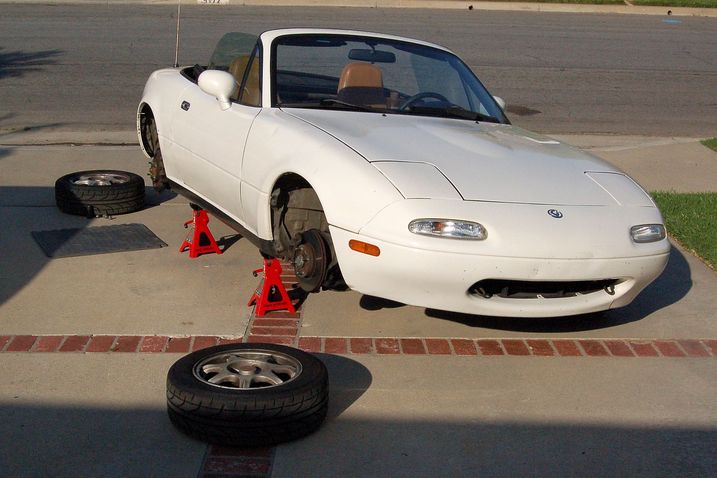
and sometimes it leads to things that look a lot better than they really are (see: the early Miata)1994_Miata_1600_sus_oa_lead-thumb-717x478


or are priced to sell but not to last (see: the Ford Pinto). burningcar



Also, when teachers are given a canned curriculum they do not have the investment in its creation, so they are less likely to know the material inside and out and are more likely to resent the material (sometimes garbage) being handed down from on high. So, in order to do proficiency grading properly, teachers need the time and support to create dozens, sometimes hundreds, of pre-tests, connected lessons, and post-tests. And since our hypothetical student needs to have many opportunities to try again when she doesn’t master a skill the first time, more post-tests and more post-tests.

The other temptation is to plunk our poor girl down in front of a computer and make her take as much of her schooling as possible through computer-based classes. Now, teaching through the computer can work, but only if it’s done in a very specific way. Linguists learned a long time ago that programs on the radio, broadcast by Radio Free America, didn’t effectively teach people English. Why not? They could listen to them for hours upon hours, but they didn’t absorb the language. Was something wrong with them? Nope. It was the nature of the instruction. When people learn, they need to be able to demand feedback and receive unrequested correction. If you can’t ask a question and get an answer, you don’t learn well, and if you are doing something wrong and no one corrects you, you just keep on doing it wrong. Computer courses, too often, are designed to provide learners with an onslaught of information they are simply supposed to absorb before taking a test which provides them with very little feedback or correction. Someday we’ll design computer programs that can evaluate a student’s performance, provide them with the appropriate feedback needed to improve, and answer their questions (correctly and appropriately for their level) when they ask.  Then I will beCyborg-Robopocalypse out of a job. Luckily, we’re not there yet, and the people trying to sell computer-based learning are more concerned with saving schools money (and making their own) then providing students with the best instruction.  (But the day will come when students taught by computers do better than students taught by humans. I think that’s as inevitable as, say, universal healthcare. Yes, teachers should be as worried as the folks who file health insurance claims. We will have to learn to do something else.)

Another challenge for a true proficiency system, which you already alluded to, is what to do with the kids who are done too fast, and what to do with the kids who aren’t done fast enough. Our traditional model says that they should all go at the same rate, and we do it that way not because we believe it’s true, but because we can’t quite figure out what to do about the fact that we know it’s false. In small degrees, it’s bearable. If our hypothetical student finishes her math faster than her history, maybe we can provide a space where she can work on the history she needs to catch up on while the rest of her math class reviews something she already knows how to do. But what happens when she’s ahead of her class at everything? Free time to learn about things she’s interested in would be great, but according to a proficiency model, we should be moving her on to the next grade’s material. That poses a number of problems, though. Do we want a really bright 7th grade girl hanging out in the same halls as our 16 year old guys? And what if she’s not a really bright girl? Do we warehouse her in a class of capable 7th graders when she’s 16? What will that do to her, socially?

Oh, and remember how I mentioned that behavior problems will be taken care of by teachers and administrators and parents working together? That part is essential. And rare.

And those are just the obvious problems. What about the kid with a learning disability who is never going to be able to perform certain tasks? Do we say he’s a 10th grader forever? And what about the kid who just moved to this country and doesn’t speak a lick of English? And what if he is also the kid with the learning disability? Our traditional model allowed that kid to stumble along with straight Ds, get a high school diploma that completely deceived employers about his ability level, and then he could get a low-level service sector job and maybe be okay. But those jobs no longer pay a living wage and the world wants high school diplomas to mean something specific.

Which brings us to another major issue: The world has not adjusted for the proficiency based model. Parents still want to know what the letter grade is because that’s how they were taught to evaluate their own performance when they were in school. Colleges are warming to proficiency grades because they will give them a better sense of who can succeed within their walls than the meaningless high school diploma did, but scholarship committees still want a GPA, so even a kid who wants to go to a progressive school that recognizes his list of skills instead of his GPA might not be able to pay for it. Businesses want to know that the kid will show up on time and obey his boss, something the list of tasks might not include. It’s going to take time for schools to be able to show that students focused on building skills still learn a work ethic without the fear of punishment through punitive grading, and in the meantime they may be punished for the system’s uneven, hodgepodge switch.

And then there’s the problem of the timeline. This wholesale reboot of both the grading and the delivery of instruction will take a while. We could just start with Kindergartners and roll it out over 13 years. That would allow folks to get more comfortable with it, but if we really know it’s better for kids, can we justify not doing it for the kids in high school right now? Conversely, is it fair to change course midstream for the high school seniors who are in line to be valedictorians and suddenly find that A) they have been earning those As through hard work and extra credit but can’t earn better than a B on skills alone, B) their colleges of choice still care about GPA more than skills, and C) the valedictorian award is suddenly getting the ax (which it should have received long ago)? All the theory might say proficiency is what is best for these kids, but it still feels unfair to me. And it will seem plenty unfair to their parents. Oh, and they would be right to point out that the teachers don’t even know how to do proficiency right yet.

And herein lies the biggest threat to proficiency-based teaching and learning: If the rollout is done poorly, despite all the research and theory behind it, we will abandon it like we have so many other education fads that were underfunded and hastily implemented. We’re already seeing that here in Oregon. The state produced a law that said, simply, that schools had to produce an annual letter to parents which described their child’s proficiency separate from that child’s behavior. Some schools dove in years ago, preparing for this, and they’re getting good at it. Others, like mine, are diving in at the last minute, but we’re going all-in, leading to massive stress levels and a very uneven implementation. Others are saying, “Let’s wait and see if the state will really enforce this law, because this sounds like a lot of work, and they’re not paying for it.” In the midst of this, parents start screaming (rightfully), and the politicians are running away from it, declaring that schools that are attempting to measure proficiency all year are going way beyond the law since they only required an annual report (as though anyone could produce an accurate report on the fly in April without keeping track all year), and that local districts get to define behavior. They went so far as to wash their hands of any definition of behavior, saying schools could include or exclude homework, missed work, cheating, absences, extra credit, you name it. Now, I’m all for local control when it makes sense, but if the state wants to pass a law that uses words, they can’t turn around and say each locality gets to individually decide what each word means. That’s not a law. That’s not even a meaningful suggestion. But this is what could undo your great idea, Scott. We either have to push through the resistance any new system will necessarily generate and provide the resources to allow that new system to produce results, or we will starve it of resources and buckle under the pressure to remain status quo.

And here’s what my experience as a teacher has really taught me: When people are pissed off about the crappy roll-out, they will blame the teachers. When the roll-out is starved of the necessary resources, they will blame the teachers. And if succeeds, the way public schools succeed right now in educating a broader swath of our population to achieve at higher levels than they ever have before, someone will point out that our kids are not doing as well as the kids in a country where kids are culturally homogeneous, all speak the same language, have a strong enough social safety net that all of them are fed and have healthcare, have vastly less income inequality, aren’t traumatized by our levels of crime, and go to school six days a week and throughout the summer, and they will blame the teachers.

PH2009010701816And the people blaming the teachers will call themselves school reformers, make millions peddling the next fix, and send their own kids to private schools.

But I’m not at all bitter about that.

Admittedly, this took a bit of a dark turn at the end. Sorry about that. I try to stay positive because I really do love my job, but the further I get from theory, the more cynical I become. Now I have to go write a hundred new scoring rubrics while organizing my local union to strike because, in the middle of all this radical change, our school district, newly flush with state cash, thinks we should be paid less than we made last year.

simple button

An Idea for Addressing Income Inequality

Lately I've been more than a bit frustrated with the complete tone-deafness of America's political leaders when it comes to the issue of growing income inequality. Democrats, it seems, are so beholden to their big donors and/or so afraid of being called communists by right-wing talk radio that they only mention income inequality in hushed tones and don't dare to do anything substantive about it. Republicans, on the other hand, either want to use rising poverty rates as a club to beat up on the President, or they want to cut programs to assist the poor as a means to punish them into not being poor anymore. As John Oliver pointed out on this week's The Bugle, this attempt to address the problem of poverty is a bit like a doctor trying to awaken someone from a coma by repeatedly hitting the patient in the head with a wooden plank; it's unlikely to work, and if it does, the guy is going to be pretty pissed off when he wakes up. hacksaw

I could rage about this for a few hours, but it's more constructive to try to think about solutions. Since the problem, as I see it, doesn't come from an inability to address the issue of poverty (we've done it before, quite successfully, with some of the very programs people are trying to cut now). It's caused by a lack of political will. So, tackling poverty should start with addressing Congress. Electric cattle prods might be a popular solution, but I'm pretty sure that's illegal, and if it's not, they have the power to make it so. Instead, here's an idea:

What if Congressional salaries were legally pegged to the median of U.S. incomes?

First of all, it shouldn't be the mean income ($55k), because Congress could skew that number upwards and enrich themselves by creating more policies that enrich a few people at the top. Instead, it should be the median. That's not an easy number to find, it turns out, but if I'm reading this correctly (click here, then, under the Table H-1. Income Limits for Each Fifth and Top 5 Percent, click on the "All Races" and note the top of the second quintile) it's probably right around $40k. Or, according to data from the Social Security Administration, the median per capita worker income is $26k. Like I said, it's not easy to find, but I'll bet it would get a lot more attention if the salaries of everyone in Congress were pegged to it. Oh, and the median would have to be calculated based on the income people actually pay tax on. In other words, if Congress continued to allow people to pay a different rate of tax on investment income, that income would not be included in the calculation of their own incomes. You can bet they would quite suddenly have a come-to-Jesus moment about investment income being taxable as income.

Buddy Christ


Anyway, that would have to be all these politicians were allowed to live on. Anything they owned previously would be put in a trust until after they were out of office. They would have to live in some pretty crummy neighborhoods in D.C., and that could open their eyes a bit. The President's salary should be exactly the same, but with the added perk of a really nice house. To make sure that all these politicians couldn't just live in near-poverty for a couple years and then cash in as consultants for the companies that were promising them lucrative future salaries in exchange for bad bills, the politicians would have to live with the mode for an additional ten years after leaving office, but with any difference between the current year's mode and the mode of the year they left office doubled. In other words, if the median went up by 1% the next year, they'd get a 2% raise. If it went up by 5%, they'd get a 10% raise. Conversely, if they padded the stats by creating economic bubbles while in office, and then those bubbles burst and the median went down by 2%, their income would go down by 4%. Consequently, they would be motivated to enact policies that would lead to longer term growth.

I think this idea would be a huge improvement. At the very least, it might prevent a few jerks in Congress from telling people without shoes to pull themselves up by their bootstraps. At best, it could lead to a very different way of regulating the economy. And it can't be accused of being communist, since flattening incomes towards the middle wouldn't change the median at all. This would make politicians try to raise the bottom and the top, but it would make them focus on the quantity of people at the bottom, not just the average per capita income.

What do folks think of this idea? Silver bullet or total dud? And if you think it's a dud just because the people in Congress would never vote for it, ask yourself why you would vote for anyone who wouldn't.


[Note: When I posted this originally, I kept writing "mode" instead of "median" and "median" instead of "mean." Luckily, I have friends who are smarter than I am who quickly pointed out the error. Fixed!]

Update: September 24th

My friend Scott, who blogs here and generally engages me in great debates because we come at problems from very different ideological angles, has a wonderful pair of ideas I want to share:

"[T]ax inheritance by the beneficiary rather than by the deceased; several small inheritances from one large estate should be taxed lower than the whole going to one or a few single individuals. The concern should be less about how much the deceased had acquired and more about how much any single recipient is getting; after some baseline (which should likely be pegged to a median home price, or should account a primary residence of the deceased as separate from normal liquid assets), the rest ought to be treated as regular income."

This is a great idea because it would encourage billionaires to give their inheritances to a broader number of people or put more of it in the public coffers. That's a winner.

Scott's second idea is more complicated, but I like it, too:

"[T]ax brackets should be pegged to median incomes. The executives with the highest salaries and thus highest tax brackets would be far better incentivized to raise wages and salaries beneath them and they have far more control over this. And it would need to be clear that this is the median of all filers, rather than just the employed.

"...an illustration.

"Let’s take the Ike tax brackets that are so widely discussed. He had a really high rate (something like 90%), but that marginal rate was only on incomes over $400,000 at a time when the median income was about $6,000. This is very different to today, where the highest bracket can hit a middle class person in a boom year that may not be representative of their overall wealth, opportunity costs, risks, future earnings, etc. So the idea would be something like this. Let’s take that ratio that Ike had and say that the top rates kick in at 50X and 100X the median salary. That is to say the top rate goes back down to 35% for whatever that bracket is today ($400,000, the same nominal value as in Ike’s time but drastically less in buying power). The next bracket jumps up to 70% on incomes over 50X the median, while incomes over 100X the median are taxed at 90%.

"Now let’s look at this in practice. The median household income in 2010 was $51,017, and it dropped to $50,054 in 2011. These numbers could not practicably be applied for anything but a two-year lag, so the rates generated would apply in 2012 and 2013, respectively (enough time to have the data compiled and have the rates known publicly by Jan 1st). In 2012, the rates would kick in at $2.551 million and $5.102 million, while in 2013 they’d drop to $2.507 million and $5.005 million, meaning that for any person making more than $5.2 million, $48,150 more would be exposed to 70% rather than 35% taxation, and $96,300 more would be exposed to 90% taxation rather than 70% taxation. Thus a person ends up paying a little more than an additional $36,000 in taxes because the median income dropped.

"That might seem somewhat small by comparison to the salaries, but let’s look at it in a different light. If the median income jumps $10,000 from $50,054 to $60,054 (assuming we’re talking several years, here) then the tax burden for that person making more than $5.2 million drops $375,000. That’s a huge incentive to business leaders to raise their employee’s salaries, and gives them a direct stake in raising wages and reducing inequality.

"This is a quick-and-dirty illustration to make the point, but theoretically the entire set of marginal rates could likewise be set. That $400,000 bracket could be changed to 8X the median. If the median increases, you lower your tax burden for a given nominal income.

"Currently, brackets rise with inflation. This means that as inflation goes up, tax burdens go down in order to account for the fact that $100k means a very different thing in 1990 vs. 2010. That makes some sense. To a degree, my plan accomplishes the same sort of thing, because inflation generally rises with average incomes. But the difference is that it only remains fixed to inflation alone when inequality remains constant. If inequality rises, however, the tax code becomes more progressive, and if inequality falls, the tax code becomes flatter.

"Ideally, a mechanism ought to be incorporated to look not only at the median, but some metric that assesses the 20th and 80th percentiles as well. The reason for this is that Wal-Mart raising wages across the board is unlikely to bump the 50th percentile directly, and the connection between wages/salaries and progressivity would be slightly less direct than is desirable. But I think it would be a good start."

See what I meant about having smart friends?


I made it into the local paper, but...

  ...it's for my work as the president of my teacher's union.

"Central School District classified staff settles, another side eyes deal" by Aaron Newton

One of my friends and colleagues said I should have put in a plug for the novel. I wish I could have figured out a way to do that. Maybe something like,

"Gorman, a novelist with a new book coming out in November, said that he is as hopeful for the success of the next bargaining session as he is for the sales of his book. However, in both cases, he is trying to maintain realistic expectations."

Yeah, that wouldn't have been at all weird.

Image from IO articleSpeaking of weird, the picture made me look like a goblin of some kind.

I have a sinking suspicion that's not Mr. Newton's fault.

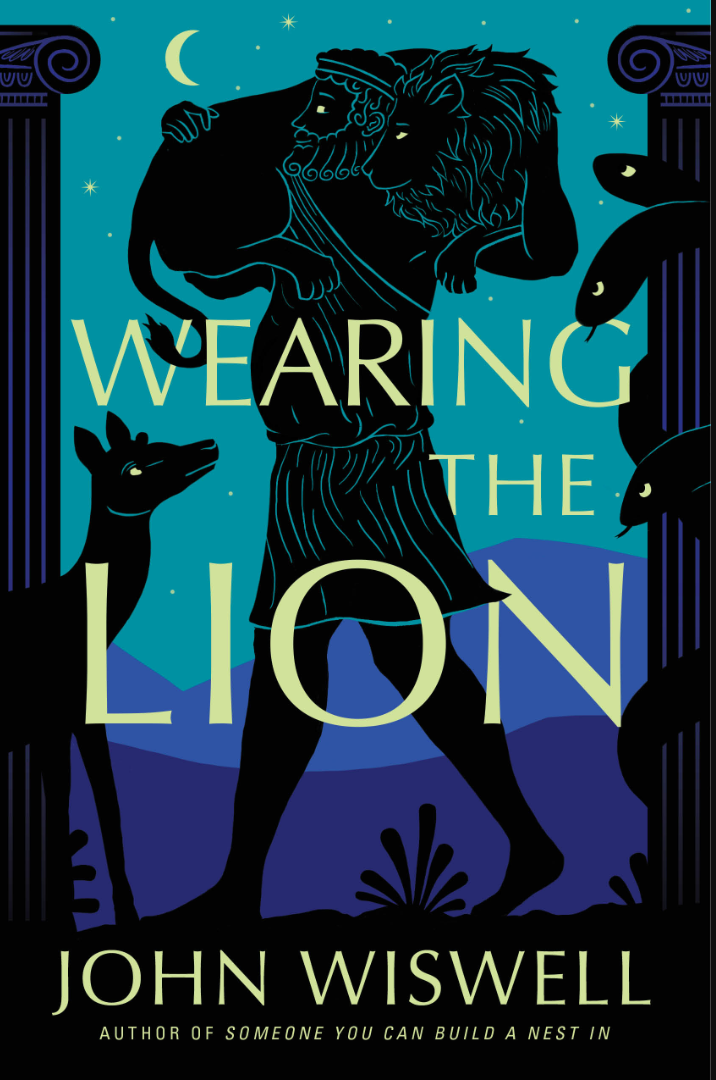
Praise for The Sum of Our Gods

  “For readers with a high tolerance for irreverence and the hope that humanity will be able to make our own way in the universe, The Sum of Our Gods is a thoughtful and entertaining read.” – Karen Eisenbrey, author of "Hat" in the anthology Heathers coming soon from Pankhearst.


“It is brave, imaginative, original, humorous, irreverent, well-written and well-paced. I thoroughly enjoyed it. …God-spotting has never been such fun.” –Mark Fleming, author of The Call of the Siren. (Read Mark Fleming's complete review here.)


"This was hysterical. ...Such irreverence. I could get behind gods like these. ...Verily, you made me laugh. All hail Ixtab. (You can't be too careful, right?)" -Cass McMain, author of Sunflower, blogging at http://cassmcmain.com/


“My first feeling from the diametrical perspective was the ease in which the writing must have flowed, but it soon became clear that a lot of thought and effort went into it. …A full metal jacket of stars.” -Daniel Manning, author


I’m still looking for reviewers who are interested in reading a free copy, so if you write reviews of indie-books for a blog, a newspaper, or a periodical, drop me a line at writergorman@gmail.com


Learning to Read like a Writer

[originally published at amwriting.org, here, in June of 2011] Ben Reading

Here’s a secret writers need to learn in order to master their craft: Writers need to learn to read. They don’t need to consume all the books on the New York Times best sellers list just to see which kind of monster is producing the most sales. Writers need to learn to read differently from readers. Writers need to understand that reading is part of practicing.

Part of my job as a high school English teacher consists of teaching students to become better readers by teaching them to identify the purpose of their reading. Are they reading for pleasure? Are they seeking information? Are they analyzing an argument in order to be persuaded or to refute the author’s position? Good readers can do these things. And that’s enough.

But it’s not enough for writers. Writers are artists, and artists need to be able to examine the works of their peers and betters in a different way.

Consider, as an analogy, film. When one of my sixteen-year-old students goes to see the newest big Hollywood blockbuster at the Cineplex this summer, he is satisfied by the experience. As a viewer, he was looking for entertainment, and the movie delivered. Done and done. Now, the cinephile goes to the movie theater and watches the same film (not anything high-brow, but something competently-made) and is also entertained. But she thinks about the structure of the story, the characters, the setting, the themes: She is, in short, a reader of film as text, and because she can do all the things we try to teach good readers to do when they pick up a novel, she gets a lot more out of the movie. She does not, however, come out of the theater talking about the tracking and handy-cam shots, diegetic and non-diegetic sound, side lighting and back lighting, fast cuts and slow fades. These were the techniques that gave the movie its punch and made it satisfying, but they aren’t her business.

These techniques are the business of the movie critic. The critic studied film back in college. She can not only tell you that The Conversation is her favorite Francis Ford Coppola movie, but she can explain why in great detail. She watches movies for a purpose, but it’s not to be entertained or to be informed or to be persuaded. At least, those aren’t enough. She watches movies because it’s her business, her livelihood, to evaluate them based on her vast knowledge of the way they are made, as well as what they make her think and how they make her feel.

And then there’s the film director. He watches movies differently than the casual viewer, the cinephile, and the critic. He watches to learn. For him, watching movies is part of his artistic education. It’s practice.

Writers need to do the same thing. When we pick up a novel, we can remember why we fell in love with books when we were young. We can enjoy being transported to new places, getting to know new people, and absorbing new ideas. We can even evaluate the works in the same way critics do. But we cannot afford to stop there. We need to read differently. For us, every choice of simple or complex vocabulary, every choice about following the basic rules or breaking them, every choice about revealing the minutia about a character or hiding it serves as a lesson which will make us better writers. This is because we recognize all these things for what they are: Choices. Choices made by writers. Writers just like us, only better. Admitting that last part is absolutely essential to becoming better writers ourselves.  As long as we hold fast to the same choices we’ve always made, believing we are God’s gift to our readers, then not only is our writing a waste of time, but our reading is, too. Arrogant writers aren’t just obnoxious; they’re missing out on vital time to practice.

Malcolm Gladwell, in his book Outliers, talks about a group of psychologists who studied violin students in Germany. They divided the students up into three groups based on ability as determined by their teachers, then tried to figure out what made the great ones great and the mediocre ones mediocre. What they found was that the great ones practiced more. Not just a little bit. A lot more. In fact, they found a magic number necessary to become a virtuoso: 10,000 hours of practice. At a good clip, that takes ten years. They also didn’t find too much deviation from that. None of the virtuosos got by with very little practice, and none of the mediocre violinists practiced for 10,000 hours and remained mediocre.

Then, the psychologist began looking into other fields, and they found that the same magic number held up in every endeavor they examined. 10,000 hours. Athletes. Computer programmers. Ballerinas. Composers. And yes, writers.

The quality of those hours matters as much as the quantity, and that’s why writers need to change the way they read; it’s the difference between 10,000 hours of entertainment versus 10,000 hours of practice. One of Gladwell’s examples of 10,000 hours is the early Beatles before the British Invasion, when they were just a struggling rock band trying to find gigs. They worked in strip clubs in Hamburg, Germany and would often play for eight hours straight to non-English speaking audiences and compete for attention with the strippers. Not only did this give them a chance to compose songs that are probably on your iPod right now, but they also had to learn dozens, probably hundreds of covers, and not just of rock and roll songs but of Jazz standards and other genres. What Gladwell doesn’t discuss is the influence of the music Lennon and McCartney were listening to, both before the Beatles formed and during this time. I would bet good money that these guys were not only reading the crowds to see what was working, but they were also listening carefully to the music on the radio and on the albums they bought, and listening in a different way than you or me. They were reading the music to become better musicians.

My preferred example (as a die-hard NBA fan), would be a basketball player. If a basketball player practices his shot for 10,000 hours, he will get to the point where he can sink his free-throws a very high percentage of the time, he’ll know where he can hit the highest percentage of three-pointers, and he’ll make some very tricky moves under the hoop on a drive. And he will lose. Why? Because he didn’t spend some of that time reading the scouting report about, and watching tape of, his prospective opponents. His 10,000 hours were spent becoming an oddity, a guy who could mop the floor with you at HORSE, and in its own way that is becoming a virtuoso. But he won’t be a great basketball player, because he didn’t learn to read his opponents.

Sure, the analogy is imperfect. Writing is at once less collaborative (despite great writing communities like #amwriting, we do our work in isolation), and less competitive (we don’t go head-to head with another author or team of authors. It’s not a zero sum game. More good books can generate more readers.) Maybe we’re less like players watching tapes of their opponents to learn to beat them and more like players watching the greats to learn from them.

So pick up a copy of Suzanne Collins’ The Hunger Games and learn from her choice to write the book not only in first person, but in the present tense. Crack open Cormac McCarthy’s The Road and learn from his choice to eschew dialogue tags and conventional punctuation, then follow up with All the Pretty Horses or No Country for Old Men to reassure yourself that it’s not a fluke that just happens to work brilliantly but a conscious and careful choice he’s not always bound by. Read Alice Sebold’s The Lovely Bones and learn how a premise that seems doomed to be saccharine and trite becomes beautiful and powerful because of careful choices of characterization and intentional withholding.

Then go grab that guilty pleasure book on your nightstand. You know you have one. This is the huge hit by that debut novelist that fills you with rage when you read about the sales figures, and you grouse about it so publicly and with such vehemence that you can’t possibly admit how much you enjoyed the book yourself. Now, when you are flying through that weak prose, that thin characterization, or that awful adverb-filled dialogue attribution that makes you want to throw the book at the wall, stop and figure out why you don’t. Sure, it’s fine to identify the things you don’t like about the book. Note those choices so you will make different ones. But also acknowledge that there’s a reason that book is in your hands, and other copies are in a lot of other hands at the same time.

If you’re willing to do that, to learn from your betters (and yes, that hack on the New York Times best sellers list is your better, at least in some way) , then reading becomes part of your practice time, part of the 10,000 hours you need to rack up in order to become a true master of the art. Writing is practicing your shot. Reading is watching tape. You must do both to be great.


Murphy's Law: Gorman's Pizza Corollary

[originally published here in February of 2011] I have always been a fan of Murphy's Law. For those of you who are unfamiliar, Murphy's Law states that "Anything that can go wrong, will go wrong."

There's a whole taxonomy of corollaries that can be extrapolated from Murphy's Law. I used to have a page-a-day calendar of them. My favorite did not come from the calendar, but from one of my professors in college, Vic Bobb, who once said, "If there are two drops of rain falling from the sky, they will both fall on your glasses, one on each lens."

Tonight I discovered my own, which shall henceforth be known as Gorman's Pizza Corollary: "If you have three pizza boxes in your refrigerator, regardless of your presumption of their order, the one you want will always be the third you open."

On Sharing the Draft of a Novel with Friends

[originally published here in January of 2011] Before Christmas Break, I asked four of my colleagues from the English department at the high school where I work to read the first draft of my recently completed manuscript. That was foolish, because I then spent my whole break feeling a consistent, low-grade anxiety about their possible reactions. I recently asked my wife to read it, and she promised to start today. Now I’m a nervous wreck.

One of the things all these people have in common, besides being people I respect and care about (my wife most of all) is that none of them ripped the book out of my hands, squealed with pleasure, and ran off to tear through it in a single sitting. In fact, when I returned from my anxious break and found that most of my colleagues hadn’t read it, I was greatly relieved. As much as I would be horrified to hear that they hated the book, I think I would be even less capable of responding appropriately if they loved it. At least, when they apologized for not getting around to it, I knew what to say. “That’s okay. You’re busy. It’s no big deal,” I lied.

Don’t these people understand a writer’s relationship with his or her novel?

Of course they don’t. That’s a stupid question. To paraphrase my African-American friends, “It’s a writer thing; you wouldn’t understand.” More specifically, it’s a novelist thing. I’m not sure anyone who hasn’t written at least one novel can really understand the relationship.

I’ve been thinking about that relationship (as I’ve stewed and fretted about my coworkers avoiding me because they hated my book), and I remember hearing more than one writer describing his or her novel as a child to whom they’ve given birth. I categorically reject this metaphor. It’s wrong in too many ways. In fact, any writer who utters this kind of drivel should not only avoid using metaphors in his or her own work, but should probably also not be allowed to have children.

A novel is only like a child in the most superficial ways. It’s fun to start. It takes a while. It hurts to finish. And then it’s ready to be presented.

But even these similarities don’t stand up to close inspection. When you begin a novel, as you fall into the joy of the story and pass that point where you know it can’t all fit in a short story, you inevitably begin to dream about the rest of the book, its reception, the fame and wealth it will bring when throngs of adoring fans beg for a sequel. Not so, for children. If, in the act of making babies, you start to think about your future child, even if you limit yourself to only the most positive parts of child-rearing, the way your father will shake your hand outside the delivery room, your mother’s happiness when she picks up the baby for the first time, the look on your son’s face some Christmas morning, the pride your daughter will take in some spelling test or piano recital, the funny stories you’ll tell to his prom date to embarrass him before he heads out the door, the moment you walk her down the aisle… Any one of these moments would sufficiently ruin the mood enough that no one would ever make babies.

And yes, writing a novel is a significant investment of time, but unlike a pregnancy, there’s no natural mechanism which assures that it won’t take a year, or five years. And if you don’t finish your novel that might be a bit disappointing, but let’s not fool ourselves about the false equivalence to the heartbreak of losing a pregnancy.

I’ve heard that labor hurts. A lot. In the process of crafting your novel, you may run into barriers that might make you cry out in exasperation, but that’s not quite the same thing. Also, those frustrations, while far less pronounced than the pain of childbirth, don’t come exclusively at the end of the process. Writer’s block is the unpredictable false contraction that pops up during the first trimester, or the second, but doesn’t mean you’re anywhere close to finishing the book. Oh, and if that false contraction is bad enough, you can walk away from the novel for a year or two. I’m pretty sure you can’t take a hiatus in the middle of your pregnancy. But again, I’m not speaking from experience.

And then, when your baby is born, it’s really born. It’s out in the world, fully formed and ready to go. Your job instantly changes. And people can immediately see your baby, and coo over it, and no one I’ve ever met says, “I don’t really have time to look at your baby right now,” or “I’ve examined your baby and he just doesn’t do it for me,” or “Your baby is pretty enough, but I’m just not sure what she’s trying to say to us.” The baby is there and perfectly wonderful. The novel is a rough manuscript and you have to schlep around, begging for some agent to pimp it to publishing companies. If you treat your baby this way, immediately looking for someone to pimp him on the streets for cash, you should be locked up.

So what is a writer's relationship to his novel like? What metaphor might explain this better to that first group of prospective readers who just don’t understand how important this is to you?

I think writing a novel is more like trying to build a boat in your backyard. At first, you’re excited about the drafting of the plans. Everything is possible. Will it have a motor? Will it have a sail? Why stop at one? Maybe a crow’s nest, and replica cannons, and a satellite navigation system! Throw them all in there! Why the hell not? And if your spouse is noticing that slightly mad gleam in your eye, you don’t have to show her the plans quite yet. They’re just sketches, after all. Who cares, right?

And then you actually go and buy lumber. Very quickly you realize that you aren’t quite up to this task. You know a thing or two about boats, but mostly from pictures and movies, and there’s really not enough room in your backyard to build the Queen Anne 2. But you’ve nailed some boards together, and you’ve made adjustments to your plans, so why not continue, right? Who cares?

Now the hull is starting to take shape. You find yourself telling friends that you’re building as boat. After their reactions, you find yourself keeping it a secret again. Don’t worry. They’ll forget.

You make time in your schedule, but not too much. It would be embarrassing to have to cancel engagements because there’s a half a boat in your back yard. The neighbors complain about the hammering after dark, so you move some things around and try to do most of the work on weekends during daylight (okay, well maybe that’s the exact opposite of the novel, but we’re still closer than a pregnancy), and you just keep adding more lumber. You realize you’ve made a significant investment in this thing, but it’s a sunk cost (you do note the pun), so you can’t stop now.

You find that you’re acquiring all these new tools, too. Back in high school, your shop teacher seemed like a nice enough guy, but you just didn’t understand how he got so excited about this kind of thing. Now you imagine calling him up to show it off, but you reconsider and decide to wait until you know it will actually float.

You start to get really worried that the neighbors will look over the privacy fence and see what you’re doing. You know they’ll call you "Noah" behind your back and make jokes about the coming flood. They would call your sanity into question, and you’re not sure you could blame them. But it’s really coming together.

At the end of the building, there’s a lot of sanding and painting involved. If you hadn’t committed to the thing a long time ago, you’d never go through all this drudgery, but now it seems like an act of love. You wonder how it has come to pass that you actually take pride in your new talent for sanding. It’s not exactly something you could put on a résumé, but you’re pretty sure you’re above average at it.

Now you think it’s finished, but that means you have to decide who will see it first. It’s just too big to put on the trailer all by yourself. Plus, even though you’ve walked around the thing a thousand times, you worry that someone else will immediately see a gaping hole in the hull you managed to miss. And what if your friend takes one look at it and says, “That’s going to sink,” or “That’s the ugliest boat I ever saw,” or “I don’t get it”? Bearing these possibilities in mind, you don’t want to throw a big party, pull a huge sheet off the thing, and yell, “Tada!” So you choose very carefully, make those selective phone calls, and ask for help.

And then they say, “Yeah, I’ll come help, but I’m busy, so it might be a while.” And you want to scream, “I have a yacht in my backyard! I built it with my own two hands! We’re talking His Majesty’s Sailing Ship ‘Novel’ here! I’m not kidding, it’s a giant f---ing boat!”

But you don’t do that. Because you are already the guy crazy enough to build a boat in your backyard, and crazy people can’t afford to shout at their friends.

So that’s where I find myself.

Now, assuming my friends and my wife don’t try to save me from embarrassment by dissuading me from proceeding, I’ll try to get an agent. Basically, I’ll be asking people to climb aboard and find out if she sails or sinks once we’re off shore. I understand why people don’t want to be on that maiden voyage, even the people nearest and dearest to me.

But I wish they could understand why I’m being so weird. I’m telling you, it’s a giant f---ing boat!

A Strange Sunday of Marathons and Existential Dread

[originally published here in October of 2010] Today has been a strange day. Strange in that it does not cohere, does not congeal into a narrative the way we like our days to behave. Most days are well behaved. Our routine makes them so. We wake, we dress, we look at the clock four times more than is necessary to see that we are not running late. Those of you lucky enough to have hair are unlucky enough to have to brush it. Then we commute, we work, we commute again. A spouse or parent or child thoughtfully asks us for the story of our day and we tell the abridged version prematurely. Then the next third or half of the day begins. Perhaps you, like my wife, change clothes again. Or maybe, like me, you loosen your tie, un-tuck your shirt, and affect a style that is the mullet of the middle aged professional: We work hard, and we play hard, it says. Only we don't, most of us. We watch our news or cartoons or game shows according to our predetermined age and demographic. At some point we eat, maybe with family at a dinette table, maybe on the couch, maybe standing in the kitchen as close to the microwave and sink full of dirty dishes as possible. At some point we realize that the story of our day needs a climax, and if it isn't provided by a favorite prime time show we check the internet for some email that isn't spam or call a distant friend or look for someone closer to kiss goodnight. And then the story resolves into sleep, with perhaps that epilogue of a bad dream or an anxious waking to double check the alarm clock before it wakes us and calls for our attention four more times the next morning. That is the plot of the day. That is a day that has behaved.

But today has been unruly. First of all, it had the temerity to start on a Sunday. That makes me immediately uncomfortable because I stopped going to church over a year ago and haven't figured out a defined routine for professed agnostics. I usually try to avoid this discomfort by writing until three or four in the morning (my worship, confession, and communion hour, I suppose), then sleeping as late as my wife and son will allow. But today was the Portland Marathon, and we had friends and family running, so we woke early, dressed for the predictable Portland rain (it didn't disappoint), an drove an hour and a half before I usually wake up. We made it in time to cheer on one of my best friends. When I shouted his name he was so focused, and I was so bundled in a coat, a sweatshirt, and a stocking cap, that he looked at me with utter incomprehension that verged on anger. It was a look that said, “Who the f*&% is this idiot?” He quickly recovered and apologized for not recognizing me while still on the run, which was above and beyond the call of duty, but that look was unsettling and fit the tone of the day.

We cheered on our other friend, then met up with my brother-in-law and nephews to cheer for my sister-in-law. The enormity of these runners’ accomplishment was both impressive and humbling. Not only can I not do what they were doing, but I honestly don’t believe I ever could. Sure, my body is capable of training for it, and I have the time and means, but I don’t have the necessary willpower to adopt that kind of discipline. It’s just not in me. Realizing that is a bit depressing. Stupid Sunday.

We came home after lunch with the family. On the way up we’d listened to NPR’s Wait Wait Don’t Tell Me, and on the way back we listened to The Bugle, two of my favorite podcasts which tap into my preferred vein of humor: irreverence at the current state of the world. These are the kinds of shows that I tell my students about only if they are knowledgeable about current events. Still, while the shows lighten my mood, in the context of the realization about my own lack of willpower they made me feel guilty about my cynicism. I can’t even train to run a marathon. What right do I have to laugh at the world?

When we got home I took a long nap. Apparently I can be exhausted just by watching a marathon. When I awoke I took care of some household business, and then we put my son to bed. We’re past the climax of Harry Potter and the Goblet of Fire, but my son interrupted tonight’s reading of the story’s denouement to ask about one of the character’s deaths, and where people go when they die. This was a tricky moment for two parents, one of whom is a Christian and one an agnostic. I tried to explain that our bodies are buried, but some people think we go to heaven, and some people think we just cease to be. I told him that I’m just not sure, and asked him what he believed. This dichotomy was complicated by the fact that the character, Cedric, returns as a kind of ghost. My son announced first that he wants to go to “Jesus-land”, which I told him was great, because it sounded like an amusement park. He wondered if, because we would both be old when we die, I would be his age. I told him that could be, or maybe we could choose our ages and he’d be older than me. He preferred the idea that we’d both be kids of the same age, so we could play together, and I said I liked that idea a lot. My wife told him that she was particularly excited about the chance that he’d get to meet her grandfather, who passed away before my son was born and who was, truly, a wonderful man. Then my son changed his mind. “Maybe I’ll be a ghost. I would come back to my home and my video games. And I’d play pranks!” My wife and I had a good laugh at his delivery of these lines; he used a drooping voice that hit its lowest notes on “home” and “video games”.

But then he became more serious. “But what if there really is nothing?”

“Well then,” I said, “it would be like sleeping with no dreams. Very peaceful.”

“Like a nap that goes on for a thousand years and forever?”

“Whatever happens after we die, it goes on forever, but maybe we go to heaven and maybe we sleep. I don’t know.”

“I hope it’s Jesus-land,” he said.

“I hope so, too,” I told him.

When my wife went to sleep, I decided to go for a run. Partly, this was because I was inspired by my runner friends. Partly it was because a colleague, Tom, has encouraged me to compete with him to see who can run the most miles, and I’m more motivated by a fear of embarrassment than by anything else. I loaded a new audio book onto my ipod and headed out. The Circle K is two and a half miles from my house, so I took my credit card and ID and planned to buy one of those tiny orange juices that come in the barely translucent, cheap plastic containers with the orange milk jug lids. I thought I’d down one of those halfway through a five mile run and be healthy. Instead, I found that they don’t sell those (they might not even make them anymore, for all I know), and Kool-Aid in squeeze bottles hardly sounded like the healthy drink I was hoping for. I bought a kiwi-strawberry Snapple. I misread the label and only when I was at the counter did I realize it’s a “juice drink”, which means it could be roughly anything. Back on the road and listening to my book, War Dances by Sherman Alexie (excellent so far), I got to a story where the protagonist finds a dead cockroach in the bottom of a carry-on bag and wonders if, in its last minutes, it felt existential dread. I realized that was precisely what my son had been expressing.

“But what if there really is nothing?” he’d asked.

So I took out my iPod touch and started writing this while walking in the dark. This is less dangerous than it sounds, though I did walk off the sidewalk once and stuck a foot into some very wet grass. It also served to remind me that, though some writers might also be runners, I will always be one and not the other, as I instantly chose my preferred hobby over my reluctant obligation.

So here I am, walking through the darkness on a silent road at 11 at night, thinking about the plot of our days and existential dread. Tomorrow I will be teaching my Creative Writing students about plot. I’ll tell them about rising action, climax, falling action, and resolution. But I think I’ll also point out that these things are like grammar. We need grammar to make sense of our writing just as we need plot to make sense of the stories of our lives, but the most interesting writing plays with grammar, upends it in carefully selected ways. Our lives have plots within plots, but they do not behave as Aristotle said stories should. Perhaps we do not come to a marvelous conclusion about existential dread and how to cope with it, or how to protect our children from it. Perhaps we write in the darkness. Perhaps we stumble into the street and get run over before there’s been any climax to our stories. And then maybe we go to Jesus-land.

Why Reading Literature Is Essential

[originally published here in February of 2010] One of my colleagues, (and, I'm proud to say, my former student teacher) Sam Cornelius, has given me a homework assignment. He found this piece by Nancy Atwell, "A Case for Literature" and assigned me to weigh in. Atwell's concern is that the powerful forces pushing for national curriculum changes do not recognize the merits of reading literature because it does not satisfy their interests in profiting from more expensive curricula, more expensive testing, etc. She cites some research that shows that independently reading literature, and lots of it, not only increases reading proficiency, but is one of the best predictors of over-all academic success. At first glance, this is preaching to the choir, and I don't know how I'm going to satisfy Sam's assignment.

Luckily, the very first commenter on the comment page, Tomliamlynch, after claiming to agree with Atwell, writes, "English education has never had a convincing rationale for teaching literature; thank heaven for writing, as at least a teacher knows when a student does it! Literature has always been--and continues to be--use-less: it doesn't have a clear use that translates into a value for non-literature-teachers... Teachers don't know if and when students really read. They can't know; reading is wonderfully private."

Oh boy.

First of all, we don't teach literature for its own sake. Literature, on one level, is entertainment, just like films or music or any other art. We wouldn't expose a student to a famous painting just so they can say they've seen it. Similarly, when I teach a book (or a film, or a short story) my focus is always beyond the text itself. Now, that work of art can do many things, and I'm hesitant to tier them because they're all important, so these are not in a particular order.

Literature, like any art, teaches its appreciators how to participate in that art in the future. Tomliamlynch alludes to this by making a connection to writing, and that's certainly one part of the value. Reading makes students better writers. But if that were the limit, that a piece of literature might allow a student to become a professional novelist someday, we would be devoting far too much time to prepare such a tiny fraction of the population that we would be criminally negligent. But reading literature not only allows a student to participate in the art form as a creator, but as a different kind of consumer. Beyond simple comprehension (essential, but merely foundational) a reader of literature learns to make connections between a work and other works in that medium, in other media, in their own lives, in their culture, and across cultures. A bad reader can understand that Jack and Jill go up the hill to fetch a pail of water. A good reader asks why these two children are going up to get a resource that's usually found at a lower elevation, what the task says about their socioeconomic level, what the pairing might imply about a familial or romantic relationship, what the language might tell us about the time frame, how this might be different in another country, culture, or time, and what this might relate to in the reader's own life. These processes might be private if the student is reading at home, and eventually I want my students to be able to do this on their own, but as a teacher it is my role to make sure these processes are public, conscious, and intentional.

These skills are not useful in some tiny, compartmentalized way. Last night I was sitting with a couple dear friends arguing about the TV show Lost. All of the language we were using came directly from specific and targeted instruction provided by out English teachers. But these skills don't just allow us to interpret other art. They allow us to interpret Narrative with a capital "N." Whether I'm trying to follow the story of the debacle of the health care bill making its way through the Congress, or studying the way The Big Bang produces a singularity, then energy and time, then later matter, or the process by which the used car salesman evaluates his costs and benefits as he negotiates with me over the price of a '91 Isuzu, I need to be able to interpret a narrative.

Which brings us to the greatest virtue of literature (I know I said I wouldn't tier these, but I lied): We are stories. In fact, we are stories within stories within stories all the way down. If I can't understand the arc of a plot, the influence of a character, the consequence of a choice, the vagaries of fate or coincidence, then I cannot understand myself, my family, my faith, my community, my culture, my country, my world, or my universe. Try teaching history without narrative. Every discipline has a history. For that matter, try successfully teaching science without narrative (imagine teaching the water cycle without sequence). The skills one acquires when learning how to interpret literature cross over into every other field. In fact, if there is some kind of brain injury or developmental disorder which prevents a person from understanding all stories, I would bet that person also cannot be successful in any other field. (Somebody do some research on this for me.)

It should also come as no surprise, consequently, that people who do not know the same stories have trouble relating. Our culture is a composition of our stories. On the surface it just might seem like a person can't get the clever jokes on The Simpsons, or some off-hand Biblical allusion tossed out in a conversation. But it goes far deeper: If a person doesn't know the same stories, they can't understand another person, validate (or even fully respect) their decisions, or work effectively with them toward a common goal. Find two people in a crisis situation working toward some shared goal at the base of Maslow's hierarchy (a subsistence farmer in a third world country and the Peace Corps volunteer who's come to help provide emergency relief) and I'll bet you'll find two people telling each other stories. They are interpreting each other's literature, because if they don't they will only understand even the most basic needs from their own cultural contexts, and they will not be able to make larger plans or connections.

This sounds hyperbolic, but without narrative we cannot make meaning of our life experience. In short, without stories, life is meaningless. The more stories we are exposed to, and the more skilled we become at interpreting those stories, the more meaning we can make.

Education without literature (on paper, encoded digitally, filmed, etc.) is not only diminished; it's pointless.