GOP Response: More Hypocritical Government Bashing

I'm not quite sure which kind of hypocrisy irks me more, right-wing media outlets complaining about "The Media" or right-wing government employees complaining about "The Government." Tonight, in the GOP response to the President's State of the Union Address, U.S. Rep. Cathy McMorris Rodgers went on what can fairly be described as an anti-government tear. Cathy McMorris Rodgers"...Republican vision… One that empowers you, not the government…"

"trusts people to make their own decisions, not a government that decides for you."

"...To grow the working middle class, not the government..."

"...more spending, government bailouts, and red tape…"

"...health care choices should be yours, not the government’s."

Sensing a theme? By the end, I think she was literally choking on her own hatred of the government - the precise institution that she works for!

But it's worse than that. She started off with a mini-biography about how she pulled herself up by her bootstraps, working at the McDonald's drive-thru to put herself through college. Buried in that bio, she mentioned that her father was a school bus driver. Now, it is possible, though unlikely, that her dad worked for a private school. I tried to confirm either way and couldn't find out that detail in any of her bios online. But since most school bus drivers drive for the public schools, and since most private schools don't employ their own bus drivers (at least in rural areas where I work and where McMorris Rodgers grew up), this means her father was, more than likely, a government employee. So while she was working at McDs to put herself through school, the food she was eating around the kitchen table and the roof over her head were paid for, in part, by the hard work that her father did for the evil government she kept deriding.

And this gets at the heart of why I am so frequently irritated when I hear people griping about "the government." Do you know who gets kids to schools safely and brings them home safely to their families each day? The government. And who teaches them and cares for them while they are at school? The government. And the police and firefighters who keep those families safe? The government.

Now, when pressed, I expect most conservatives would say, "Well, that's not the part of the government I have a problem with."

Oh, so you like local services but dislike the evil "Federal Government"?

"Yeah, that's what I really mean."

Yeah, except that most of the employees of the federal government work for the military, and conservatives seem to like them.

"Well, sure, that's not the part of the federal government I have a problem with."

Veteran's Affairs?

"No, not them either."

The treasury that prints your money?

"No."

The courts?

"Well, there are those activist judges I dislike and the activist judges I like (because when they agree with me they aren't activist judges anymore), but no, that's not the part of the government I mean."

Then what? Homeland Security? Agriculture? Interior? Transportation? Commerce? Labor? Energy? Housing and Urban Development? NASA?

"No, not those."

Um, The Tennessee Valley Authority?

"I don't like the IRS!"

So you like all the parts except for the part that collects the taxes that make them all possible?

"No. I don't like all the parts. I don't like the EPA!"

Yeah. Clean water is a bitch. Mercury and lead are tasty; no argument there.

See, here's where I think the average conservative voter and their political leaders part ways. They can both hum along to the same "the government" dog whistle, but it means two different things to each. To the voter, it means "I like most of the parts of the government, but I vote for the team that doesn't want it to work because I don't like the team that makes it work." Is that an oversimplification? Yes. But we need these people. This conservative impulse is actually good, because, in a measured degree, it could save us all from government overreach which is a real thing that could happen if the only people in power were the ones who believe in government solutions. They would wield the tools they have (government solutions) for everything, and that would be bad. We need conservative voters.

What we do not need are right-wing politicians who mean something very different when they say "the government." Because if you do a close reading of McMorris Rodgers' speech, she's not talking about the NSA (clear government overreach) or drone strikes. She's talking about taking away limits. This is another code for "regulations," another word the Republicans have tried to make into swear word. And I worry that it's working and that people don't give that a second thought. Because while stupid regulations are bad, Republicans don't propose smart regulations. They oppose all regulation on principle; the rules that keep your water clean, that prevent your car from being a ticking time bomb, that try (and often fail) from keeping the banking industry from throwing away your life savings. Why?

Because what Republican politicians really want, in spite of the fact that conservative voters actually like a lot of government programs, is to cash in on all those potential markets. Schools? Privatize them all. Police? More money to be made in private security forces. The military? Blackwater mercenaries. EPA? Let Exxon Mobile do whatever it wants. What bad things could possibly come from that?

Now, of course this irks me because I'm a public sector employee who firmly believes that all children in the world's richest nation deserve a free, high quality public education. But this goes beyond self interest. I overhear my students in the halls parroting this anti-government propaganda and I can't say anything because that wouldn't be appropriate. I oversee my former students grousing about the government on Facebook and twitter, and it depresses me. 

Despite Republican's claims to be the "party of personal responsibility," this constant anti-government drum beat has diminished a whole generation's sense that they need to take personal responsibility for their government. It becomes "the government," this nebulous entity that can only wreak havoc on their young lives. What they don't see is that, unlike the corporation they work for, the government is an entity they own and control. It's certainly not perfect and it's not the solution for everything, but it is an entity that belongs to all of us. The government is an extension of We the People. Anti-government rhetoric from people who carry aroundwe-the-people_larger little copies of the Constitution seems like the most bitter form of irony to me. Read the first three words! The government is us. And if we don't like it, we shouldn't complain about some institution out there. We should fix it. Because it's ours. The people who hate the government hate something we have created (or failed to create due to our apathy), and that should be an insult to all of us. 

The insult is even more severe when those people work for that government or are asking for our permission to go to work for it.

So tell me the government should change in this way or that way. I can appreciate that. Tell me you want to reign in this specific part or alter this other specific part. But don't sneer every time you mention the government until you're literally choking at the end of your speech. Because that government belongs to us.

Review of Heathers

Heathers CoverOne of the authors of a story in the collection Heathers (published by the Pankhearst Writers Collective) offered me a review copy, and I thought, “A book of short stories written by adults for teens about teens. Uh-oh.” In the world of indie-publishing madness and self-important MFAs too concerned with style to say anything of substance, I opened this book with no small amount of hesitation and a deep well of cynicism. Would it be some earnest but misspelled, ungrammatical mess, or would it be the bastard child of Raymond Carver and Franz Kafka telling teens that their young lives climaxed on the first page and had no resolution? Sure, the editors had the good taste to pick a great epigram from Margaret Atwood, and the introductory essay was so good I will be sharing some of it with my teenage students when I explain why YA literature is not just good but vital to surviving adolescence, but could Lucy Middlemass and E.R. McTaggart pick stories to cash the check that essay was writing? The proof is in the pudding and all that.  

I was hooked from the very first story. Wow.


Here’s what this collection gets so right: Teenagers are not monsters. I know this because I teach them every day in my high school English classes. They are not one hundred year-old vampires. They are not the know-it-all brats who aggravate their parents on TV sitcoms. They are human beings. My ninth graders are squirrelly and hyperactive sometimes, but that’s a function of their age, not a judgment of their character. I have to remind myself of this occasionally. They are people, complicated and imperfect. If you don’t love people and all their multifaceted and sometimes ridiculous struggles, this book is not for you. Find something where the characters are amalgamations of a few interesting traits with no soul underneath. But if you, like me, are inspired by the way people strive in the face of an onslaught of suffering and find hope and love where none should reasonably exist, this book is for you.


Shizuyo, in Simon Paul Wilson’s “Sushi,” is more than just the new-kid-in-school archetype. She’s a real person who has fallen in love with the wrong girl and has pissed off the wrong bully. Barbara, in Karen Eisenbray’s “Hat,” isn’t the alternative loner who needs a make-over to win the popular guy. She’s a girl who has been turned invisible by a witch and needs a magic hat to allow the kids at her school to see her (and to allow her to see them).


Real teenagers are not all heroes, any more than they are villains. Some are kind and others cruel, some are shy and others outgoing, and some are good while others are jerks. And then there’s Pete in E.R. McTaggart’s “Girls, Interrupted,” who reminds us that some are kind of douche-y but still have very real feelings they hide under a proto-frat boy suit of armor that is just as real.


This collection is full of characters like this. There’s the girl who is about to learn the perfect thing on the London subway train in Lucy Middlemass’ “Metro,” and the 19-year-old fatherless heroin junkie who is about to learn the exact opposite in PS Brooks’ “Chairoscuro.” There’s the girl who can weave through every defender on the basketball court and every distracting through in her head in Layla Harding’s “On the Line.” And then there’s Trevor, the autistic boy simply trying make it through a week of junior high in Evangeline Jennings’ “Walking to School,”… …oh, just spending time with Trevor will make you ache for him, make your guts twist with a sympathy that can never be empathy…


The only real question I had when I was halfway through the collection was: Should I buy one copy for myself or six copies for all the teachers in my school’s English department?


I’m buying six.

-------------------------------------------------

Heathers was released on Amazon in print and Kindle version on December 14th. Get your copy (or six) here.


Memory

(The Central High School Creative Writing Club is writing stories for the "1000 Prompts, 1000 Dollars" Contest. Here's our first entry.) "Memory"

Cassie Lawsonby Cassie Lawson

(Inspired by Prompt #10 in the "Memory" category, here.)

I squeezed my eyes shut, trying to stop the tears from flooding my eyes. I slammed the door behind me and slid to the floor, my back against my bedroom door. I wrapped my arms around my knees and sobbed. My phone rang, an annoyingly happy tune chirping at me. I picked up my crappy flip-phone and threw it against my wall. I heard his steps as his loud, heavy footsteps down the hall as he paced after me. He tried to open the door, but I braced against it.

“Kit, just listen to me—please—I can explain. It wasn’t what you think.” His voice sounded sad. Sad for being caught¸ I thought bitterly.

“How?” I wailed, “You were singing her our song! I saw the look on your face.” My voice broke, remembering what I had seen. My boyfriend, Ryder, was a musician who worked at the local coffee shop. I decided to stop by his work between classes, so I could surprise him during his break, but I saw him with another girl. They were sitting on a leather couch and he had his guitar on his knee.

If Heaven and Hell decide/ That they both are satisfied/ Illuminate the "No"'s on their vacancy signs/ If there's no one beside you/ When your soul embarks/ Then I'll follow you into the dark,” he sang the chorus of “I Will Follow You Into the Dark” strumming gently on his guitar. The girl had her hand on his knee and as he sang, he gave her the look. The look when his grey eyes looked gentle, and his smile was soft. The look he got when he thought of us being together forever. The look he had when he loved someone. The look. I dropped my coffee when I saw him, my heart shattering against the floor in time with my latte. Everyone—including Ryder and the girl—turned to look at me. When our eyes met, I turned around and ran straight out of the café. I didn’t stop running until I reached our apartment four blocks away, ignoring his shouts.

As I sat in my room, the sun blazed high in the sky and bird chirped out the window.  I glared at the sky through tear blurred vision. Why was it always sunny in this damn town? It should be raining. From behind the door, I heard Ryder’s knees hit our hardwood floor and I could imagine how he looked right now. He sighed and I pictured him running his hand through his shaggy black hair so his bangs were out of his eyes. His shoulders were probably slumped, he always slumped his shoulder when he got upset. I heard his hand gently thump as he rested it against the door. “Kit, please…”

I was surprised by the pain in his voice. He sounded hurt and sad. I wiped the tears from my eyes. Gandhi once said that forgiveness is the attribute of the strong. I took a deep breath and scooted back. After a moment I opened the door to find Ryder and I looking eye to eye. Normally, he is a good foot and a half taller than me, but when he is slumped over I’m only a few inches shorter. He slowly looked up from his hands. Tears streaked his cheeks, some still clinging to his thick black eyelashes.  “Kit,” he said, his voice breaking. He reached towards my hands, which I had placed in my lap. I pulled them away quickly, as if his touch would burn me.

“What?” I asked bitterly, glaring at him through my tear-soaked bangs. “Explain yourself.” After I avoided his hands, another tear fell.

“Please, just listen to me. Please. Will you listen to a story before I explain? Trust me, I can explain everything.” I nodded and he closed his eyes. “Do you remember the day we met? Because I remember that I had gotten a job at the café my junior year—I needed to pay for school and all, I didn’t have scholarships like you—and I hated it. It was always the same people, stuck up girls pretending to be artists or boys who wished they were in a band. Day in and day out, I made black coffees and foofy drinks for college students that just called me ‘coffee guy.’ But then you came around. Instead of the scent of coffee, you smelt like green apples and your roommate’s clove cigarettes. I still remembered that you called me by name. You ordered a caramel frappe on the first rainy day of the school year. All the other girls were whining about the weather, but you shone. The chilly rain brought beautiful color to your cheeks…” He paused, and raised his fingers to my cheek. He hesitated, and then let his hand drop to his lap. “ You looked beautiful. When you began coming in regularly, I was ecstatic. I began pulling extra shifts in order to work whenever you were there. Do you remember the first time you heard me play?”

I nodded. He and his band played a late night show at an apartment complex that all of the art kids decided to rent together. We had our own little community, sectioned into the poets, the musicians, the painters, and the sculptors. I didn’t move into my room until the second week, when I realized that I hated the party girl roommate I had. Elly and I met in Creative Writing 201, a sophomore class I got special permission to get in. It was after our first poetry slam that she invited me to be her roommate.

“Well, it’s just that my boyfriend and I just split and I’ve been looking for a new roommate. You seem like you’d fit in with the indie kids. Unless you’re an axe murderer, I’d be happy to have you for a roommate. Oh yeah, you don’t smoke, do you?” I shook my head and Elly grinned, putting a clove cigarette between her lips. “Good. My ex used to always steal my smokes.”

Ryder’s band sang a bunch of cover songs by famous punk bands. I remembered him from the café, but I didn’t know he was a singer. It turned out that he lived in the complex four doors down from me. That was the night I finally felt like a college student. I hung out with Elly and a few art majors. I recognized many of them from classes and the café. Elly introduced me to Alec and Jace, brothers who were named Alexander and Jason, but decided to shorten it just as Elizabeth and I, Katherine, decided to become Elly and Kit. We danced with them and sang along to Ryder’s band for what felt like hours. When the sun began to rise Ryder’s band was replaced by Elly and Alec DJ-ing from their iPods.

“Hey,” Ryder said from behind me, offering me a Monster Energy drink with a smile on his face. “I didn’t know you lived her. Or are you just hanging out with a friend?” Then his smile began to falter as he added, “Or maybe your boyfriend?”

“No boyfriend, just my new roommate Elly. I didn’t know you sang Ryder. You were amazing!” Ryder grinned and looked down at me. He bowed, his black bangs fell down and when he looked up at me, they covered his right eye. He took my hand in his and kissed it. I giggled at the goofy, yet sweet gesture.

“Caramel Frappe Kit, will you do me the honor of this dance, and if the night goes well, maybe we can see each other somewhere other than the café?” I nodded, my lips curling up at the ends, without clarifying which I was answering. After we started dating, Elly told me that she had seen us together and that was why she played “I Will Follow You Into the Dark.”

Time seemed to stand still as Ryder placed his hand on my hip. He gently took my hand and I placed my lace-gloved hand on his shoulder. He pulled me close, and the scent of coffee beans and boy engulfed me. He was warm and with our chests pressed together, I feared he’d feel my heart racing. The party around us disappeared when I got the courage to look up. I could see my hazel eyes in his grey eyes, as we stared at each other.

“You’re absolutely beautiful, Kit.” Ryder whispered into my hair. I blushed and looked down. That was the first time anyone outside of my family had ever called me beautiful, and coming from him I almost believed it. It was like he could read my mind because he lifted me up and held me around the waist as we swayed to the music. “And it’s okay if you don’t believe me yet. Because I’d be happy to spend every day proving it to you.”

Poverty Beats His Children

After coming across this great article which blows up some of the insidious lies that cripple our debate about our country's social safety-net, I remembered a piece I wrote back in June for my previous blog, and I thought it would be worth republishing here.  

Poverty Beats His Children

The other day, a friend of mine voiced the opinion on Facebook that America is the ultimate land of opportunity, and that people who are in poverty are at fault for blaming others for their plight. It was, he argued, a question of perspective. If people are poor, he argued, they should take more responsibility for their circumstances.

My friend isn’t a greedy or hurtful person. Though we haven’t seen each other in almost two decades, based on the pictures of his beautiful, happy family, he strikes me as somebody who has his priorities in order. But this statement got under my skin and has been itching. I’ve been scratching at this for a little over a week now, and I’m not quite sure how to express why this irritates me so much.

Should I begin on purely factual grounds? He states, without evidence, that the United States is one of the foremost countries which provides its people with the ability to raise themselves out of poverty.  “Unlike nearly any other country, you can start in poverty and move into the middle or upper income bracket within a few short years...definitely into a generation.” What he’s describing is something economists call "social mobility." It’s measurable. And he’s simply wrong.  At best, we rank 4th. When other factors are included, like unemployment, inflation, and respondents’ satisfaction to standard-of-living and employment opportunities, the U.S. comes in 18th. Of the 195 countries our government recognizes, that means we’re not even in the top 5%. That hardly sounds like “unlike nearly any other country” to me.

Or should I challenge his notion that income inequality is irrelevant? He claims that we don’t have “haves” and “have nots”, but “has” and “has more.”  This sounds like merely bit of optimistic semantics. It’s all in one’s perspective, he claims. But that’s wrong, too. The distance between the “have nots” and the “has mores” produces real world consequences. According to economists, it impedes growth in a number of ways. It doesn’t take a lot of economics training to imagine why this would be. People who are far down the economic ladder can’t demand higher salaries. Beggars don’t haggle. When they have lower salaries, they can’t buy as many goods. The ultra-wealthy still live very well, thank you, but they store their money in accounts rather than investing in businesses which sell goods to people on the bottom of the income spectrum because that’s a better investment. If you reduce the buying power of the poor, you reduce the selling opportunities for the rich. This leads to less sales, less employment, less of what economists call “churning”: money growing because it’s changing hands in exchange for real goods and services. Widening income inequality makes some people much richer, and creates the illusion of economic growth when the total GDP is divided to become the Per Capita GDP, but in truth the standard of living of the vast majority of people decreases.

But this kind of sunny optimism is worse than just bad economics. In my friend’s defense of his position, he cites Christian scripture, pointing out that people have an obligation to use the talents they’ve been given to achieve success. He cites the parable in Matthew about the bags of gold entrusted to servants, Matthew 25:14-30. This is what an English teacher would call “bad reading.” The passage is clearly not about money, it’s about faith. The master says, quite clearly, “You have been faithful with a few things; I will put you in charge of many things. Come and share your master’s happiness!” If the parable were about money, one would have to imagine that the “things” Jesus is teaching his disciples to take care of are quantities of money. This from a man who told people that they should take all they have and give it to the poor? This from a man who told people to give Caesar his coins back? This from a man who told people that wealth would make it more difficult to get into heaven? This from a man who told people not to store up their treasures on earth? This from a man who, at least according to scripture, was aware that his death was imminent and yet spent more time talking about concern for the poor than any other single topic during the limited time of his ministry? It’s certainly a convenient interpretation to use when one is trying to justify an investment strategy, but it cannot be justified by the text as a whole.

That’s not what bothers me, either, though. I’m not a Christian. If Christians want to pick apart their scripture to justify widening income inequality and callous disregard for the plight of the poor, that’s their business. They can write a new translation which actually includes the phrase “pull yourselves up by your bootstraps,” stick it into the Sermon on the Mount, and shove those words into Jesus’ mouth, and if that’s what they all decide they believe, who am I to argue? I could point out that it’s a very different interpretation of scripture than other Christians have had before, tantamount to a different religion, something earlier Christians would have called a heresy, but they could quite correctly retort that Christianity has changed a lot over the years. Some have learned to read around the misogyny. Most have learned to stop using scripture as a justification for racism and slavery. A growing number are even learning to get around the bigotry towards homosexuals that’s clearly in the text. So if they want to decide that all the commands to care for the poor, to suffer with those who suffer, and to recognize worldy wealth as a threat to their salvation are just cultural relics of a time gone by and scold the poor for having bad attitudes, it is absolutely within their 1st amendment rights to do so, and they can take that up with their god when they get to the end of the road. That’s no longer my business.

Except…

Except I have to live with these people. And not just this particularly venal and callous kind of Christian, but with a greedy and self-defeating kind of American. This kind of attitude has real-world policy implications which harm my country, my community, my family.

No, that’s not it, either. I can abide people I disagree with, even when their beliefs harm me and mine. I can live with people who deny evolution even though their beliefs hurt our country’s international reputation and our scientific competitiveness. I can live with people who have regressive beliefs about immigration even though their selective notions of law enforcement will split up families, hurt our own economy, and ultimately fail to do anything but align them with racists. I can live with people who deny the reality of global climate change even though their intransigence will have dramatic and disastrous effects on the economic, political, and even physical health of their fellow citizens. I can live with people I find to be wrong. Why? Because I am sure I’m wrong about some things, too, and I’m sure the ways I’m wrong will injure others. Of course, I don’t know how I’m wrong. As Wittgenstien pointed out, “If there were a verb meaning ‘to believe falsely,’ it would not have any significant first person, present indicative.” If I’m wrong about something, I can’t know it at the time. But I can assume I am wrong because I know I’ve been wrong before, and because I know that being wrong about some things has always appeared to be an essential characteristic of every other human being with whom I’ve come into contact, including those people who are far smarter and far wiser than I am. I try to surround myself with the kind of people who can tell me how I am wrong, and I’ll bet this post may motivate a few of them.  I may not know what god to believe in, but I do believe in people, complete with all their absurdity and outright folly. Sartre said “Hell is other people,” but I think other people are the point of existence. Without them, including all their multifaceted wrong-ness, life would be meaningless. An un-observed tree falling in a forest may or may not make a sound, but a man in a crowd who doesn’t care about any of the people around him makes no difference.

And that, ultimately, is why my friend’s point bothers me so much. It’s the callous disregard for others that I cannot abide. I cannot claim to be an expert on poverty from personal experience. As the Everclear song says, I’ve “never had the joy of a welfare Christmas.” I wish I could explain poverty as eloquently as Sherman Alexie does early in his novel The Absolutely True Diary of a Part Time Indian. (If you haven't read it, do so forthwith.) I just don't have the skill.  But, in my experience, that kind of personal history doesn’t always give people a whole lot of insight into the nature of poverty anyway. I know too many people who raised themselves out of poverty, sometimes terrible, tragic poverty, and their response has been to look back over their shoulders with contempt and say, “I did it. Why can’t they?” I’m starting to recognize that I understand poverty better than some people who experienced it more acutely because, though I might be exactly as middle class as my parents (American social mobility, right?), like them, I’ve chosen to work for people who haven’t escaped poverty. That’s taught me about more than the path out. It’s taught me about the people who are stuck inside.


I came across a great illustration of this today. There's a powerful if unsurprising relationship between effects of dyslexia and the wealth of the dyslexic. Dyslexic children born to wealthy families are identified earlier and are able to get more interventions. As one would expect, they are far more likely to overcome their disability. Now, we could say to a dyslexic, as my friend does, “If you're working has[sic] hard as you can and not getting anywhere....change what you're working at. You need a new perspective or a new path.” But, in this case, we’d be saying, “If you are working hard to learn to read and it’s difficult, you really should have started working hard with a specialist when you were much younger, and in order to do that, you should have been born richer. Choose that path.”


I think my friend doesn’t understand poverty (and again, he is in the company of my middle class friends who climbed out of it themselves). Poverty is an abusive father who beats his children. He stands in the foyer of his house, punching them and kicking them, and they cower in the corner, curled up into tight little balls, trying to protect themselves. Every day his blows rain down on them, but while he beats them, he tells them to get out of his house. Behind him, the door is open. For some, it’s open wide. They are gifted with intelligence, athletic ability, good looks, resilience, perhaps an indomitable will. For others, the door is open just a tiny crack, smaller even than their little bodies. Maybe they are not exceptionally smart or brave or beautiful. Maybe they are afraid to leave the house that at least protects them from the weather. For whatever reason, some of these children remain cowering in the corner, while others make a break for it, scrambling for the door. Some of these escaping children run and don’t look back. “I made it out. Why can’t they? It’s their fault.” Others stay inside all their lives. But here’s the greatest atrocity: We are standing out on the sidewalk, and we can always see into the door, at least a little. We can see Poverty beating down the poor. And, to my amazement, many of us say, “It is their fault. Why don’t they take responsibility for their circumstances? Look at the way their choices keep them inside the house of Poverty?” But we stay out on the sidewalk. I want to ask my friend and anyone else talking about taking personal responsibility for poverty: "Who is supposed to take responsibility for where you stand while the poor suffer? Isn’t that up to you?"

All American Corporations Go to Heaven

Have you ever had the experience of telling a story to a friend and, only during the act of telling it, you fully realized what it meant or why it was relevant to the topic at hand? When I started writing The Sum of Our Gods, I was at the tail end of the process of losing my own Christian faith, and I was self-aware enough to realize that the story was part of that process. I didn’t fully realize what the story was really about until I revised it. Now, in the light of a news story that is just starting to get the attention it deserves, and after my book is in print and getting into people’s hands, I finally see just how relevant it is. hobby-lobby1In case you missed it, a private company called Hobby Lobby Stores Inc., has successfully worked its way through the lower courts and will have their case heard by the Supreme Court. Their contention is that, since the Citizens United case established that corporations have at least some of the rights of individual human beings, those rights should extend to allow companies to invoke their religious beliefs in order to get a religious exemption from the Affordable Care Act so that the owners don’t have to foot the bill for medical insurance that might be used by some of their employees who want to buy birth control. I’m not making this up. That’s really what they want.

And this case has just been accepted by the Supreme Court. The highest court in the land! This is not some tiny court with a wacky judge who hands out an absurd punishment that makes the local news, or even a state court that gives out a very large settlement in a civil suit which serves as anecdotal evidence for people who argue for tort reform (despite the fact that fear of civil suits and large settlements stands in for weak government regulation and makes almost every product we buy safer for consumers). No, this is the Supreme-fucking-Court! Either way, their ruling will have the force of law for the entire nation and will make precedent that will last until Congress acts (try not to laugh) or a future court overturns it. This is the real deal.

And yet, I’m not hearing any significant public outcry about this case. We live in a country where people complain if greeters at Target say “Happy Holidays” instead of “Merry Christmas” (or vice versa), but this isn’t earning the same outrage? That’s madness! And now I see that it’s exactly the kind of absurdity I was trying to point out in my novel.

Luckily, I didn’t know about this case when I wrote the book. The novel is, by and large, light-hearted and fun. Had I known, it may have curdled into an angry diatribe. Why? Because this should piss just about everyone off if they would just stop and think about it for two seconds.

Now, you’re going to hear a lot about women’s rights to make their own decisions about their healthcare choices, and that’s a legitimate argument. You’ll also hear some talk about a slippery slope. Personally, I don’t go in for those as a rule. A slippery slope is a logical fallacy. A decision to move to position X does not necessarily mean a slide to position Y and then Z. People will point out that a company could use this same rationale to try to justify other forms of workplace discrimination. What if the owners of a company are opposed to same-sex relationships on religious grounds? Could they invoke the company’s religion to fire those employees? What if the company’s religion dictates that the planet should be preserved from ecological destruction? Could they fire employees who have gas-guzzling cars? Certainly we could imagine a thousand ways that this kind of proposition could be abused, but we don’t have to worry about positions Y and Z, because X is far enough, and I’m not just talking about the affront to the autonomy of female employees. The very foundation of this argument should have us (all of us, people of faith and those who live with them) howling with rage.

If a company has the rights of an individual, and those rights extend to a religious preference, then we are making a statement as a country that we believe companies can participate in religion as individuals. What does that entail? Does a company get baptized? Does it pray? Does it worship a deity? If so, does the deity recognize it as a single adherent? Ultimately, does the company have a soul that can be sanctified? Will Walmart go to heaven?

If this seems absurd to you, consider how much we allow beliefs like these to have sway over our society. This instance involves a relatively discrete set of circumstances; companies refusing to participate in the ACA. But we don’t have to go down the slippery slope into some dark dystopia to contemplate all the other absurdities that religious belief brings into our lives, whether we hold those beliefs or not. In a few short days I will have a tree inside my house. Why will I be bringing this bit of the outdoors inside? Because the people of one religion danced around a maypole in cold German winters to ask their gods for fertility, and the people of another religion decided to make that symbol their tradition, and my family took it on generations ago, and now it’s mine. It’s fun and beautiful and provides a meaningful connection to my childhood memories, but I’d be a fool if I didn’t acknowledge that it’s also fundamentally silly. So if that bit of ridiculousness can infiltrate so many of our homes every year, why should we think that the idea of companies recognized by the government as single spiritual entities will not become an equally acceptable part of our national dogma?

So here is where we find ourselves: Either a preponderance of Christians find this notion of corporate person-hood compatible with their beliefs about the relationship between God and human beings, or they don’t. I just don’t think there’s a lot of gray area in between. If they do, that has significant theological implications that should be acknowledged. God may sanctify your company. Or He may not. Do all the employees of a Christian company go to heaven? Did Jesus die on the cross to save Citibank and GE? If a company goes bankrupt, was it always predestined to go bankrupt? Should Christian companies obey Jesus’ edict to take all they have and give it to the poor? Perhaps Hobby Lobby Stores, Inc., should address that question. My guess is that they would say that they are planning on divesting of every penny as soon as they figure out a way to make sure none of the poor will use that money for abortions.

Or companies are not individuals with religious rights, in which case we live in a country where Christians dominate our political landscape and, when faced with a proposition that would fundamentally undermine their concept of the soul and its relationship to the divine, they yawn. Or worse, they are willing to tolerate that insult to their faith if it gets them a win on a social issue or needles the President’s healthcare plan.

I went pretty easy on Christianity in my novel. Though I’m not a Christian any more, I love a lot of Christians, and I still hold a great deal of respect for them. I knew, going in, that many of these people would be pained even by my gentle ribbing of their faith. I know some of them pray for my soul. I sincerely appreciate their concern, and I’m sorry that my lack of faith hurts them. So I didn’t beat up on their religion.

But now I want to make something very clear to anyone who wants me to ever take their religion seriously: Figure this out first. Does your religion say that Walmart or Bank of America is on equal footing with real, live human beings in the eyes of your god? If so, (and you’ll have to pardon my language, but as a writer I’m bound to use the correct words) fuck that noise. If Saint Peter wants to write my name in his ledger underneath Hobby Lobby Stores, Inc., I think I’ll find some other after-life abode, thank you very much. On the other hand, if your particular deity of choice doesn’t treat corporations as if they were people, did you stand idly by while the courts allowed that to be the legal interpretation of the country? Why? Because you couldn’t be bothered? Because preventing women from buying birth control was that important to you? Or did you just feel there was nothing you could do? Your god couldn’t or wouldn’t put a stop to it?

If this goes through, it will only shore up my fervent agnosticism which dictates that the universe is either run by no one in particular or by powers I cannot comprehend.  If Christians want to convince me that the universe is orderly and overseen by a deity who loves all individuals, they’d better decide if those individuals include Walmart.


BestsellerBound Recommends...

I was interviewed by the website BestsellerBound Recommends. They asked fun questions like: Favorite breakfast food? When I was a kid, my parents didn’t let us have sugary cereal, so I feel very adult when I get to have a bowl of Captain Crunchberries because I’m a grown-ass man and I can do what I want!  Most days I rush off to work and I’m lucky to grab a granola bar and a soda before my first class starts.

For more, click here.Bookseller Bound


If you have a site and would like to be a stop on the blog tour, click here.

Irresistible Reads Tours: A Book Tour Blog

Interviewed by Morgen Bailey

Here's my interview with UK book blogger Morgen Bailey. It also includes an excerpt from the book and a synopsis, so send it to a friend who is wondering if she/he will like the novel! http://morgenbailey.wordpress.com/2013/11/23/author-interview-no-694-with-multi-genre-writer-benjamin-gorman/

Skin That’s Thick and Thin: Some Advice for Writers

One cliché bit of advice doled out to writers (and actors, artists, politicians, and various other people who elect professions where they face a lot of criticism) is that they should grow a thick skin. Like rhinos, perhaps. rhinoOr crustaceans of some kind. The assumption is that this will make us more successful. That might be true. Perhaps due to our society’s conflation of financial success and happiness, there’s also an underlying implication that this thick skin will lead to happiness. Or to better art. I am unpersuaded.Skeptical Hippo


This week, I hung out with a friend who had a particular verbal tick. In the midst of conversation, he'd say, "I don't care about that." This struck me as a harsh way to segue from one subject to another, or to make a point. This tick can be partly explained by the fact that English is his third language; a native speaker, learning English as a child with less strongly formed opinions, might have learned some gentler way to say, “I disagree,” or “Well, I’m not sure that’s relevant to the point at hand.” This friend simply and boldly asserted that he didn’t care. He even doubled-down, voicing his admiration for a particular writer who had achieved great success by promoting unpopular theories due to his complete disregard for the opinions of critics or academics who disagreed with him.

I shared my current dilemma. My novel comes out in a little over a month, and I can’t help but hope that readers enjoy it. I attributed this to a personality flaw. “I’m a people-pleaser,” I told my friend, as though making a confession to a habit of cannibalism or necrophilia. My confessor encouraged me to go and sin no more, to grow a thick skin, to not give a -well, he didn’t use the word “care” that time- let’s just say he advised me not to donate any carnal acts to critics.

On the surface, this seems like good advice. Why should a writer allow himself/herself to be cut to the core by the rantings of some Greenwich Village hipster he’ll never meet, the invective of a mommy-blogger who was too distracted by her children to read the book carefully, the ad hominem insults of a sixteen-year-old who likes to post nasty reviews on Amazon just to see if he can get a reaction?

Why? Because those three people are readers! The guy from the village walks down to Washington Square Park, finds an empty bench, and he reads!Reader at Washington Square Park The stay-at-home mom carves out the few precious minutes when both her kids are napping, and she reads! The kid on Amazon… okay, he’s really a 35 year-old troll who lives in his mom’s basement, and he doesn’t really read novels, but his life is sad and he deserves some sympathy. Though the writer may never meet them, the guy in Washington Square Park and the woman sitting on her toilet next to the baby monitor… They are the reason he writes. Their opinions matter, not just because they are human beings with intrinsic worth, but because they read the book. If the writer doesn’t care about that, he should stick to journaling.

But this is an over-simplification as well. I never want to achieve “universal acclaim.” First of all, if everyone knows that a book is good, they file it away as a “classic,” a book everyone has heard of and no one is excited to read. Second, if the world of literary criticism ever becomes so homogeneous in its thinking that there are no contrarian voices, the whole pursuit becomes something I’d prefer to avoid. I hope for some bad reviews. By all the gods, I’d love to have a few high profile bad reviews. But only because they would drive more people to the book. I want the majority of readers to enjoy it. At least 51%. There. I’ve confessed. I want it to be (gasp) popular.

Having a thin skin may actually help in that department. Thin skin may be fragile, but it’s also sensitive. It feels effectively. Absorbing that information allows the writer to more accurately predict what might be pleasing to the reader. Consider, who would you rather curl up next to on a thick rug in front of a roaring fire, a beautiful woman/man with very sensitive skin, or the aforementioned rhinoceros? I would hypothesize rhino chargingthat the human is more likely to be able to satisfy your sexual desires, but I don’t know what you’re into.

Still, despite Stephen King’s assertion, writing isn’t seduction. A desire to be sensitive  to reader’s tastes can lead to trend-chasing, a bad habit that has bred a thousand Twilight knock-offs which should have stayed hidden away in fan-fiction forums. Trend-chasers are about as seductive as the kid in middle school who asked every single girl to the dance and found out they were all planning on washing their hair that night. A writer has to have some small measure of self-respect.

After writing a handful of novels, I finally decided this was the one to publish not just because I’d honed my craft to a point I could be proud of, but because this book was my bravest one yet. I was able to put the disapproval of my grandmother out of my mind on some previous projects, but this time I was finally able to risk the disapproval of my parents, my dearest friends, even my wife, because I was nine-and-a-half months pregnant with a story that just had to come out. As I wrote it, I caught myself thinking, “Oh, that line is going to piss-off Christians,” and “Oooo, Muslims won’t like this chapter very much,” and “Some atheists won’t appreciate that crack,” and “Dammit. There go the Orthodox Jews.” I didn’t set off to offend religious people. Most of my favorite people are adherents of one religion or another. The book will only offend the kind of believers who lack a sense of humor. Luckily for me, they aren’t known for their habit of searching out opinions that disagree with their own. Scary Westboro BaptistBut they are the scariest kind of believers! Their bad reviews sometimes take the form of bullets. I was aware of that. I couldn’t let it stop me, though. I was processing the loss of my own faith, and I had to turn that pain into something positive, even fun, for myself. Then I discovered that the story I needed to tell myself was a good one, one that others might enjoy.

I couldn’t back down from the story, but I couldn’t ignore my audience either. If I was going to make it available for them, it had to be more than a story for my own benefit. I had to revise and edit. Those phases are the least popular among writers precisely because they exist to serve the reader’s needs, not the writer’s pleasure. I can’t overstate their importance, though. Not only did a willingness to revise, to truly “see again,” deepen my own experience of the story, it made the novel into something I’m far more proud of. And editing? Editing doesn’t build pride; it prevents shame. Now I’m neck deep in online writer’s groups where we share marketing ideas, and I am constantly amazed by the number of writers who post ungrammatical, misspelled, incorrectly punctuated comments online. Sure, these might be informal forums, but we’re writers, for Valhalla’s sake! Every typo is an offense to potential readers. I paid good money to hire an editor to save me from any of those mistakes in my book. You can bet I’m going to try to communicate that level of quality to potential readers in every online post.

So, if this novel is any kind of model, writing should have some measure of swagger. It should be hard at its core but soft on the outside. It should be confident but also sensitive. On second thought, I guess Stephen King was right about seduction.

In my life, my need to please others has led to my most embarrassing moments (made all the more excruciating by the fact that I’m so sensitive to embarrassment), my most ill-conceived blunders (desperate, impulsive attempts to win favor), and my most shameful acts (failed efforts to make people like me at the expense of others). However, the same impulse has led to my greatest successes. When I wanted the approval of the right people and went about acquiring it in the right way, I not only found my greatest joys but brought the most joy to others. Furthermore, my need to please demands that I look for the good in people, give them the benefit of the doubt at every turn, and though this has burned me quite a few times, it’s also proven to be a good bet; most people, it turns out, are worth pleasing.

My paper-thin skin may be sliced to ribbons shortly after the book hits shelves. I certainly won’t participate in a public melt down like some have. I plan to take the best advice I’ve heard about book reviews: Say Nothing. If it’s bad, Say Nothing. Maybe have a good cry or a stiff drink. If it’s good, Tweet it, Facebook it, send everyone to it, but on the page itself, Say Nothing. Here’s what I’d like to say to a reviewer, though: “Thank you for reading the book. If you didn’t like it, I’m sorry I failed you. Truly sorry. If you liked it, that makes the whole process of revision and editing and publishing worthwhile. But, either way, I care about you, and I’m grateful for you.”

So here’s my current advice for writer, such as it is: Don’t grow thicker skin. Instead, change your clothes.

1) First, put on your best suit of armor. IRON MAN 3Climb into an M-1 Abrams Tank. Drive it into a nuclear submarine. Write like you are invincible. (Warning: People in suits of armor in tanks in submarines are lonely. And cold.)


2) Change into your shortest skirt. Revise for the reader. But rememberPretty Woman what you learned from the movie Pretty Woman: Don’t kiss on the mouth. Some things are off limits.


3) Put on a tuxedo. Adjust your cufflinks. Button the top button. Check your fly. Straighten your bow tie. Edit to protect yourself from shame.


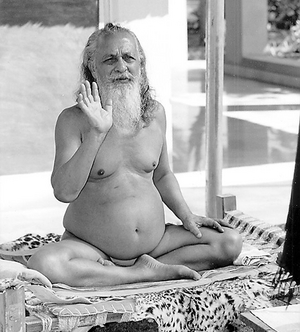
4) Strip down to a swami’s loincloth and sit cross-legged under a tree for swamia while. Publish after a great deal of consideration.


5) Then, acknowledge that you’re basically naked. Run as fast as you can toward a garden of sweet, juicy blackberries and long thorns. Be willing to hurt.


That willingness to suffer shows more courage and more respect for the Runway Model Skin Apathyreader than any runway high-fashion name-brand rhino-skin apathy.