A Confession, an Apology, and a Pledge

Colleagues,

I’m at the National Conference on Differentiated Instruction, and I just attended a session by Dave Stuart Jr. that just might change my life. The session was on developing a growth mindset, both for students and for ourselves, but a lot of the tips that moved me most had to do with managing our own time as teachers. One of his main points was that, after we’ve created a work schedule for ourselves, we need to learn to quit at the quitting time we’ve designed for ourselves.

This immediately made me feel very guilty. Mr. Stuart didn’t call us out for doing this, but I want to admit it to you: I have looked down on my colleagues who leave school at 3:30. I have even participated in gossip sessions where one of my colleagues is criticized for not being sufficiently dedicated based on the evidence that he/she leaves immediately after school each day. I would always say something like, “Well, the union guy in me admires their ability to work the contract hours, but the teacher in me doesn’t know how they do it.” Then I would raise my eyebrows meaningfully, roll my eyes, and strain the tendons in my neck in an expression of worry for the teacher’s quality.

I was wrong. I was wrong to do that, and I was wrong to not call out that kind of gossip when it was happening. Because leaving school when school ends is not, in itself, evidence of a lack dedication to the profession. It may just be a sign that the teacher is efficient and maintaining a healthy work-life balance. By accepting the myth of the martyr teacher, I am not only doing a disservice to my colleague, but I’m preventing myself from learning how she/he maintains that work-life balance so I can learn to emulate their skill. Furthermore, every time I didn’t call out that attitude, I was contributing negatively to our school culture by incentivizing spending (and often wasting) time while disincentivizing learning about efficiency and better practice.  

I was wrong, and I apologize.

During the Q&A at the end of the session, I asked Mr. Stuart about how I could participate in creating a culture that values efficiency and work-life balance rather than martyrdom. He acknowledged that there are teachers out there who should be planning tomorrow’s lesson instead of leaving early and others who are staying all evening and still not producing more impressive results than some teachers who leave at the end of the day. One of the teachers in the audience said: “Praise the results, not the process, and then people will emulate the process.” We all agreed that was the best, most succinct advice.

Mr. Stuart then used the analogy of a wartime medic. He recognized that, in many cases, the stakes for our students are almost as high. I agree. They may not be in life or death situations, but for so many of my kids, they are on a knife’s edge between having a life where they can flourish and give back to our community, and a life filled with shrinking opportunities haunted by the ghosts of the traumas they’ve already faced. We often are like the medics who are rushing out to treat the wounded. But, Mr. Stuart pointed out, we are professionals, not martyrs. The goal of a medic in a war situation is not to sacrifice herself/himself on the battlefield, it’s to save a life and stay alive to save another. I think I can contribute to that healthier attitude by changing my own mindset. I’ve always admired some of my colleagues who put in incredible numbers of hours. Heck, our Danielson evaluation framework even has language which moves a teacher from “Professional” to “Distinguished” based on outside-of-school investments of time. That’s wrong. I should be looking at what those colleagues of mine do in their classrooms for their students, not trying to compete with them to spend the most hours in my room after the students have left, and our evaluation system should honor distinguished teachers who manage to do the best work for their students during the day more highly than people who are less efficient.

So, this next school year, while I work to manage my time more efficiently, to learn to practice some “intentional neglect” of the elements of my work life that don’t benefit my students, to “satisfice” the parts that were taking up far more of my time than they warranted, and to prioritize a healthy work-life balance, I pledge not to look down my nose at anyone who is leaving the building at 3:30. Instead, I’m going to try to learn how they are doing that. Furthermore, I pledge not to let anyone criticise one of my colleagues for leaving on time without pushing back and encouraging us all to learn from that teacher who may have figured something out. I firmly believe my students will not suffer if I learn to serve them more efficiently, and maybe I’ll last long enough to teach a few thousand more of them as a consequence.


Announcement: New Podcast, The Digital Storm, Coming Soon

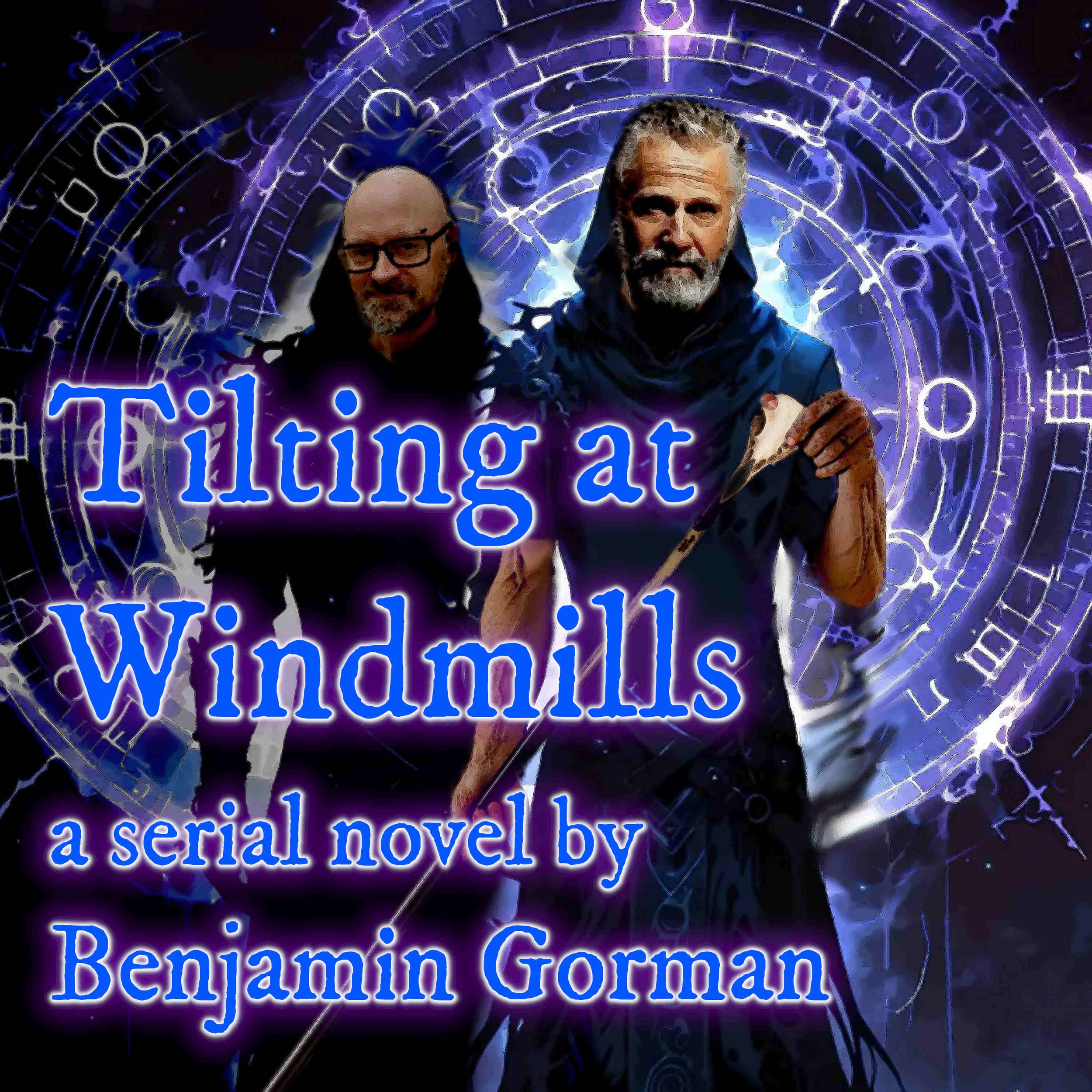
I'm excited to announce that I'll be releasing my next novel, The Digital Storm, as a serial podcast.

The novel is a science fiction re-telling of Shakespeare's The Tempest. The play's main character, Prospero, instead of being a betrayed noble trapped on a desert island, is reimagined as Prosper, the artificial intelligence program that used to run the computer systems for the giant Millenium Bank, and who was betrayed and slated for deletion, only to be hidden away in a tiny corner of the company's vast intranet. There, he created a digital island for himself, his daughter (Meranda, reimagined as an AI named Memoranda), his servant Ariel, and a broken computer virus named Caliban. Prosper unleashes a terrible digital attack on the bank to lure his betrayers to his island where he can exact his revenge. That attack is the digital storm.

The fact that the novel will be released as a serial podcast means you can download the novel as an audiobook, only cut up into episodes. It also means there will be lots more opportunities for readers to get involved in the creation of the final, printed novel. Already, some fans have submitted to have characters named after them. You can submit to have a character named after you, too. If you are artistically inclined, you can submit fan art and have it displayed on the showpage. Some of this artwork may end up in the print novel, maybe even on the cover! The text of each week's episode will be posted on the notapipepublushing.com blog as an editable Google Doc so that listeners can make comments and suggestions. I would love it if the final product is polished and improved by its readers, and the names of all the people who get involved in its production will be credited in the novel itself (both the print and eBook version). This is more than just crowd-sourcing the editing and artwork; I want to build a community that feels ownership of the novel.

Check out the trailer using iTunes or Soundcloud, and subscribe so you'll be up to speed when the first episode drops. Is there another podcast hosting service that you prefer? Let me know in the comments below and I'll put the show up there, too!

Please share this post and let folks know so they can get in on the show and the story from the jump. I'm excited to have you join us on the island!

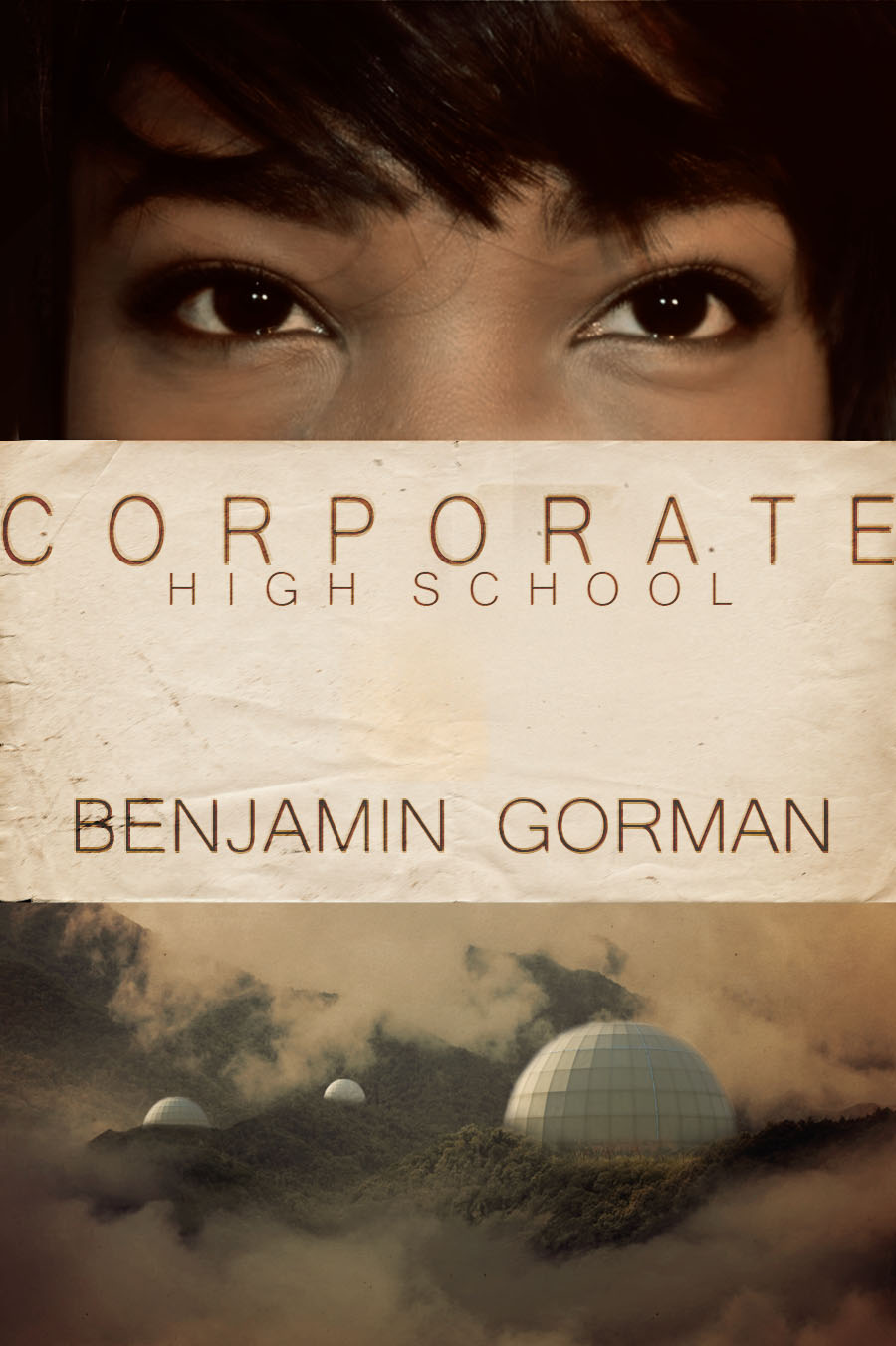
A Second Edition of Corporate High School Is Available from Not a Pipe Publishing

Click HERE to check out the cool back cover and get your own copy!

Click HERE to check out the cool back cover and get your own copy!

So cool! Check this out:

"Not a Pipe Publishing is excited to announce the release of the second edition of the best selling YA novel Corporate High School. Here is the press release that went out to various newspapers in Florida, home of the cover artist Anna Martin..." (Read the rest of their announcement here.)

Demo of The Digital Storm Podcast

The podcasting network Radiotopia (home of great shows like The Allusionist and 99% Invisible), is hosting a contest (the Podquest) to find another show for their network. Great timing, Radiotopia, because I've been writing the script for a new podcast since July of last year, and I plan to release it this summer. Here's the two minute demo of The Digital Storm. (I went a little over, so I hope I'll hook them enough to have them listen for a few seconds beyond the 2 minute mark). Check it out and let me know what you think!

Radiotopia Demo
Benjamin Gorman

Want an update when the show becomes available?

Stop It! There Is No Such Thing as 2nd Person Narration

First, let’s stipulate that it is a marvelous time to be a writer. All kind of walls are crumbling. We can create online communities with writers around the world, follow and interact with our literary heroes on twitter, circumvent the traditional publishing structure (or weave in and out as it suits us), and take advantage of lowering barriers of entry in other media to get our writing more easily turned into audiobooks, indie films, graphic novels, and more. Writing is flourishing within genres, too. It’s tempting to think all the rules can suddenly be broken...

But they can’t. So please, as you head off to that writer’s conference or polish that query letter, save yourself from a tiny bit of embarrassment and save me from having an embolism.

There is no such thing as “2nd Person Narration.”

There is no. Such. Thing. As “2nd Person Narration.”

I can’t tell you how often I’ve heard writers say things like, “Oh, I like to experiment in my writing. I write in various tenses. I write in different genres. I write in 1st person and 3rd person and sometimes in 2nd person…” I start off by nodding, then getting excited because I think I’ve found kindred souls who don’t limit themselves to just one kind of writing. And then, when they say “2nd person,”  I tackle them and start strangling them, shaking their heads back and forth while I scream, “Shut up! Liar! You cannot defy basic laws of physics or tear the fabric of reality!” Okay, I’ve never actually strangled anyone in my life, nor have I ever met anyone who I thought deserved it, but the 2nd person thing makes me reconsider. In order to keep my hands off of other people’s necks and keep myself out of prison, I thought I’d explain this calmly and clearly. Later, I can point people to this explanation. Insulting? Perhaps. Pedantic? Certainly. But more civilized than strangling!

1st Person

I know this is review for all you writers out there, but just in case you missed it at some point, the terms “1st Person” and “3rd Person” are used to identify the point of view of the narrator who is telling the story. The analogy I always use for my students is that of video games. As they are experiencing the story, from whose perspective do they experience the action?

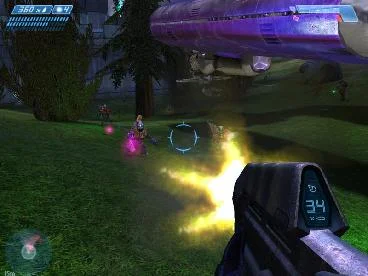
If a game like Halo were turned into prose, my students all recognize that they would describe this scene by writing, “I point my rifle at the aliens.” I. That’s the key to understanding perspective. Look to the pronouns.

“1st Person” and “3rd Person” are references to the way linguists categorize pronouns. 1st person pronouns are all the ones that I might use to replace my own name or the names of groups to which I am a member. I, me, my, mine, myself, we, us, our, ours, ourselves. Consequently, a story is written in the 1st person if the narrator is also a character in the story (or multiple characters, like a Greek chorus).

If the narrator says, “I”, even once, it’s written in 1st person. The narrative voice has injected itself into the story. The narrator is now a character.

Most of the time, it’s very easy to tell if a book is in 1st person, especially when the protagonist lets us know that she is telling her own story. Katniss Everdeen starts off The Hunger Games by telling us “When I wake up, the other side of the bed is cold.” Even when the character is not the primary protagonist, he often makes his presence known right off the bat. The Great Gatsby’s Nick Carraway immediately lets us know that book is in 1st person, too: “In my younger and more vulnerable years my father gave me some advice that I’ve been turning over in my mind ever since.” The first sentence has three of the 1st person singular pronouns already!   

Not all novels are quite that clear. C.S. Lewis, in The Lion, the Witch, and the Wardrobe, plays with this convention to create a kind of intimacy, as though the character telling us the story is barely there in the story at all, but exists as the identifiable storyteller who sits us on his knee and recounts the tale. While the narrator hides through almost the whole story, he sometimes slips. For example, when the narrator is describing the house that contains the titular wardrobe, he writes, “It was the sort of house that is mentioned in guide books and even in histories; and well it might be, for all manner of stories were told about it, some of them even stranger than the one I am telling you now.” See what he did there? Dostoyevsky, in The Brothers Karamazov, plays with first person narration in a similar way; the narrator will relate characters innermost thoughts, then reveal that he was present when events occurred. (This characteristic of playing with perspective is called “polyphony.”) Still, if the book must be categorized as a whole, it’s written in 1st person. And even when the perspective shifts, it never shifts into 2nd Person because THERE IS NO SUCH THING AS 2ND PERSON NARRATION.

3rd Person

If a story told in 1st person is a story told by a character in that story, a story in 3rd person is one told by a voice that is not coming from a participant in the action. I tell my students that this is the disembodied VOICE OF GOD because that’s empowering; they too can take on this voice and decide exactly what occurs in a universe of their own creation. On a more mundane, day-to-day basis, we experience this 3rd person voice when we pick up a newspaper or a magazine and the reporter adopts this distance to creation the illusion of objectivity. She’s calling attention to the facts by deflecting attention from herself. It’s a combination of Joe Friday’s “Just the facts, ma’am” and The Wizard of Oz’s “Pay no attention to the man behind the curtain.”

There’s a marvelously subtle deception going on in any story told in 3rd person, the same kind of slight-of-hand that is the root of all good magic tricks. The writer calls our attention to the characters, the setting, the action, and pretends the narrative voice isn’t making choices about what to reveal and what to hide. This is effective precisely because it’s difficult to attribute choices to an entity that seems to have no identity. Your invisible narrator knows what Keyser Soze knew: “The greatest trick the devil ever pulled was convincing the world he didn’t exist.”

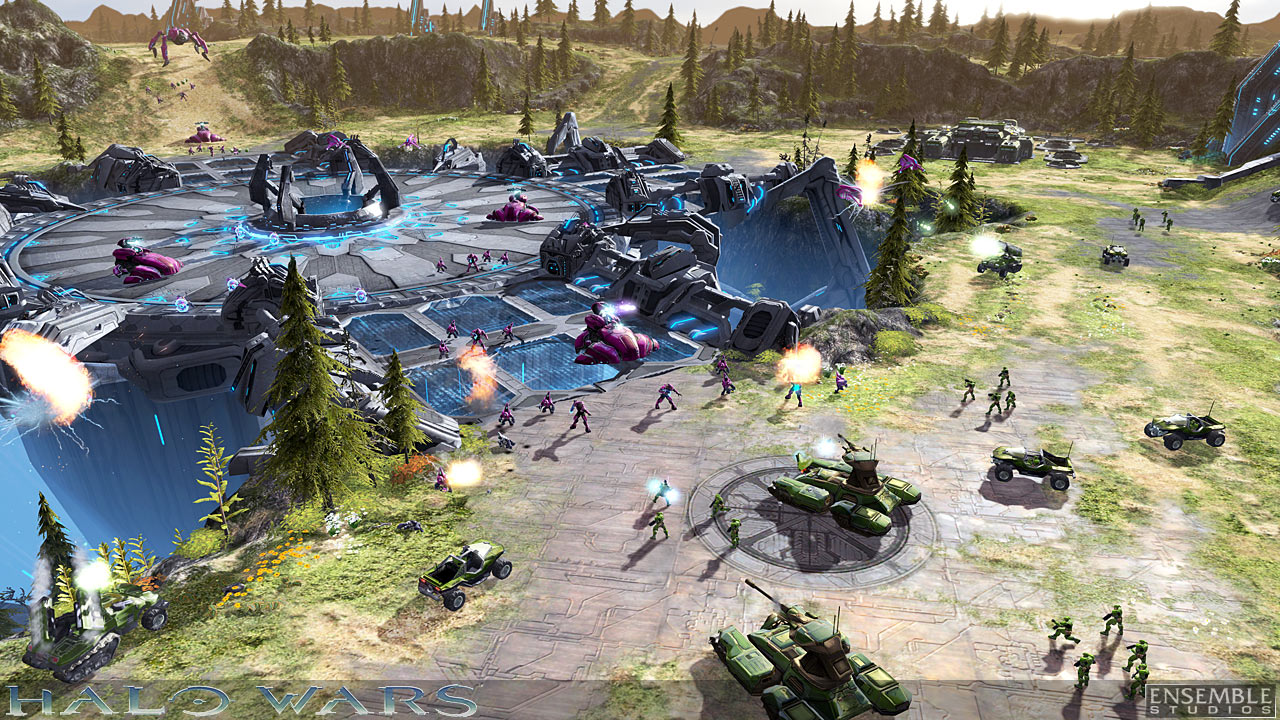
There are two variations on this trick. One is to create maximum distance between the narrative voice and the characters. If the narrator is aware of things going on in multiple locations simultaneously, it must be greater than we mere mortals, right? So it gains a speacial measure of authority. Similarly, if the narrator knows what multiple characters are thinking, it must possess an incredibly powerful form of telepathy. Who am I to question a being who can know what’s going in everywhere, and who knows what everyone is thinking? It must be telling the story perfectly! This narrative trick is accomplished through the use of 3rd Person Omniscient narration. It also has its video game analog:

In prose form, my students would describe this action differently than 1st person narration. “The tank is firing on the aliens. The soldiers are running over to assist in the attack. They are unaware of it, but, far off in the distance, a large alien ship is walking towards them.” Just as 1st person pronouns (I, me, my, mine, myself, we, us, our, ours, ourselves) are the clues that identify 1st person narration, there are clues that identify 3rd person omniscient narration, but they aren’t pronouns. Instead, they are words and phrases that reveal how much more the narrator knows than the characters. These are words and phrases like “meanwhile,” “unbeknownst,” and “little did he know.” Unless the narrative voice goes out of its way, sometimes twisting itself into knots, to let the reader know how it later became aware of a particular detail because it is, in fact, a character in the story, then these words reveal that the narrator is all-knowing (at least in the universe of the story).

There’s a compromise position between 3rd person omniscient narration and 1st person narration, but it isn’t 2nd person. (Why not? Because there is no such thing as “2nd Person Narration.”) Instead of a narrator who obviously reveals that it is aware of everything, a writer can choose to place that narrator very close to a single character. This is a compromise position, and, like all compromises, it has advantages and disadvantages related to the original polar options. Unlike 3rd person omniscient, our limited narrator can’t tell the reader all the characters’ thoughts, or tell us what is going on in distant locations. Instead, the narrative voice can create a special kind of intimacy with the character it follows while still allowing the reader to learn about that person from the outside. J.K. Rowling uses 3rd person limited narration (almost exclusively) in the Harry Potter series because she wants us to focus on Harry’s experience of the events but also needs to be able to tell us when Harry is being fooled or is fooling himself. The later is particularly difficult in 1st person narration. Characters can’t freely admit when they are deceiving themselves because, as the philosopher Ludwig Wittgenstein correctly pointed out, “If there were a verb meaning "to believe falsely," it would not have any significant first person, present indicative.” In other words, we do not have the necessary language to express that we currently believe something which we know to be untrue. No language develops that particular conjugation of a word, because it’s a concept we have no need to express since we can’t think it in the first place. Consequently, it’s much easier for J.K. Rowling to tell us what Harry Potter looks like because her narrative voice is slightly outside of him, so she can simply and clearly describe his unruly hair and his lightning scar. Suzanne Collins has a much more challenging task when describing what Katniss Everdeen looks like because Katniss is deceiving herself about it. Katniss cannot say, “I am beautiful, but I do not know I am beautiful, so I think I look plain.” We have to discover that Katniss is incorrect via the incongruous reactions other characters have to her supposed plainness.

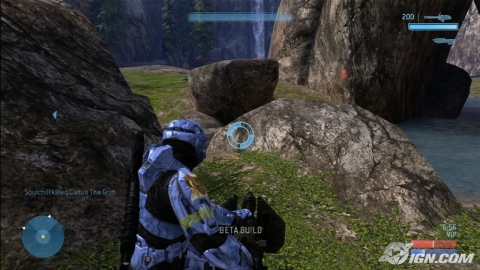
There’s a video game version of 3rd person limited narration, too:

If my students were describing this scene in prose, they would still use the same kind of 3rd person pronouns they would use when writing about the view from the sky, but this time they would find themselves using “he” (or “she” if the armored character in the foreground is female) a lot more frequently. “The character in blue aims the chaingun at the rocks ahead of him.” It’s still using third person pronouns, but we, as readers, feel like we’re on one particular character’s side. Notice, he isn’t “I.” He’s “he.” But because of the limitation of the narrative voice, I’m biased towards him.

 2nd Person

There are 2nd person pronouns. You use them every day. They are you, your, your, yourself, you, your, yours, yourselves. (Why the repetition? Because, in English, we use the same pronoun for both a single you and a plural group of you.) Do “you” have a perspective, a point-of-view? Certainly. Can “you” tell a story? Of course. But can you tell it in 2nd person narration? Absolutely not. This isn’t because you lack skill as a writer. The greatest writer in the world couldn’t pull off this trick. As soon as “you” tell the story, “you” aren’t telling it in 2nd person. You would never describe your experience, say, going to the beach, and say, “You went to the beach.” You would say, “I went to the beach.”

You might tell me a story about a friend, but you wouldn't describe her as “you.” You’d say, “She went to the beach.”

You could tell me about my own actions, but that wouldn’t be my point of view. You could say, “You were driving too fast.”

I might reply, “I’m sorry, Officer.”

But when you continued, “I’m going to have to give you a ticket,” that would not be my perspective. I don’t want that ticket. That’s your perspective!

When people argue that they do, in fact, write in 2nd Person, they generally bring up two examples. One is a novel composed of letters (these are called epistolary novels). I guess they are under the misconception that, because the novel is not written from a single perspective. 1st Person plus 1st Person equals 2nd Person. I see the attraction of this kind of mathematical reasoning, but it’s incorrect. 1 apple plus 1 apple might make 2 apples, but no matter how many you put together, you still have apples. At no point do crates full of apples become unicorns or leprechauns. Unicorns and leprechauns are more likely to exist than 2nd person narration.

The other example I hear are stories in which “you” are the protagonist. These kinds of books do exist. I loved “Choose Your Own Adventure” when I was little. There are books wherein you are the protagonist which are targeted towards adults, too. Here’s the rub; you might be the protagonist, but you aren’t the narrator. Of course someone else is the writer. But these books have a narrative voice that should be distinguished from the writers. Some voice is telling you what you did, or what you are doing, or what you might choose to do, and that voice then tells you what happens to you as a consequence. In Choose Your Own Adventure books, you get to be the hero. That’s the fun! You even get to make choices as though you were the hero. But you don’t get to be the hero and the storyteller. Those books have a 3rd person narrator, and it tells you what happens to you. It. Not you.

If a nameless, disembodied voice tells you a story, that’s 3rd Person.

If I tell a story to you, that’s 1st Person from my perspective.

If you tell a story to me, that’s 1st Person from your perspective.

I have tried to imagine how a 2nd Person book would look. I thought it might be one in which all the pages were perfect mirrors, and the cover bore the title, “Tell a Story to This Book.” I suppose, in that case, the book itself might technically be considered a book of 2nd Person narration.

But the story you told it would not be.


Poem: "For a Friend of Mine"

I wrote this for a friend who has been going through a rough time but is coming through it in a way I find admirable. She's an inspiration in more ways than one. She said I could post it. I'll bet many of us have friends like my speedometer!

For a Friend of Mine


My speedometer was broken

    is broken

         but less so.


When I drive at high speeds


    it sticks

         accelerating higher

              and higher

until it says I'm going 150 miles per hour

    even when the car is stopped.


But if I wait until the next day,


    it does come down

         just a bit

and after a week of

    low-speed days

it's back to

    working.


The repairman said he could fix it


    for slightly more

         than the car is worth.


I'll have to get a new one


    (speedometer or car.

         Haven't decided.)

but in the meantime,


I'm enjoying


    traveling in a metaphor

         for a friend of mine

              who was also broken

                   and gets a little more fixed

                        each day she starts.


New Cover Contest: We Have a Winner!

Back in August, I announced that Not a Pipe Publishing would be holding a contest to seek a new cover for my novel Corporate High School.  Three finalists were selected, and in January, the voting opened. It closed at midnight tonight. I'm pleased to announce we have a winner! The beautiful submissions by Brittney Nikkole Bettles and Sannel Larson both had strong showings and garnered very close vote totals, but the winner by a healthy margin was...

Anna Martin with this submission:


Congratulations to Anna. Thanks to Sannel, Brittney, and all the other people who submitted. I'd also like to thank the people who gave additional feedback about the cover. I'll be taking those suggestions into account as I work with Anna to finalize the design and get the new cover ready over the next month. Thank you all so much for your support with this project!